🧶 Beautiful ✨ Detailed 💝 Adorable

Baby Dandelion Amigurumi Pattern

Baby Dandelion Amigurumi Pattern
4.1★ Rating
5-7 Hours Time Needed
3.8K Made This
✂️

Intermediate Level

Ideal for those with basic knitting experience, featuring slightly more advanced stitches and techniques to expand your skills.

⏱️

Weekend Treat

Takes 5-7 hours, making it an enjoyable project to finish over a couple of days.

🧸

Cute Companion

An adorable friend to cherish, handcrafted with love to bring comfort and joy for years to come.

About This Baby Dandelion Amigurumi Pattern

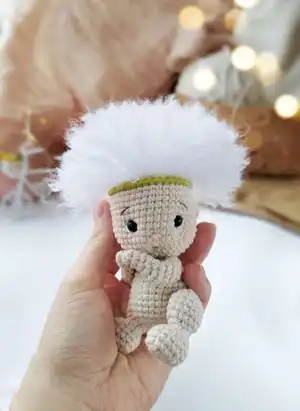
This Baby Dandelion pattern walks you through a charming tiny amigurumi with a fluffy hair top and a sweet, sculpted face. The pattern contains clear round-by-round instructions, helpful photography references, and finishing techniques for hair and facial details. You will learn simple sculpting and thread-joining methods to achieve professional-looking expressions and secure limbs.

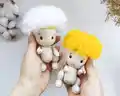
Baby Dandelion Amigurumi Pattern crochet pattern - detailed view of completed project

Worked in continuous spirals, the pattern is written for a small hook and light stuffing to keep shapes delicate. Detailed notes explain how to attach a plastic joint and make the fluffy hair.

Why You'll Love This Baby Dandelion Amigurumi Pattern

I love how this little amigurumi combines simple crochet with playful texture—especially the fluffy hair. I also enjoy the sculpting steps; they give such sweet personality to the face and make finishing really satisfying.

Baby Dandelion Amigurumi Pattern step 1 - construction progress Baby Dandelion Amigurumi Pattern step 2 - assembly progress Baby Dandelion Amigurumi Pattern step 3 - details and accessories Baby Dandelion Amigurumi Pattern step 4 - final assembly and finishing

Switch Things Up

I enjoyed how the thread sculpting step brings so much personality to this tiny face; it makes small changes feel impactful.

I often try different hair yarns — mohair gives a softer halo while acrylic makes a puffier look.

I prefer to attach limbs with thread joining because it hides the seams and keeps the shapes snug.

I usually start hair with fewer strands and add more if needed, which helps me control density.

I always mark my first stitch with a small yarn piece to avoid losing my place in continuous spirals.

I recommend testing blush on a scrap yarn before applying on the face to get the shade right.

I like to keep a small sewing kit nearby to weave ends immediately as I finish parts.

I sometimes try different eye sizes; 6 mm safety eyes are suggested but smaller or embroidered eyes change expression nicely.

I suggest making two dolls — the first as a learning sample and the second as the polished gift version.

I love photographing each stage to help remember placement for future dolls and to improve my assembly process.

Common Mistakes & How to Fix Them

✗ Skipping the stitch marker during continuous spirals makes it easy to lose your start of round; always mark the beginning of the round. ✗ Not stuffing gradually leads to lumps and weak shapes; stuff a bit as you shape and adjust frequently for smooth curves. ✗ Pulling the magic ring too tight before installing the joint prevents the joint from fitting; leave about 6 mm in the ring for the joint insertion. ✗ Forgetting to secure plastic joint legs by melting slightly can cause a loose attachment; melt and press the leg to the washer using a metal tool carefully.

Baby Dandelion Amigurumi Pattern

Create a tiny, dreamy Baby Dandelion amigurumi with soft, fluffy hair and simple, well-photographed instructions. This pattern guides you through each part—arms, legs, body, head, sculpting and attaching the hair—so you can follow step by step. Ideal for a thoughtful handmade gift or a sweet shelf companion.

Intermediate 5-7 Hours

Materials Needed for Baby Dandelion Amigurumi Pattern

— Main Fabric

  • 01
    YarnArt Jeans (50g/160m, 55% cotton 45% polyacrylic) Colors: beige - #05, green - #29
  • 02
    Nako Paris (100g/245m, 60% polyamide, 40% premium acrylic) Color: white - #208 (used for hair; you can also use mohair, 100% wool or 100% acrylic but result will differ)
  • 03
    (Image reference) Nako Bon Bon Classic (100g/200m, 100% acrylic), yellow - #98217 (used as an example for hair color)

— Tools Required

  • 01
    Crochet hook suitable for your yarn (author used 2 mm)
  • 02
    Safety eyes 6 mm
  • 03
    Plastic joints 20 mm (we will need only one for the head)
  • 04
    Lighter (to make plastic safety joints more secure)
  • 05
    Strong thread for sculpting and thread joining
  • 06
    Scissors
  • 07
    Tapestry needle
  • 08
    Pins
  • 09
    Stitch marker (a piece of yarn can be used)
  • 10
    Fiberfill (stuffing)
  • 11
    Stuffing tool (author uses wooden skewers)
  • 12
    White embroidery thread (author used YarnArt Jeans #62)
  • 13
    Black or brown thread to embroider mouth and eyebrows
  • 14
    Make-up blush powder/soft pastel of pink color
  • 15
    Paintbrush or make-up brush / q-tip
  • 16
    Slicker brush
  • 17
    Tweezers (optional, helpful when melting or holding joint)

Progress Tracker

0% Complete

— ARMS (make 2) :

Info :

Work with beige yarn. Do not stuf the arms.

Round 1 :

6 sc in a MR (6)

Round 2-3 :

(2 rows) 6 sc (6)

Round 4 :

inc, 5 sc (7)

Round 5 :

3 sc in 1, 2 sc, dec, 2 sc (8)

Round 6 :

(inc, 1 sc) * 2, dec, 2 sc (9)

Round 7 :

(dec, 1 sc) * 2, 2 inc, 1 sc (9)

Round 8-9 :

(2 rows) 9 sc (9)

Round 10 :

(dec, 1 sc) * 3 (6)

Info :

Cut the yarn off leaving a tail for closing the opening. Insert the yarn tail into a needle, go under the front loops of all 6 sc (p.1), tighten the thread and weave in the yarn ends.

Info :

Later we will attach the arms to the body.

— LEGS (make 2) :

Info :

Work with beige yarn. Stuff as you go.

Round 1 :

Ch 6, From the 2nd ch from the hook 4 sc, 3 sc in 1, 4 sc along the other side of the chain (11) Continue working in spirals.

Round 2 :

inc, 3 sc, 3 inc, 3 sc, inc (16)

Round 3-4 :

(2 rows) 16 sc (16)

Round 5 :

5 sc, 3 dec, 5 sc (13)

Round 6 :

dec, 2 sc, 3 dec, 1 sc, dec (8)

Round 7 :

(3 sc in 1, 3 sc) * 2 (12)

Round 8 :

inc, 1 sc, inc, 3 sc, 3 inc, 3 sc (17)

Round 9-11 :

(3 rows) 17 sc (17)

Round 12 :

1 sc, 2 dec, 3 sc, 3 dec, 3 sc (12)

Round 12 :

6 dec (6)

Info :

Cut the yarn off, close the opening, weave in the yarn end.

Info :

Later we will attach the legs to the body.

— HEAD (part 1) :

Info :

Work with beige yarn.

Round 1 :

6 sc in a MR, do not pull the ring tight, leave about 6 mm to insert plastic joints later (p.4).

Round 2 :

6 inc (12)

Round 3 :

(inc, 1 sc) * 6 (18)

Round 4 :

(inc, 2 sc) * 6 (24)

Round 5 :

(inc, 3 sc) * 6 (30)

Round 6 :

2 sc, (inc, 4) * 5, inc, 2 sc (36)

Round 7 :

(inc, 5 sc) * 6 (42)

Round 8-16 :

(9 rows) 42 sc (42)

Info :

Cut the yarn off leaving a tail to change to green color later.

Info :

Now we will neet to crochet the body and after the body is done, continue crocheting the head.

— BODY :

Info :

Work with beige yarn.

Round 1 :

6 sc in a MR, do not pull the ring tight, leave about 6 mm to insert plastic joints.

Round 2 :

6 inc (12)

Round 3 :

(inc, 1 sc) * 6 (18)

Round 4 :

18 sc (18)

Round 5 :

(inc, 2 sc) * 6 (24)

Info :

At this stage we connect the head to the body using a joint. Insert the joint into the space left from the MR on the head (from the inside), then pass through the MR on the body (p.5). Fix it with a washer.

Info :

For a more safe attachment it is necessary to melt the leg of the joint and press it against the washer with a flat metal tool (I use tweezers or scissors) (p.6).

Info :

Melt the leg only with the blue part of the fire so that the plastic does not turn black.

Info :

Watch the video of the joint installation process.

Round 6-8 :

(3 rows) 24 sc (24)

Round 9 :

(inc, 3 sc) * 6 (30)

Round 10-13 :

(4 rows) 30 sc (30)

Round 14 :

(dec, 3 sc) * 6 (24)

Round 15 :

(dec, 2 sc) * 6 (18)

Info :

Stuff the body.

Round 16 :

(dec, 1 sc) * 6 (12)

Round 17 :

6 dec (6)

Info :

Cut the yarn off, close the opening, weave in the yarn end.

— HEAD (part 2) :

Info :

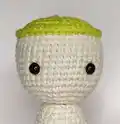
Insert the safety eyes between rows 10 and 11 with a distance of 8-9 stitches.

Info :

To make it easier to insert the eyes, first make holes for them. I use a wooden skewer, insert it between the stitches and widen the hole. You can also use tweezers or blunt end scissors (you do not want to damage the stitches) (p.8).

Info :

Continue crocheting with green yarn. Color change should be on the back of the head, make or undo several stitches in beige yarn if needed.

Round 17 :

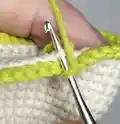
42 sc FLO (p.9) (42)

Round 18 :

42 sc through the BACK LOOPS of the 16th rows (p.10) (42)

Round 19 :

(dec, 5 sc) * 6 (36)

Round 20 :

(dec, 4 sc) * 6 (30)

Round 21 :

(dec, 3 sc) * 6 (24)

Round 22 :

(dec, 2 sc) * 6 (18)

Info :

Stuff the head.

Round 23 :

(dec, 1 sc) * 6 (12)

Round 24 :

6 dec (6)

Info :

Cut the yarn off, close the opening, weave in the yarn end.

— ASSEMLING :

Sculpting :

To sculpture eyes and mouth use a stong thread (approximately about 40 cm). Each time you insert or pull out the needle, make sure it is as close to the eye as possible. Thread the needle, insert it from the top of the head (point 1, p.12), leave a small tail about 10 cm, - pull the needle out at point 2, insert it into point 3, pull it out at point 4 - insert it into point 5, pull it out at point 6 (between rows 5 and 6), insert it into point 7, - pull it out at point 8, pull up both ends of the thread to the desired degree of tightening. Tie the ends together several times, continue: - insert the needle again at point 1, pull it out at point 2, insert it into point 9, - pull it out at point 4, insert it into point 10, pull it out at point 8.

Info :

Pull up both ends, tie them together several times and weave them in.

Info :

Embroider the whites of the eyes with white yarn (p.13-14).

Nose :

Embroider the nose using the same yarn you used for crocheting the body. Make one horizontal stitch between rows 8 and 9 (one row below the eyes) (p.15), then wrap this stitch with 5-6 stitches as shown on p.16-17. Pull the ends out at the back of the head, tie them together and weave in.

Info :

Embroider the nose using the same yarn you used for crocheting the body. Make one horizontal stitch between rows 8 and 9 (one row below the eyes) (p.15), then wrap this stitch with 5-6 stitches as shown on p.16-17. Pull the ends out at the back of the head, tie them together and weave in.

Eyebrows :

Emroider the eyebrows with 1 stitch (I use 2 ply embroidery thread): Pull the needle out 2 rows above the eye and insert in at the point 2 stitches to the side and one row below (p.18).

Thread joining :

Pin the arms between rows 5 and 6, and the legs between rows 12 and 13. You can choose a different placement, but be careful, the legs should not be too high or low. Use a strong thread (we will need about 50 cm for the arms and 50 cm for the legs). Grab several stitches from the inside of the arm (p.20), pull the needle through the body (p.21.22), grab several stitches on the inner side of the second arm (p.23), insert the needle back into the same hole on the body (p.24). Repeat these steps several times (4-5 will be enough), inserting the needle into the same holes and trying to grab the same stitches on the arms. Pull up both ends, tie them together several times and weave them in. Attach the legs using the same method.

Hair :

Cut the yarn into strands of about 12 cm/4.7" long. Start with 80 strands, make more later if needed. Attach stands using knotless method (watch the video of the process). Skip one stitch each time to avoid very thick hair. Go around moving counterclockwise (p.26) until the entire green part of the head is covered. Do not skip stitches in the last row, attach strands into each stitch (p.27). Cut the hairs to the desired length (mine are about 3-4 cm/1.5"), fluff the ends with a slicker brush.

Blushing :

I add blush to cheeks, nose and mouth. Add a little touch of blush and blend it well.

Info :

Congratulations! Your Baby Dandelion is ready!

Assembly Instructions

  • Insert the plastic joint through the magic ring opening of the head (left about 6 mm) and pass it through the MR on the body; secure with the washer from the outside.
  • For extra security melt the leg of the plastic joint slightly and press it to the washer using tweezers or a flat metal tool—use the blue part of the flame to avoid blackening the plastic.
  • Pin arms between rounds 5 and 6; attach by grabbing several inner arm stitches and pulling the thread through the body several times until firm, then tie and weave ends.
  • Pin legs between rounds 12 and 13; attach them the same way as the arms using strong thread and multiple passes to secure.
  • Embroider the nose and mouth before finishing the head closure; use the same yarn as the body and wrap the nose stitch 5-6 times for definition.
  • Attach the hair using the knotless method in strands approx 12 cm long; start with ~80 strands and distribute evenly, then trim and fluff with a slicker brush.

Important Notes

  • 💡All parts are worked in continuous spirals (without slip stitch and ch) unless noted otherwise; use a stitch marker to track rounds.
  • 💡Leave about 6 mm in the magic ring of head and body to insert the plastic joint before tightening.
  • 💡Stuff gradually and test shape frequently to avoid over stuffing or lumps in small limbs and head.
  • 💡When melting plastic joint leg, use tweezers and the blue part of the flame to avoid burning or discoloring the plastic; work carefully and in a ventilated area.
  • 💡Secure and weave in all sculpting and joining thread ends to prevent unraveling after play or handling.

This tiny Baby Dandelion is a whimsical, portable amigurumi with a cloud-like hair top and a sculpted, expressive face. Perfect as a sweet gift or a shelf buddy. 🧶✨🌼
You ask,

we answer.

FAQs

What size will the finished Baby Dandelion be?

The finished Baby Dandelion is a small palm-sized amigurumi; exact size depends on yarn and hook, but using the recommended yarn and 2 mm hook gives a tiny figure roughly 9-12 cm tall.

Can I use a different yarn or hook size?

Yes — you can substitute yarn or change hook size, but this will affect the final size and hair effect. If you use thicker yarn, use a larger hook and expect a larger, less delicate hair result.

How many hair strands should I prepare?

Start with about 80 strands of yarn cut to ~12 cm each and add more as needed while attaching; thickness and fluffiness depend on how densely you place strands and whether you skip stitches while attaching.

Are plastic joints necessary?

The pattern uses a 20 mm plastic joint for a secure, movable head attachment. You can sew the head directly to the body instead, but the joint provides neater, safer movement and a cleaner attachment point.