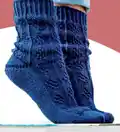
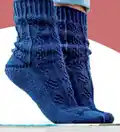
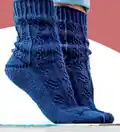
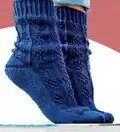
About This Basic Sock Guide Pattern
This pattern guide teaches you how to knit socks from cuff to toe, including two heel options: short rows and cap-and-gusset. It covers casting on, ribbing, leg length, heel shaping, gusset decreases, foot shaping and toe finishing. The instructions reference size charts and tension swatches to get a perfect fit.
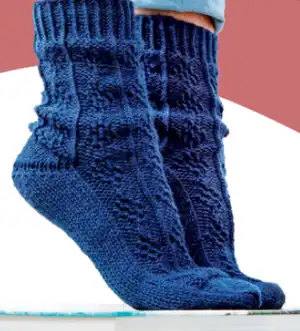
The guide is suitable for 4-ply, 6-ply and 8-ply sock yarns and includes tension recommendations and needle ranges. Clear step-by-step row instructions help you work both in rows and in rounds with confidence.
Why You'll Love This Basic Sock Guide Pattern
I absolutely love this sock guide because it balances precision with flexibility, letting you adapt the sock to many sizes and yarns. I enjoy the two heel options—short rows for a seamless fit and the cap-and-gusset for more structure—because they let me choose based on wear and yarn. I also appreciate the clear emphasis on swatching; it saves time and ensures a great final fit. This pattern feels practical, rewarding and perfect for gifting or everyday use.
Switch Things Up
I love how many ways you can customize this basic sock guide to make it your own.
You can change the ribbing from 1x1 to 2x2 or a twisted rib for a firmer cuff and different look.
Try striping or self-striping yarn to add color interest down the leg and foot without extra sewing.
If you want a chunkier sock, use a heavier yarn and larger needles and follow the tension guidance to recalculate stitch counts.
I often swap the short-row heel for a slip-stitch heel for extra durability depending on who will wear the socks.
For a dressier sock, add a simple lace or cable panel on the leg, making sure to keep the stitch multiple consistent across the needles.
You can also experiment with toe styles: a rounded toe as shown, a wedge toe, or graft the toe with Kitchener stitch for a seamless finish.
I like to add a few rounds of slipped-stitch reinforcement across the heel and sole for longer wear in high-friction areas.
To make ankle socks or knee-highs, simply adjust the ribbing and leg length and refer to the size chart for foot length before beginning the toe.
Finally, add elastic thread through the ribbing or knit a folded hem to help socks stay up, and personalize with embroidered initials or small appliques for gifts.
Common Mistakes & How to Fix Them
✗ Casting on wrong number of stitches for your chosen size leads to an incorrect fit; double-check the chart and count stitches before joining in the round.
✗ Skipping the swatch check causes the finished sock to be too large or too small; knit a 12 cm x 12 cm swatch and adjust needle size until tension matches the pattern.
✗ Forgetting to place the beginning of the round at the centre back of the sock can make the pattern and heel placement uneven; mark the centre back and maintain it each round.
✗ Neglecting to work both parts of wrapped stitches correctly will leave holes in the heel; when instructed, work both parts of the wrap together as one stitch on the next round to close the gap.