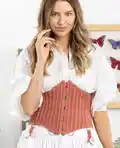
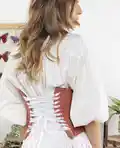
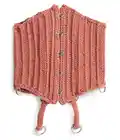
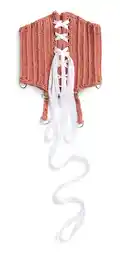
About This Crochet Corset Belt Pattern
This pattern creates a fitted crochet corset belt with authentic busk detailing and optional boning casings for structure. You will work front shaping, back shaping and eyelet rows to create the corset silhouette. The design includes finishing instructions to attach a steel corset busk, add optional D-rings and make optional skirt hikes.
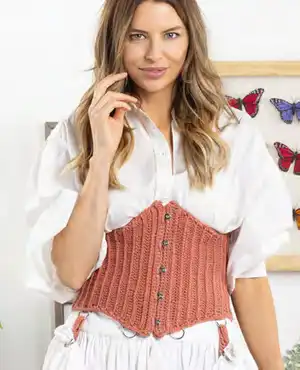
Worked in Bernat Maker yarn with a 4 mm hook for a sturdy texture. The pattern is adjustable for multiple waist sizes and includes full finishing notes.
Why You'll Love This Crochet Corset Belt Pattern
I absolutely love this pattern because it combines the structure of a traditional corset with the handmade charm of crochet. I enjoy how the shaping and eyelets create a flattering silhouette that you can customize with boning and ribbon. I love that it uses an authentic steel busk for a polished look while remaining comfortable and wearable. I find the optional D-rings and skirt hikes a fun detail that lets you personalize the piece for different outfits.
Switch Things Up
I love customizing this corset by changing yarn color to match a wardrobe palette; try jewel tones or soft neutrals for very different looks.
I often make a lighter, smaller version by using a lighter yarn weight and a smaller hook to create a delicate, mini corset belt for styling over blouses.
For a chunkier, statement piece I use a bulkier yarn and a larger hook which gives a cozy, structured belt with a very different feel.
I sometimes replace the steel busk with decorative buttons or toggles for a softer look while keeping the shaping the same.
I like to add embroidered motifs or appliques to the front panels to make each piece uniquely personal and eye-catching.
Try metallic or contrasting satin ribbon for lacing to give the piece a dressier finish and extra visual interest.
If you prefer less structure, skip the boning casings and still enjoy the shaping and eyelets for a softer, flexible belt option.
For festival or costume looks, embellish with chains, charms or additional D-rings to create hanging details from the lower edge.
I often shorten the corset slightly to create a wide belt rather than a full corset, perfect for layering over jackets or dresses.
Consider lining the wrong side with a soft fabric if you plan to wear the corset against bare skin for extra comfort and to protect the yarn from wear.
I recommend trying different spacing for eyelets or adding more eyelet rows for dramatic lacing effects that change the visual rhythm of the piece.
Finally, experiment with placement of boning and number of boning channels to balance comfort, flexibility and the amount of shaping you want in the finished garment.
Common Mistakes & How to Fix Them
✗ Skipping the placement marker at the end of the second row can cause mis-measured shaping later; place a marker at the end of the second row to keep track of the marked row and shaping.
✗ Not working into the correct loop (front loop, back loop or back horizontal bar) will change the texture and gauge; carefully follow loop instructions and check your stitch placement each row.
✗ Failing to measure the work from the marked row may lead to incorrect length before back shaping; measure from the marked row and work until the specified measurement is reached.
✗ Inserting the busk loops into the wrong row will misalign the front edges; insert corset busk loops through the ch-2 spaces worked in the specified 2nd row for the right front and pins in the 2nd row for the left front.
✗ Skipping the instruction to position boning at least 1/2 in from the edge can cause irritation or edge distortion; follow the placement diagram and ensure boning is at least 1/2 in from the edge before whipstitching casings.
✗ Using inconsistent tension when making boning casings can twist or gap the casing; maintain even tension when wrapping yarn around boning and when whipstitching the casing down.