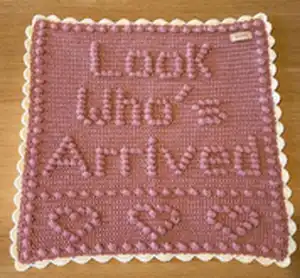
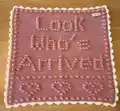
Make a sweet baby blanket featuring puff stitch hearts and a charming lettering panel. This pattern uses simple single crochet rows with puff stitch details to create texture and a playful message. Perfect for gifting to new parents or keeping as a cozy nursery accent. Follow the step-by-step rows and chart to recreate the exact look shown.
Progress Tracker
0% Complete
— Materials & Notes :
Info :
Needles : I used a 4mm hook for the blanket in the photo, my tension is on the looser side. If your tension is tight I would suggest going up in size with your hook. With a light worsted yarn a 4mm to 5mm will be fine, with a worsted yarn (aran) a 5mm to 5.5mm will also work perfectly.
Info :
Yarn : I used Stylecraft 100% premium acrylic dk (light worsted yarn) in shades of Pale Rose 1080 and edged in a Cream shade 1005 100g balls. Approximately 1 & 1/2 balls was used for the main colour.
Info :
Finished blanket size : Approximately 21 x 20 inches
Info :
Gauge : 17 stitches x 18 rows = 4 inch square. Adjust hook size if wanting the same size blanket in the photo.
Info :
Terminology ( US & UK ) : Ch(s) ~ Chain(s). Sc ~ Single crochet ( UK double crochet ). Ps ~ Puff stitch. St(s) ~ Stitch(es). ( ) ~ Work instructions within brackets as many times as directed. Yo ~ Yarn over ( uk Yoh ~ Yarn over hook ).
Info :
Pattern notes : Pattern is in US terminology. Gauge is not important for this pattern. Beginning chain is not included in the total stitch count. Every row ends with 75 stitches with a Ch 1 and turn. Always start the first Sc of each row into the first ch that the ch1 came from. For best results it is best to use a plain solid colour. If you're reading the pattern from the chart, it is worked from the bottom of the chart upwards, and left to right. Add a stitch at the end of the chain row and start the 1st row from the 2nd chain from the hook, ch 1 at the end of each row. Puff stitches are created on the wrong side of the blanket and will pop out into the front of the blanket. If your puff stitch is not popping forward try a tighter than normal sc into the next stitch (this sc will be part of the pattern, not an extra stitch added). For pattern support please contact me via the website you purchased this pattern from.
— How to create a Puff stitch :
Info :
Yarn over and pull up a loop, 6 times (13 loops on the hook) yarn over and pull through 12 loops leaving 2 loops on the hook (if you're finding it hard to pull through the 12 loops you may need to pull up a little higher when you yarn over, making them looser) then yarn over and pull through the remaining 2 loops, sc into the next stitch to lock down the puff stitch (this sc will be part of the pattern, not an extra stitch added), the puff stitch will naturally pop out on the right side of the blanket creating the puff stitch.
— Blanket :
Row 1 :
Sc into 2nd loop from the hook. ( the back bump of the Ch to create a nice edge to add your border to). Ch1 and turn.
Info :
All even rows throughout this pattern are Sc into all sts.
Row 3 :
Sc 1 st, ( ps, sc 3 sts ) x 18 times, ps, sc 1 st, ch 1, turn.
Row 5 :
Sc all sts, ch1, turn.
Row 7 :
Sc 1 st, ps, sc 12 sts, ( ps, sc 22 sts ) repeat once more, ps, sc 12 sts, ps, sc 1 st, ch1, turn.
Row 9 :
Sc 12 sts, ps, sc 3 sts, ps, sc 18 sts, ps, sc 3 sts, ps, sc 18 sts, ps, sc 3 sts, ps, sc 12 sts, ch1, turn.
Row 11 :
Sc 1 st, ps, sc 8 sts, ( ps, sc 7 sts, ps, sc 14 sts ) repeat once more, ps, sc 7 sts, ps, sc 8 sts, ps, sc 1 st, ch1, turn.
Row 13 :
Sc 8 sts, ps, sc 11 sts, ( ps, sc 10 sts, ps, sc 11 sts ) repeat once more, ps, sc 8 sts, ch1, turn.
Row 15 :
Sc 1 st, ps, sc 6 sts, *(( ps, sc 5 sts ) x 2, ps, sc 10 sts )) repeat once more, ( ps, sc 5 sts )* x 2, ps, sc 6 sts, ps, sc1 st, ch1, turn.
Info :
* ( ( ) )*means repeat this whole section again.
Row 17 :
Sc 10 sts, ( ps, sc 1 st, ps, sc 3 sts, ps, sc 1 st, ps, sc 14 sts ) repeat once more, ps, sc 1 st, ps, sc 3 sts, ps, sc 1 st, ps, sc 10 sts, ch1, turn.
Row 19 :
Sc 1 st, ps, sc 71 sts, ps, sc 1 st, ch1, turn.
Row 21 :
Sc into all sts, ch1, turn.
Row 23 :
Sc 1 st, ( ps, sc 3 sts ) x 18 times, ps, sc 1 st, ch 1, turn.
Row 25 :
Sc into all sts, ch1, turn.
Row 27 :
Sc 1 st, ps, sc 71 sts, ps, sc 1 st, ch1, turn.
Row 29 :
Sc into all sts, ch1, turn.
Row 31 :
Sc 1 st, ps, sc 3 sts, ps, sc 11 sts, ps, sc 3 sts, ( ps, sc 7 sts ) x 3, ps, sc 8 sts, ( ps, sc 1st ) x 2, ps, sc 5 sts, ( ps, sc 1st ) x 2, ps, sc 4 sts, ps, sc 1, ch1, turn.
Row 33 :
Sc 6 sts, ps, sc 9 sts, ps, sc 4 sts, ( ps, sc 7 sts ) x 2, ps, sc 6 sts, ps, sc 1 st, ps, sc 6 sts, ps, sc 9 sts, ps, sc 4 sts, ps, sc 6 sts, ch1, turn.
Row 35 :
Sc 1 st, ps, sc 5 sts, ( ps, sc 1 st ) x 4, ps, sc 5 sts, ( ps, sc 7 sts ) x 2, ps, sc 5 sts, ps, sc 3 sts, ps, sc 5 sts, ( ps, sc 1 st ) x 3, ps, sc 3 sts, ( ps, sc 4 sts ) x 2, ps, sc 1 st, ch1, turn.
Row 37 :
Sc 8 sts, ps, sc 5 sts, ps, sc 6 sts, ( ps, sc 7 sts ) x 2, ps, sc 4 sts, ps, sc 5 sts, ps, sc 4 sts, ps, sc 5 sts, ps,sc 3 sts, ps, sc 4 sts, ps, sc 6 sts, ch1, turn.
Row 39 :
Sc 1 st, ps, sc 7 sts, ps, sc 3 sts, ps, sc 7 sts, ( ps, sc 1 st ) x 2, ps, sc 3 sts, ( ps, sc 1 st ) x 2, ps, sc 3 sts, ps, sc 3 sts, ps, sc 7 sts, ps, sc 4 sts, ( ps, sc 1 st ) x 2, ps, sc 5 sts, ( ps, sc 1 st ) x 2, ps, sc 4 sts, ps, sc 1, ch1, turn.
Row 41 :
Sc 10 sts, ps, sc 1 st, ps, sc 55 sts, ps, sc 6 sts, ch1, turn.
Row 43 :
Sc 1 st, ps, sc 9 sts, ps, sc 25 sts, ps, sc 30 sts, ps, sc 4 sts, ps, sc 1 st, ch1, turn.
Row 45 :
Sc into all sts, ch1, turn.
Row 47 :
Sc 1 st, ps, sc 71 sts, ps, sc 1 st, ch1, turn.
Row 49 :
Sc into all sts, ch1, turn.
Row 51 :
Sc 1 st, ps, sc 15 sts, ps, sc 3 sts, ps, sc 5 sts, ( ps, sc 4 sts ) x 2, ( ps, sc 1 st ) x 2, ps, sc 11 sts, ( ps, sc 1 st ) x 2, ps, sc 15 sts, ps, sc 1 st, ch1, turn.
Row 53 :
Sc 15 sts, ( ps, sc 3 sts ) x 3, ps, sc 4 sts, ps, sc 3 sts, ps, sc 5 sts, ps, sc 16 sts, ps, sc 15 sts, ch1, turn.
Row 55 :
Sc 1 st, ps, sc 13 sts, ( ps, sc 3 sts ) x 3, ps, sc 4 sts, ps, sc 3 sts, ps, sc 5 sts, ps, sc 10 sts, ( ps, sc 1 st ) x 2, ps, sc 15 sts, ps, sc 1 st, ch1, turn.
Row 57 :
Sc 15 sts, ps, sc 7 sts, ps, sc 3 sts, ps, sc 4 sts, ps, sc 3 sts, ps, sc 5 sts, ps, sc 8 sts, ps, sc 23 sts, ch1, turn.
Row 59 :
Sc 1 st, ps, sc 13 sts, ps, sc 7 sts, ps, sc 3 sts, ( ps, sc 1 st ) x 2, ps, sc 5 sts, ( ps, sc 1 st ) x 2, ps, sc 11 sts, ( ps, sc 1 st ) x 2, ps, sc 15 sts, ps, sc 1 st, ch1, turn.
Row 61 :
Sc 15 sts, ps, sc 7 sts, ps, sc 3 sts, ps, sc 18 sts, ps, sc 28 sts, ch1, turn.
Row 63 :
Sc 1 st, ps, sc 13 sts, ps, sc 7 sts, ps, sc 3 sts, ps, sc 19 sts, ps, sc 25 sts, ps, sc 1 st, ch1, turn.
Row 65 :
Sc 48 sts, ps, sc 26 sts, ch1, turn.
Row 67 :
Sc 1 st, ps, sc 71 sts, ps, sc 1 st, ch1, turn.
Row 69 :
Sc into all sts, ch1, turn.
Row 71 :
Sc 1 st, ps, sc 18 sts, ( ps, sc 1 st ) x 3, ps, sc 4 sts, ( ps, sc 1 st ) x 2, ps, sc 5 sts, ( ps, sc 1 st ) x 2, ( ps, sc 4 sts ) x 2, ps, sc 17 sts, ps, sc 1 st, ch1, turn.
Row 73 :
Sc 19 sts, ps, sc 10 sts, ps, sc 5 sts, ps, sc 3 sts, ps, sc 5 sts, ( ps, sc 3 sts ) x 2, ps, sc 20 sts, ch1, turn.
Row 75 :
Sc 1 st, ps, sc 17 sts, ps, sc 10 sts, ps, sc 5 sts, ps, sc 3 sts, ps, sc 5 sts, ps, sc 3 sts, ps, sc 2 sts, ps, sc 19 sts, ps, sc 1 st, ch1, turn.
Row 77 :
Sc 19 sts, ps, sc 10 sts, ps, sc 5 sts, ps, sc 3 sts, ps, sc 5 sts, ps, sc 3 sts, ps, sc 1 st, ps, sc 22 sts, ch1, turn.
Row 79 :
Sc 1 st, ps, sc 17 sts, ps, sc 11 sts, ( ps, sc 1 st ) x 2, ps, sc 5 sts, ( ps, sc 1 st ) x 2, ps, sc 4 sts, ps, sc 2 sts, ps, sc 19 sts, ps, sc 1 st, ch1, turn.
Row 81 :
Sc 19 sts, ps, sc 30 sts, ps, sc 3 sts, ps, sc 20 sts, ch1, turn.
Row 83 :
Sc 1 st, ps, sc 17 sts, ps, sc 30 sts, ps, sc 4 sts, ps, sc 17 sts, ps, sc 1 st, ch1, turn.
Row 85 :
Sc into all sts, ch1, turn.
Row 87 :
Sc 1 st, ps, sc 71 sts, ps, sc 1 st, ch1, turn.
Row 89 :
Sc into all sts, ch1, turn.
Row 91 :
Sc 1 st, ( ps, sc 3 sts ) x 18 times, ps, sc 1 st, ch 1, turn.
Row 93 :
Sc into all st and tie off, sew in both ends
— Border :
Info :
To prepare for the border I like to do a row of sc along the front left and right edge in the same shade as the main blanket colour, to give a nice edge for the border.
Info :
For this blanket I did a shell edge border in cream to give it a nice finish, but I'm sure any border of your choice would look fantastic.
— Chart :
Info :
A chart for the lettering and hearts is provided (worked from the bottom of the chart upwards and left to right). Use the chart to place the puff stitches where indicated to create the words and hearts.
This Look Who's Arrived blanket is a charming and heartfelt make that adds personality to any nursery. The textured puff-stitch hearts and lettering create a playful focal point that is both modern and cozy. Perfect for gifting to new parents or as a special keepsake to celebrate a new arrival. 🧶💖