🧢 Beautiful ✨ Detailed πŸ’ Adorable

Minimals Dog Amigurumi Pattern

Minimals Dog Amigurumi Pattern
4.1β˜… Rating
5-7 Hours Time Needed
2.5K Made This
βœ‚οΈ

Intermediate Level

Ideal for those with basic crochet experience, featuring slightly more advanced stitches and techniques to expand your skills.

⏱️

Weekend Treat

Takes 5-7 hours, making it an enjoyable project to finish over a couple of days.

🧸

Cute Companion

An adorable friend to cherish, handcrafted with love to bring comfort and joy for years to come.

About This Minimals Dog Amigurumi Pattern

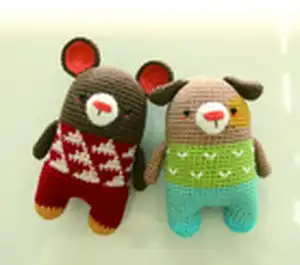
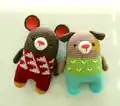
This pattern creates a small, stylized dog amigurumi from the Minimals mini + animals series. It includes colorwork instructions for the body, clear round-by-round shaping, and separate patterns for arms, snout and ears. The finished doll features a sewn snout, embroidered mouth, and removable assembly tips for a neat finish.

Minimals Dog Amigurumi Pattern crochet pattern - detailed view of completed project

You will use single crochet shaping, magic rings, increases and decreases, and simple color changes. The pattern includes placement guidance for eyes, snout, cheeks and arms so assembly is straightforward.

Why You'll Love This Minimals Dog Amigurumi Pattern

I absolutely love this pattern because it captures so much personality with simple shapes and small details. I enjoy how the colorwork on the body gives the doll a playful sweater look without complicated techniques. I also appreciate that the instructions are clear about when to change yarn colors and how to divide the legs for a neat finish. Sewing the snout and placing the small features always makes the doll feel alive to me, and it is a joy to gift these little companions.

Minimals Dog Amigurumi Pattern step 1 - construction progress Minimals Dog Amigurumi Pattern step 2 - assembly progress Minimals Dog Amigurumi Pattern step 3 - details and accessories Minimals Dog Amigurumi Pattern step 4 - final assembly and finishing

Switch Things Up

I love swapping yarn colors to give each doll a unique personality; try pastel palettes for a soft nursery friend or bold colors for a playful look.

I often change the yarn weight and hook size to create different scales β€” fingering weight with a 3mm hook makes a small, delicate version, while bulky yarn creates a chunky, cuddly toy.

I like to embroider tiny details like freckles or a little heart on the sweater to personalize each piece and make it special.

Try using safety eyes for durability or embroidered eyes for a child-safe version β€” both change the character of the face dramatically.

I sometimes add removable accessories like a crocheted scarf, tiny hat, or buttoned sweater to mix up outfits and styles.

For posability, I have added thin wire to the arms so they can be posed; wrap the wire with yarn before inserting to keep it secure and soft.

If you want a keychain, make a mini version with thinner yarn and add a keyring loop before closing the head.

Experiment with surface stitches or duplicate stitch to add patterns to the sweater area instead of color changes for texture variety.

I also like to change the snout color or make a heart-shaped snout for a whimsical twist that still follows the same sewing steps.

Don’t be afraid to adjust eye placement slightly or the snout height to change your doll’s expression; test placement before sewing to find the perfect look.

Common Mistakes & How to Fix Them

βœ— Skipping stitch markers during the leg division can lead to miscounted stitches; place markers to identify the center space and counts before separating legs. βœ— Forgetting to leave long tails when fastening off makes sewing parts tedious; always leave a long tail for sewing so you can attach pieces securely. βœ— Overstuffing the head and body can distort the shape and make joining parts difficult; stuff gradually and evenly, adding small amounts at a time for smooth shaping. βœ— Placing safety eyes too low or too high changes the doll's expression; follow the pattern placement between rounds indicated and check with photos before fixing them. βœ— Not weaving the closing tail through front loops properly can leave a visible gap; pull the tail through each front loop and tighten evenly to close neatly.

Minimals Dog Amigurumi Pattern

Make a charming Minimals Dog amigurumi with clear step-by-step instructions and cute colorwork details. This pattern guides you through head, body, legs, arms, snout and ears so you can create a lovable mini companion. Perfect for gifting or adding to your handmade toy collection, with helpful assembly tips and finishing touches.

Intermediate 5-7 Hours

Materials Needed for Minimals Dog Amigurumi Pattern

β€” Main Fabric

  • 01
    Worsted weight yarn (as indicated) - Soft Brown yarn (main body/head color), small amount
  • 02
    Worsted weight yarn - Yellow yarn (face patch), small amount
  • 03
    Worsted weight yarn - White yarn (snout and stitch details), small amount
  • 04
    Worsted weight yarn - Brown yarn (ears and darker accents), small amount
  • 05
    Worsted weight yarn - Orange yarn (nose detail), small amount
  • 06
    Worsted weight yarn - Sky blue yarn (lower body/legs), small amount
  • 07
    Worsted weight yarn - Neon blue yarn (leg/colorwork accent), small amount
  • 08
    Worsted weight yarn - Light green yarn (body sweater color), small amount
  • 09
    Alternative: If using fingering weight yarn, use a 3mm crochet hook as noted for different sizing

β€” Tools Required

  • 01
    Crochet hook size 5/0 (3mm)
  • 02
    Yarn needle for weaving ends and sewing parts
  • 03
    Scissors
  • 04
    Stitch markers to mark rounds and leg division
  • 05
    Polyester fiberfill stuffing
  • 06
    Glue (to glue the eyes on the face if desired)
  • 07
    5mm Black plastic eyes x2
  • 08
    Wooden pins to straighten doll feet (optional for stability)

Progress Tracker

0% Complete

β€” Head / Body / Legs :

Info :

*Change the color of the yarn according to the SYMBOL PATTERNS on page 1. Changing the yarn color is not mentioned in the descriptive design below.

Info :

Rnd Use the Soft brown yarn to make MAGIC RING.

Round 1 :

scx6 in the yarn loop, tighten the loop [6 sts]

Round 2 :

(2-sc inc) x 6 [12]

Round 3 :

(scx1, 2-sc inc) x 6 [18]

Round 4 :

(scx2, 2-sc inc) x 6 [24]

Round 5 :

(scx3, 2-sc inc) x 6 [30]

Round 6 :

(scx4, 2-sc inc) x 6 [36]

Round 7 :

(scx5, 2-sc inc) x 6 [42]

Round 8 :

(scx6, 2-sc inc) x 6 [48]

Round 9~36 :

sc in all 48 st [48]

Info :

DIVIDE THE LEGS: To make a leg, identify the center space between the legs by the 6 stitches, and each leg identifies the other by 18. (Use stitch markers to help.) Sc at the 31th st of the Rnd 36. *1 This sc is the first st of the first leg (left leg). Continue working on the first leg (left leg).

Round 37~40 :

sc in all 18 st [18]

Round 41 :

(scx1, sc2tog) x 6 [12]

Round 42 :

(sc2tog) x 6 [6]

Info :

Fasten off, leaving a long tail. Stuff the leg. Using a yarn needle, weave the yarn tail through the front loop of each remaining st and pull tight to close.

Info :

SECOND LEG (Right leg): Rejoin the Sky blue yarn to 7th back unworked st of Rnd 36. *2 This sc is the first st for the second leg (right Leg). Continue working the second leg (right leg) the same way as the first leg (left leg), from Rnd 37–42. Using a yarn needle, sew the 6 sts between the legs. *3

β€” Arm x2 :

Info :

Rnd Use the Soft brown yarn to make MAGIC RING.

Round 1 :

scx5 in the yarn loop, tighten the loop [5 sts]

Round 2 :

(2-sc inc) x 5 [10]

Round 3~11 :

sc in all 10 st [10]

Info :

Fasten off, Leaving a long tail for sewing. Flatten the ARM, do not stuff.

β€” Snout :

Info :

Rnd Use the White yarn to make 4 chains.

Round 1 :

scx1 in second ch from hook ,scx1 in the next chain, scx3 in the bottom chain, Working up the other side-scx1, scx2 in the next chain, slst [8 sts]

Round 2 :

ch 1, 2-sc inc, scx1, (2-sc inc) x 3, scx1, (2-sc inc) x 2, slst [14]

Round 3 :

ch 1, 2-sc inc, scx3, 2-sc inc, scx2, sc2tog, scx1, sc2tog, scx2, slst [14]

Round 4 :

ch 1, sc in all 14 st, slst [14]

Info :

Fasten off, Leaving a long tail for sewing. Fill in some stuffing to the snout. And then make a nose and mouth on the snout.

Info :

Snout placement: Section for the snout stitching on the face. Eyes Location: Between Rnd 13 and 14. Use the grid reference: 19sts and 8sts sections as shown in the illustration for accurate placement.

β€” Ear x2 :

Info :

Rnd Use the Brown yarn to make MAGIC RING.

Round 1 :

scx5 in the yarn loop, tighten the loop [5 sts]

Round 2 :

(2-sc inc) x 5 [10]

Round 3 :

(scx1, 2-sc inc) x 5 [15]

Round 4 :

sc in all 15 st [15]

Round 5 :

scx6, sc2tog, scx5, sc2tog [13]

Round 6 :

scx6, sc2tog, scx5 [12]

Round 7 :

sc in all 12 st [12]

Round 8 :

(scx4, sc2tog) x 2 [10]

Round 9~10 :

sc in all 10 st [10]

Info :

Fasten off, Leaving a long tail for sewing. Flatten the EAR, do not stuff.

Info :

Placement notes: Cheek Location between Rnd 14 and 15. Arms Location between Rnd 20 and 21. Clothes pattern markers: Rnd 22 (repeat to the back), Rnd 26 for additional pattern rows. Fix Ear by stitching at the indicated spot in the illustration.

Info :

*Complete face details and doll assemblies by referring to illustrations showing location for each part and pictures in the following description. Tip: How to straighten a doll: Plug wooden pin on the back of the doll's feet.

Assembly Instructions

  • Attach the snout to the face centered approximately between rounds 13 and 14 using the grid reference (19sts across, 8sts tall) and sew securely with the long tail left from the snout.
  • Position and fix the 5mm black eyes between rounds 13 and 14 as indicated in the pattern illustration; glue the eyes if using plastic eyes or secure them before stuffing and closing the head.
  • Sew the ears to the top of the head at the indicated locations (cheek location reference shows between Rnd 14 and 15); use the long tail to stitch each ear flat and secure.
  • Sew arms to the body between rounds 20 and 21, aligning on both sides and angling slightly forward; flatten arms and attach without stuffing.
  • After completing both legs, use a yarn needle to sew the 6 stitches between the legs and close any remaining gap; weave and secure ends neatly inside the body.
  • Use wooden pins inserted at the back of the doll's feet if you want to straighten and stabilize the doll; this tip helps the doll stand and improves posture.

Important Notes

  • πŸ’‘Change yarn colors according to the symbol pattern on page 1; color change specifics are shown on the symbol chart and are not repeated in the descriptive rounds.
  • πŸ’‘Use stitch markers to mark round starts and the leg division point to avoid miscounting during shaping and leg separation.
  • πŸ’‘Leave long tails when fastening off parts so you have enough yarn to sew parts together neatly and securely.
  • πŸ’‘Do not stuff the arms and ears; flatten them for sewing as directed to preserve the pattern silhouette and attachment.
  • πŸ’‘Weave in closing tails through the front loops to close openings smoothly and pull evenly to avoid gaps.

This Minimals Dog pattern makes an irresistibly cute mini amigurumi that's perfect for gifting or displaying. The simple shapes and sweet colorwork make assembly satisfying and fun. Finished with small details like a sewn snout and tiny embroidered mouth, this little dog brings handmade charm to any collection. 🧢🐢

You ask,

we answer.

FAQs

What size will the finished piece be?

The finished amigurumi measures approximately 15 cm (5.9 inches) tall when using the recommended yarn and hook size.

Can I use different yarn weights for this pattern?

Yes, you can use different yarn weights, but this will affect the final size. The pattern notes using worsted weight yarn as shown or fingering weight yarn on a 3mm hook for different sizing.

Do I need prior crochet experience for this pattern?

This pattern is rated intermediate, so basic knowledge of crochet stitches and techniques such as magic ring, single crochet, increases and decreases is recommended.

How long does this project typically take to complete?

Most crocheters complete this project in 5-7 hours, though time may vary based on experience level, colorwork, and assembly pace.

How do I place the snout and eyes accurately?

The pattern provides grid and round references: place the snout using the 19sts by 8sts section and position the eyes between rounds 13 and 14 for the correct expression.