About This Pillow-dog Amigurumi Pattern
This pattern creates a square pillow with charming dog features — ears, nose, spot, legs and arms — crocheted separately and sewn on. It uses plush (velor) yarn to achieve a soft, cuddly surface and simple single crochet rounds to build the pillow and details. The instructions include every round for all parts plus clear assembly placement notes and photos for guidance.
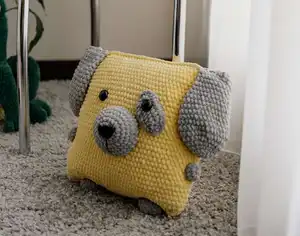
Suitable for crocheters familiar with single crochet, increases and invisible decreases, this pattern is great for gifting and home decor. Materials list and tool suggestions are included, along with tips for stuffing and attaching features securely.
Why You'll Love This Pillow-dog Amigurumi Pattern
I absolutely love this pattern because it turns simple stitches into a playful, tactile pillow that both kids and adults adore. I enjoy how the plush yarn gives a luxurious, soft finish without complicated techniques, making the finished pillow look professionally made. Sewing the facial features and tiny legs is such a satisfying finishing step that brings the dog to life. I love gifting this pillow because it feels personal and handmade, and it always brings a smile to the recipient's face.
Switch Things Up
I love customizing this pillow-dog by changing colors; swap the yellow and gray for pastel tones to make a nursery-friendly version.
I often change yarn weight and hook size to adjust the finished size — use a thicker yarn for a chunky pillow or a thinner yarn for a mini version.
I sometimes replace bead eyes with embroidered eyes for a child-safe option; black acrylic yarn works well to embroider expressive eyes and a mouth.
I add tiny accessories like a crocheted bow or a scarf around the neck to personalize each pillow for gifting.
To make the pillow more durable, I sew internal seams twice where legs and arms attach so they withstand more handling and play.
I experiment with different stuffing levels to change the pillow’s softness — less stuffing for a slouchy pillow, more for a plumper look.
I like to embroider freckles or eyebrows near the eyes to alter the dog’s expression and personality.
Try adding a zipper to one side if you want a removable cover for washing; leave an opening when sewing the top and insert a zipper before finishing.
For a posable version, I insert wire into the arms before closing, which allows gentle posing of the ears or limbs.
If I want a matching set, I make smaller or larger versions by scaling the starting chain and number of rounds and keep the same attachment placement ratios.
Common Mistakes & How to Fix Them
✗ Not fixing the beginning of each new circular piece can make your rounds twist or shift; secure the starting point with a pin or a small thread loop to maintain consistent shape.
✗ Understuffing the pillow causes a floppy, uneven shape while overstuffing creates visible lumps; stuff gradually and evenly, checking the shape frequently to achieve a smooth finish.
✗ Placing eyes without checking round placement can make the face look unbalanced; mark and count rounds exactly (eyes on round 24, distance 13 sc between eyes) before attaching.
✗ Sewing features without leaving a long thread will make future adjustments difficult; always leave long tails for sewing and hiding ends for a clean finish.
✗ Skipping stitch counting during decreases leads to incorrect stitch counts and mismatched halves; count after each round and use markers at key points when shaping.
✗ Pulling stitches too tight when sewing parts on can pucker the pillow surface; use gentle tension and pin parts in position before securing to maintain smooth seams.