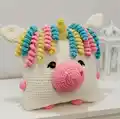
About This Pillow-unicorn Amigurumi Pattern
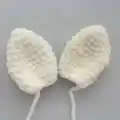
This pattern creates a soft, square unicorn pillow with a curly mane, horn, ears, nose, nostrils, legs and arms using plush baby yarn. It combines basic amigurumi construction with simple textured mane chains to add playful detail. The pattern uses rounds and small motifs which are sewn onto the pillow for a polished finish.
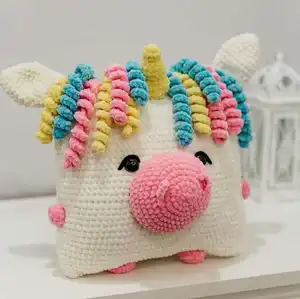
Clear round-by-round instructions and assembly photos help you place each detail accurately. Finished size depends on yarn and hook, and the pattern is adaptable for different yarn weights.
Why You'll Love This Pillow-unicorn Amigurumi Pattern
I absolutely love this pattern because it transforms simple stitches into a whimsical, huggable pillow that delights both kids and adults. I enjoyed designing the curly mane — those textured spiral chains add so much personality. The pattern uses familiar amigurumi techniques, but the assembly brings everything together into a charming finished piece. I find it satisfying to see small motifs like the nose and ears turn into a character when sewn in place.
Switch Things Up
I love changing up the mane colors to create different personalities; try pastel shades for a soft nursery-friendly look or bright neons for a playful pop.
You can make the pillow larger or smaller by swapping yarn weight and hook size; bulky yarn with a bigger hook creates a giant cuddly version while thinner yarn makes a smaller keepsake.
I sometimes replace the bead eyes with safety eyes or embroider larger expressions using black yarn to change the character's mood.
If you want a flatter pillow, use less stuffing and press corners gently while sewing; for a firmer cushion, add more hollofayber and firm stuffing.
Try making a set in coordinated colors for a themed nursery — matching blanket, toy and pillow make a sweet gift set.
I often add tiny felt accents or appliques to the pillow surface for seasonal looks like hearts, stars or initials.
To make the mane more textured, vary chain lengths or add extra spirals and cluster them closer together for a fuller effect.
Consider adding a zipper or opening row if you want the pillow to have a removable cover for washing; adapt the edge joining accordingly.
I sometimes add a small ribbon loop at one corner to hang the pillow as wall decor or to attach a name tag for gifts.
For a child-safe version, embroider eyes and features instead of using beads or buttons, and make sure all ends are securely woven inside.
Common Mistakes & How to Fix Them
✗ Skipping to sew the pillow top securely can cause stuffing to escape; leave a long thread, sew the top firmly and weave in the ends inside the pillow.
✗ Failing to fix the beginning of each round will cause misaligned stitches; always secure the start of each new circle with a pin or thread as instructed.
✗ Not stuffing evenly makes corners and angles look flat or lumpy; fill tightly and evenly and shape the angles of the pillow before closing.
✗ Placing features without measuring distances results in uneven face placement; follow the rounds guidance (for example eyes between rounds 21 and 22, 12 sc apart) and pin parts before sewing.
✗ Using inconsistent tension changes finished size and stitch count; maintain steady tension and check your stitch counts after each round to match the pattern.