🧢 Beautiful ✨ Detailed πŸ’ Adorable

Sage Advice Square Pattern

Sage Advice Square Pattern
4.2β˜… Rating
5-7 Hours Time Needed
4.2K Made This
βœ‚οΈ

Intermediate Level

Ideal for those with basic crochet experience, featuring slightly more advanced stitches and techniques to expand your skills.

⏱️

Weekend Treat

Takes 5-7 hours, making it an enjoyable project to finish over a couple of days.

🏑

Cozy Accent

A warm touch for your space that transforms ordinary corners into inviting nooks filled with handmade charm.

About This Sage Advice Square Pattern

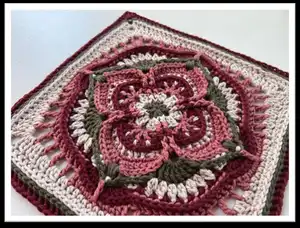
This pattern creates the Sage Advice Square β€” a decorative crochet square featuring layered petals, front and back post stitches, clusters and puff details. It uses worsted-weight cotton yarns and produces a textured, dimensional motif perfect for blankets or cushions. The instructions include colorway notes and blocking guidance to help you achieve a professional finish.

Sage Advice Square Pattern crochet pattern - detailed view of completed project

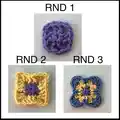
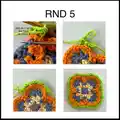
Round-by-round instructions are included with stitch definitions and photographs to guide you through each step. Suitable for intermediate crocheters comfortable with post stitches and cluster techniques.

Why You'll Love This Sage Advice Square Pattern

I absolutely love this pattern because it combines floral shaping with textured stitches for a timeless, tactile look. The layered petals and post-stitch details give the square real depth and personality that I find irresistible. I enjoy how flexible the design is β€” you can change colors to create a completely different mood. Working this square is relaxing yet engaging, with satisfying progress each round.

Sage Advice Square Pattern step 1 - construction progress Sage Advice Square Pattern step 2 - assembly progress Sage Advice Square Pattern step 3 - details and accessories Sage Advice Square Pattern step 4 - final assembly and finishing

Switch Things Up

I love how easily this square can be customized by changing colors β€” try a monochrome palette for a subtle look or high-contrast colors for a bold statement.

I often switch yarn weights and adjust hook sizes to create smaller or larger versions; using a DK weight will give a smaller, delicate square and bulky yarn produces a chunky effect.

I like to experiment with the 3LP round by using BLO or BLP instead for a slightly different texture when I cannot work comfortably into the 3rd loop.

Try adding an extra round of surface crochet or embroidery to the petals to create floral veins or tiny details for personality.

If making a blanket, mix this square with simpler solid granny-style squares to let the textured squares shine without overpowering the design.

I sometimes add a decorative picot or scallop edging instead of the final round to soften the silhouette of the square.

For cushions, I make a matching plain square as the backing and add a zipper or envelope closure for easy washing and durability.

I also enjoy combining different fiber blends β€” try linen/cotton for a crisp finish or a soft bamboo for a drapey, lustrous look.

Swap the EXT-puff for simpler puff or bobble stitches if you want a faster, less dense texture that still reads as dimensional.

Finally, I occasionally add tiny crocheted appliques or beads to the center for a unique focal point β€” just be mindful if the piece is for a child and avoid small attachments that could be a choking hazard.

Common Mistakes & How to Fix Them

βœ— Skipping the standing stitch and invisible join guidance can create an uneven start to rounds; follow the pattern notes and use the recommended slst or invisible join method to maintain neat edges. βœ— Not checking your stitch counts after repeats leads to uneven sides and mismatched corners; count stitches at the end of each round and compare to the stated totals to correct mistakes early. βœ— Using inconsistent tension when working 3rd-loop (3LP) stitches can make the 3LP rounds bulge or sink; try going up a hook size for the 3LP round as suggested and keep tension steady. βœ— Forgetting to fasten off and weave ends neatly can make the back of the square bulky; fasten off as directed and weave in ends on the backside close to your stitches for a clean finish.

Sage Advice Square Pattern

Make a beautiful, layered crochet square with textured petals, puff stitches and elegant post stitches. This pattern guides you through each round with clear, step-by-step instructions and helpful tips so you can recreate the pictured colorways. Perfect for adding to a blanket, cushion or using as a standalone decorative square.

Intermediate 5-7 Hours

Materials Needed for Sage Advice Square Pattern

β€” Main Fabric

  • 01
    I Love This Cotton (Worsted Weight), 100% cotton (used for Colorway 1 A Parchment, B Sage, C Coral)
  • 02
    Yarn Bee ~ Pima Suprema Yarn (Worsted Weight), 100% cotton (used for Colorway 2 B Bone, D Merlot)
  • 03
    Yarn Bee ~ Cotton Et Lin (Worsted Weight), 80% cotton, 20% linen (used for Colorway 2 C Mauve)
  • 04
    Hook/Finished and blocked: 4.5 mm (yields approx 11" x 11"), 5 mm (yields approx 12" x 12")

β€” Tools Required

  • 01
    Crochet hook size 4.5 mm (recommended for most rounds)
  • 02
    Crochet hook size 5.0 mm (recommended for alternate finished size and for one round if suggested)
  • 03
    Stitch markers
  • 04
    Yarn darning/tapestry needle for weaving in ends
  • 05
    Scissors
  • 06
    Blocking tools (pins, blocking board)
  • 07
    Spray bottle for wet blocking or iron/steamer for steam blocking (use caution with acrylic yarn)

Progress Tracker

0% Complete

β€” Main Square :

Round 1 :

In a double magic circle, ch 3 as a dc, dc; [ch 2, 2 dc] 3 times, ch 2; Join: slst to 3rd starting ch OR invisible join to 1st true dc of rnd, fasten off. Counts: 8 dc, 4 ch-2 corner sp (8 total)

Info :

Before starting, read the information about slst join and starting the next rnd. See stitch definitions for standing stitch and invisible join instructions.

Round 2 :

Start in any ch-2 corner sp OR slst into next dc and ch-2 corner sp, then ch 3 (as 1st dc of rnd), *(2 dc, ch 2 as a corner, 2 dc) in ch-2 sp; FPdc around each of the next 2 dc*; REPEAT FROM * TO * 3 MORE TIMES; Join: slst to 3rd starting ch OR invisible join to 2nd dc of rnd, fasten off. Counts: 16 dc, 8 FPdc, 4 ch-2 corner sp (24 total)

Round 3 :

Start in any ch-2 corner sp OR slst to corner, ch 3 (as 1st dc of rnd), *[(dc, ch 1) 5 times] in ch-2 corner sp; sk 2 dc; FPdc around 2 FPdc; ch 1, sk 2 dc*; REPEAT FROM * TO * 3 MORE TIMES; Join: invisible join to 1st ch of rnd, fasten off. Counts: 20 dc, 8 FPdc, 24 ch-1 sp (52 total)

Round 4 :

Start around 1st FPdc of 2 FPdc, *FPdc around each of the next 2 FPdc; sk ch-1 sp AND dc; (3 dc) in ch-1 sp; [ch 1, sk dc; (2 dc) in ch-1 sp] 2 times; ch 1, sk dc; (3 dc) in ch-1 sp; sk dc AND ch-1 sp*; REPEAT FROM * TO * 3 MORE TIMES; Join: slst to 1st FPdc of rnd OR invisible join to 2nd FPdc of rnd, fasten off. Counts: 40 dc, 8 FPdc, 12 ch-1 sp (60 total)

Round 5 :

Start in 1st dc after any 2 FPdc OR slst into next FPdc and dc, then ch 2 (as 1st hdc of rnd), *hdc in 3LP of 3 dc; fold ch-1 sp to the front, [2tr-cluster in dc of rnd 3, sk ch-1 sp; hdc in 3LP of 2 dc of rnd 4] 2 times; 2tr-cluster in dc of rnd 3, sk ch-1 sp; hdc in 3LP of 3 dc of rnd 4; ch 1, sk 2 FPdc*; REPEAT FROM * TO * 3 MORE TIMES; Join: slst to 2nd starting ch OR invisible join to 2nd hdc of rnd, fasten off. Counts: 40 hdc, 12 2tr-cluster, 4 ch-1 sp (56 total)

Round 6 :

Start in 3rd hdc after ch-1 sp OR slst into next 2 hdc, then ch 1 and sc in same hdc, *sc in hdc; [(2 sc) in 2tr-cluster; sc in 2 hdc] 2 times; (2 sc) in 2tr-cluster; sc in 3 hdc; FPdc around 2 FPdc of rnd 4; sk ch-1 sp, sc in 2 hdc*; REPEAT FROM * TO * 3 MORE TIMES; Join: slst to 1st sc of rnd OR invisible join to 2nd sc of rnd, fasten off. Counts: 64 sc, 8 FPdc (72 total)

Round 7 :

Start in 3rd sc after any 2 FPdc OR ch 3 as a dc, *dc in 5 sc; (2 dc) in sc, ch 2; (2 dc) in sc; dc in 6 sc; sk sc; FPdc around FPdc, ch 2 as a corner, FPdc around FPdc; sk sc, dc in sc*; REPEAT FROM * TO * 3 MORE TIMES; Join: invisible join to 2nd dc of rnd, fasten off. Counts: 64 dc, 8 FPdc, 4 ch-2 sp, 4 ch-2 corner sp (80 total/20 per side)

Round 8 :

Start in any ch-2 corner sp, *(7 tr) in ch-2 corner sp; sk FPdc AND 2 dc; hdc in 3LP of 6 dc; ch 1, EXT-puff in ch-2 sp, ch 1; hdc in 3LP of 6 dc; sk 2 dc AND FPdc*; REPEAT FROM * TO * 3 MORE TIMES; Join: slst to 1st tr of rnd OR invisible join to 2nd tr of rnd, fasten off. Counts: 48 hdc, 28 tr, 4 EXT-puff, 8 ch-1 sp (88 total/22 per side)

Round 9 :

Start in 1st tr of any (7 tr) group OR ch 2 (as starting of 1st 2dc-cluster of rnd), *[2dc-cluster in tr, ch 1] 7 times; sk 2 hdc, BPhdc around 3 hdc; ch 2, sk hdc AND ch 1 sp; BPhdc around EXT-puff; ch 2, sk ch-1 sp AND hdc; BPhdc around 3 hdc; ch 1, sk 2 hdc*; REPEAT FROM * TO * 3 MORE TIMES; Join: invisible join to 1st ch of rnd, fasten off. Counts: 28 BPhdc, 28 2dc-cluster, 32 ch-1 sp, 8 ch-2 sp (104 total/26 per side)

Round 10 :

Start in ch-2 sp after BPhdc around EXT-puff, *(6 dc) in ch-2 sp; sk 3 BPhdc, (2 dc) in ch-1 sp; [sk 2dc-cluster, (2 dc) in ch-1 sp] 6 times; sk 2dc-cluster, (2 dc) in ch-1 sp; sk 3 BPhdc, (6 dc) in ch-2 sp, sk BPhdc*; REPEAT FROM * TO * 3 MORE TIMES; Join: invisible join to 2nd dc of rnd, fasten off. Counts: 112 dc (112 total/28 per side)

Round 11 :

Start around 1st dc after any 2nd set of (6 dc) group, *BPdc around 16 dc; sk dc, sc in 3LP of 10 dc, sk dc*; REPEAT FROM * TO * 3 MORE TIMES; Join: invisible join to 2nd BPdc of rnd, fasten off. Counts: 40 sc, 64 BPdc (104 total/26 per side)

Info :

Do not skip the special note for rnd 12; read the instructions about not skipping sc in rnd 12 and the 3LP technique before starting rnd 12.

Round 12 :

Note: do not sk any sc in this rnd. Start in 1st sc of any group of 10 sc, *dc in sc; hdc in sc; sc in 3 sc; tr in EXT-puff of rnd 8, sc in 3 sc; hdc in sc; dc in sc; ch 1, sk BPdc, dc in BPdc; [ch 1, sk BPdc, tr in BPdc] 3 times; ch 2 as a corner; [tr in BPdc, ch 1, sk BPdc] 3 times; dc in BPdc, ch 1, sk BPdc*; REPEAT FROM * TO * 3 MORE TIMES; Join: invisible join to 1st hdc of rnd, fasten off. Counts: 24 sc, 8 hdc, 16 dc, 28 tr, 32 ch-1 sp, 4 ch-2 corner sp (108 total/27 per side)

Round 13 :

Start in any ch-2 corner sp, *(2tr-cluster, tr, ch 2, tr, 2tr-cluster) in ch-2 corner sp; sk tr, (tr, 2tr-cluster) in ch-1 sp; [sk tr, (dc, 2dc-cluster) in ch-1 sp] 2 times; sk dc, (2 hdc) in ch-1 sp; sk dc, hdc in hdc AND sc; sc in 2 sc, tr AND next 2 sc; hdc in sc AND hdc; sk dc, (2 hdc) in ch-1 sp, sk dc; [(2dc-cluster, dc) in ch-1 sp, sk tr] 2 times; (2tr-cluster, tr) in ch-1 sp, sk tr*; REPEAT FROM * TO * 3 MORE TIMES; Join: slst to 1st 2tr-cluster of rnd OR invisible join to 1st tr of rnd, fasten off. Counts: 20 sc, 32 hdc, 16 dc, 16 2dc-cluster, 16 tr, 16 2tr-cluster, 4 ch-2 corner sp (116 total/29 per side)

Round 14 :

Start in ch-2 corner sp OR slst into next tr and ch-2 corner sp, then ch 3 (as 1st dc of rnd), *(2 dc, ch 2, 2 dc) in ch-2 corner sp; dc in 8 sts; hdc in 13 sts; dc in 8 sts*; REPEAT FROM * TO * 3 MORE TIMES; Join: slst to 1st dc of rnd OR invisible join to 2nd dc of rnd, fasten off. Counts: 52 hdc, 80 dc, 4 ch-2 corner sp (132 total/33 per side)

Round 15 :

Note: I suggest going up a hook size for this rnd only so the 3LP of scs are a little larger for dc in 3LP in rnd 16. Start in ch-2 corner sp OR slst into next dc and ch-2 corner sc, then ch 1 and sc in ch-2 corner sp, *(sc, ch 2, sc) in ch-2 corner sp; sc in 3LP of 33 sts*; REPEAT FROM * TO * 3 MORE TIMES; Join: slst to 1st sc of rnd OR invisible join to 1st ch of rnd, fasten off. Counts: 140 sc, 4 ch-2 corner sp (140 total/35 per side)

Round 16 :

Note: If you went up a hook size in last rnd, be sure to go back down a hook size. Start in ch-2 corner sp OR slst into ch-2 corner sp, then ch 3 (as 1st dc of rnd), *(2 dc, ch 2, 2 dc) in ch-2 corner sp; dc in 3LP of 35 sc*; For those unable to work the 3LP dc into the sc, a BLdc would achieve a similar look. REPEAT FROM * TO * 3 MORE TIMES; Join: invisible join to 2nd dc of rnd, fasten off. Counts: 156 dc, 4 ch-2 corner sp (156 total/39 per side)

Assembly Instructions

  • Block the finished square to the recommended finished and blocked measurements using wet block or steam block, being careful when steam blocking acrylic yarn.
  • Fasten off and weave in all ends on the back of the square using a yarn darning needle, trimming any excess yarn close to the woven ends.
  • If joining multiple squares, pin squares together and align corners and motifs before sewing; use a mattress stitch or whipstitch for a neat join.
  • For a cushion or pillow, make two matching squares, block them flat, place right sides together, and whipstitch around leaving an opening for stuffing before closing.
  • Use stitch markers to mark corners and key motifs during assembly to ensure consistent alignment when attaching borders or joining squares.

Important Notes

  • πŸ’‘All rounds begin with a standing stitch and end with an invisible join unless another option is availableβ€”follow the special instructions carefully.
  • πŸ’‘Use the suggested hook sizes and consider going up one hook size for Round 15 if you plan to work dc into the 3rd loop to avoid tight stitches.
  • πŸ’‘Block your square to open up stitches and obtain the final shape and size; wet block or steam block as appropriate for your yarn fiber.

This Sage Advice Square was designed to combine floral textures and structural stitches for a show-stopping square you will love to make. It layers petals, posts and clusters into a dimensional motif that works beautifully in blankets and cushions. Try it in your favorite palette and celebrate the handmade charm! 🧢✨

You ask,

we answer.

FAQs

What size will the finished piece be?

The finished square measures approximately 11" x 11" when using a 4.5 mm hook (blocked) and about 12" x 12" when using a 5 mm hook (blocked).

Can I use different yarn weights for this pattern?

Yes, you can use different yarn weights, but this will affect the final size and stitch definition; adjust your hook size accordingly and swatch before starting.

Do I need prior crochet experience for this pattern?

This pattern is rated intermediate, so basic knowledge of stitches like FPdc, BPdc, clusters and how to work into the 3rd loop is recommended for best results.

How long does this project typically take to complete?

Most crocheters complete this square in 5-7 hours, though time may vary based on experience level, yarn choice and working pace.