About This The Magic of Autumn Pine Cone Amigurumi Pattern
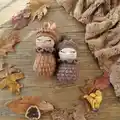
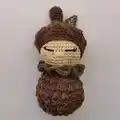
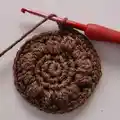
This pattern teaches you how to crochet a whimsical pine cone amigurumi complete with hat, collar and leaf details. It includes round-by-round instructions, a step-by-step bobble stitch tutorial and assembly photos to guide you. The finished toy measures about 14 cm and is worked mostly in continuous rounds for smooth shaping.
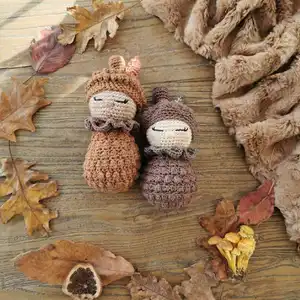
You will learn textured bobble stitch techniques and simple embroidery for facial features. The pattern uses Scheepjes Catona and recommends a 2.5 mm hook for a neat finish.
Why You'll Love This The Magic of Autumn Pine Cone Amigurumi Pattern
I absolutely love this pattern because it captures a tiny bit of autumn magic in a small, huggable toy. I enjoyed designing the bumpy pine cone texture using the bobble stitch and watching the character come to life with a tiny hat and leaf. I love that it is small enough to finish in a weekend but rich with simple techniques that teach texture and shaping. I hope it inspires you to make a whole forest of tiny companions for gifts and decor.
Switch Things Up
I love how easy it is to customize this pattern by changing colors; try soft pastels for a springtime version or deep greens for a forest palette.
You can make a mini keychain version by using finer yarn and a smaller hook, then attaching a keyring before stuffing fully.
If you want a chunkier, cuddlier pine cone, swap to a bulky yarn and a larger hook to increase size quickly.
Try different bobble stitch heights: repeating the bobble sequence more times will create a puffier, more pronounced scale effect.
I often add tiny felt accessories like a scarf or mini acorn to make a whole set of seasonal characters for gifting.
For a more realistic leaf, embroider veins with metallic or golden thread as shown, or use contrasting greens for a bicolored leaf.
I sometimes embroider different facial expressions — a smile, sleepy eyes, or curious eyebrows — to give each pine cone its own personality.
Consider making a family set with varying sizes and colors and display them in a bowl or garland for handmade seasonal decor.
If making for children, secure all embroidered parts firmly and avoid small parts; you can reinforce attachments with extra stitches inside the piece.
I also like to experiment with yarn textures: cotton gives a neat finish while wool adds softness and slight fuzz for a cozy look.
Common Mistakes & How to Fix Them
✗ Skipping the stitch marker and losing the round start leads to miscounted stitches; use a marker at the beginning of every round to keep accurate counts.
✗ Overstuffing the head and body creates bulges and distorts the texture; stuff gradually and evenly, checking shape frequently to maintain a smooth finish.
✗ Tightening your tension too much while making bobble stitches will make them stiff and uneven; relax your tension and practice bobbles on a sample before working on the body.
✗ Forgetting to leave a long sewing tail when fastening off will make attachment difficult; always leave enough yarn for sewing and hide ends after assembly.
✗ Joining rounds with a slip stitch when the pattern says continuous rounds will create visible seams; work in continuous rounds and use a marker to track the first stitch.
✗ Not embroidering the facial placement before sewing head and body together may result in misaligned features; embroider eyes and nose with reference to the indicated rounds before final attachment.