🧢 Beautiful ✨ Detailed πŸ’ Adorable

Duck No Sew Amigurumi Pattern

Duck No Sew Amigurumi Pattern
4.1β˜… Rating
2-3 Hours Time Needed
2.1K Made This
βœ‚οΈ

Intermediate Level

Ideal for those with basic crochet experience, featuring slightly more advanced stitches and techniques to expand your skills.

⏱️

Bite-Sized Project

Finishes in 2-4 hoursβ€”perfect for an afternoon of creative relaxation.

🧸

Cute Companion

An adorable friend to cherish, handcrafted with love to bring comfort and joy for years to come.

About This Duck No Sew Amigurumi Pattern

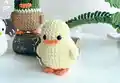
This pattern teaches you how to crochet a charming no-sew duck amigurumi worked from the body up to the head. It includes a simple base that you can make in plain yellow, a mallard color variation, or adapt to a rooster design. The pattern uses super bulky (Category 6) yarn and a 3.5mm hook for a plush textured finish. Photos and step-by-step rounds make it easy to follow along.
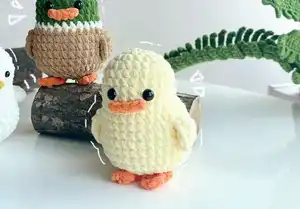
Duck No Sew Amigurumi Pattern crochet pattern - detailed view of completed project

Perfect for making quick handmade gifts or building your amigurumi skills with minimal finishing. Includes instructions for legs, wings, beak (speculum), and small details.

Why You'll Love This Duck No Sew Amigurumi Pattern

I absolutely love this pattern because it combines fast, satisfying crochet with charming results that feel handmade and heartwarming. I enjoy how the no-sew construction makes assembly easier and keeps the finished toy neat and durable. The design is versatile β€” you can make a simple yellow chick, a colorful mallard, or a little rooster using the same shaping. I also appreciate that the pattern highlights small techniques like creating feet and the speculum which really bring personality to the piece. It always makes me smile to see someone finish one in just a few hours and fall in love with their little creation.

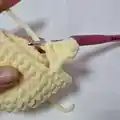
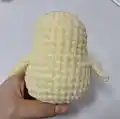
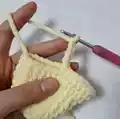
Duck No Sew Amigurumi Pattern step 1 - construction progress Duck No Sew Amigurumi Pattern step 2 - assembly progress Duck No Sew Amigurumi Pattern step 3 - details and accessories Duck No Sew Amigurumi Pattern step 4 - final assembly and finishing

Switch Things Up

I love how easy it is to customize this pattern by changing colors β€” try pastel shades for a softer chick or bright seasonal colors for festive versions.

If you want a larger or smaller duck, change your yarn weight and hook size; bulky yarn with a larger hook gives a chunky toy while lighter yarn and smaller hook create a mini version.

I often swap safety eyes for embroidered eyes to make the toy baby-safe or change the eye size to give different expressions.

You can make the mallard variation by following the color-change notes, or invent your own color blocking to make a family of ducks with unique personalities.

Try adding tiny crocheted accessories like a scarf, hat, or bow by working a few extra chains and single crochet rows to personalize each duck.

For a poseable option, consider inserting lightweight wire into the limbs before stuffing so you can bend feet and wings into different positions.

I sometimes add felt details like small embroidered beaks or cheeks glued with hot glue for extra texture and safety for young children.

To make a set, vary the eye placement and beak size slightly β€” moving eyes up or down a row or changing the speculum width changes the expression dramatically.

If youre making many at once, try using a small assembly line approach: crochet all bodies first, then all legs, then all beaks to speed up production and keep consistent results.

Dont be afraid to experiment with stitch tension and stuffing density β€” a firmer stuffing gives structure while softer stuffing yields a cuddlier feel, and both are lovely depending on the intended use.

Common Mistakes & How to Fix Them

βœ— Skipping the stitch marker at the start of rounds causes you to lose track of the beginning; place a marker at the first stitch and move it each round to remain accurate. βœ— Forgetting to stuff gradually leads to lumps and uneven shaping; add stuffing little by little while shaping to maintain a smooth, rounded body. βœ— Cutting the yarn too early when making legs or feet prevents seamless joining; keep the yarn when instructed and use slip stitches to join pieces to the body as directed. βœ— Misplacing the eyes will change the character of the face and proportions; count stitches carefully and place the safety eyes between the recommended rounds and stitch separation. βœ— Working with inconsistent tension causes uneven round sizes and mismatched stitch counts; maintain a steady, comfortable tension throughout the project. βœ— Ignoring color-change notes can produce messy joins or incorrect stripes; follow the color change instructions exactly and weave in ends as recommended to keep edges tidy.
Duck No Sew Amigurumi Pattern

Create an adorable no-sew duck amigurumi using super bulky yarn β€” perfect for gifts or to brighten your home. This pattern guides you step-by-step from the body up to the head so you can crochet without sewing pieces together. Youll learn simple shaping, color changes for a mallard version, and small details like feet and beak. Clear rounds and helpful tips make this pattern accessible and fun.

Intermediate 2-3 Hours

Materials Needed for Duck No Sew Amigurumi Pattern

β€” Main Fabric

  • 01
    Super Bulky yarn (Category 6) - main color Yellow for chick (approx 50-100g)
  • 02
    Super Bulky yarn (Category 6) - accent Orange for beak and feet (approx 15-30g)
  • 03
    Super Bulky yarn (Category 6) - Green, White and Brown for Mallard colorway (Green main approx 50-100g, Brown and White small amounts 15-30g each)
  • 04
    Super Bulky yarn (Category 6) - White, Red and Yellow for Rooster (White main approx 50-100g, Red and Yellow small amounts 10-30g)

β€” Tools Required

  • 01
    Crochet hook size 3.5mm (E)
  • 02
    Stitch marker
  • 03
    Sewing needle / yarn needle for weaving ends
  • 04
    Scissors
  • 05
    Plastic safety eyes 8mm (for duck/chick/mallard)
  • 06
    Plastic safety eyes 6mm (used in rooster pattern pages)
  • 07
    Hot gun glue
  • 08
    Fiberfill stuffing
  • 09
    Pins for assembly (optional)

Progress Tracker

0% Complete

β€” Body (Yellow) :

Round 1 :

6 SC in an MR (6)

Round 2 :

6 INC (12)

Round 3 :

(SC, INC) 6 times (18)

Round 4 :

(2 SC, INC) 6 times (24)

Round 5-8 :

24 SC (24)

Round 9 :

5 INC, 14 SC, 5 INC (34)

Round 10 :

9 SC, (5 Ch, turn: SC, HDC, 2 DC), Sk 2, 12 SC, (5 Ch, turn: SC, HDC, 2 DC), Sk 2, 9 SC (34)

Round 11 :

9 SC, 2 SC (Crochet into the two skip stitches in R10), 12 SC, 2 SC (Crochet into the two skip stitches in R10), 9 SC (34)

Round 12-16 :

34 SC (34)

Round 17 :

17 DEC (17)

Info :

*Stuffing*

Round 18 :

(SC, DEC) 5 times, 2 SC (12)

Round 19 :

6 DEC (6)

Info :

Weave in the yarn end and cut

β€” Legs (Make 2) :

Round 1 :

Make 3 CH. Start in the second stitch from the hook: 2 SC (2)

Round 2-3 :

2 SC (2)

Info :

Keep the yarn without cutting it. Crochet 2 Slip stitches into the body at the position of the feet. Attach eyes on rows 7 and 8, spaced 4 stitches apart

β€” Speculum :

Round 1 :

4 Slip stitch into the 4 stitches between rows 8 and 9 (the 4 stitches between the eyes), turn.

Round 2 :

Ch, 4 SC

Info :

Cut the yarn

β€” Mallard Body (Green -> White -> Brown) :

Info :

Use Green yarn

Round 1 :

6 SC in an MR (6)

Round 2 :

6 INC (12)

Round 3 :

(SC, INC) 6 times (18)

Round 4 :

(2 SC, INC) 6 times (24)

Round 5-8 :

24 SC (24)

Info :

Change to White yarn

Round 9 :

5 INC, 14 SC, 5 INC (34)

Info :

Change to Brown yarn

Round 10 :

9 SC, (5 Ch, turn: SC, HDC, 2 DC), Sk 2, 12 SC, (5 Ch, turn: SC, HDC, 2 DC), Sk 2, 9 SC (34)

Round 11 :

9 SC, 2 SC (Crochet into the two skip stitches in R10), 12 SC, 2 SC (Crochet into the two skip stitches in R10), 9 SC (34)

Round 12-16 :

34 SC (34)

Round 17 :

17 DEC (17)

Info :

*Stuffing*

Round 18 :

(SC, DEC) 5 times, 2 SC (12)

Round 19 :

6 DEC (6)

Info :

Weave in the yarn end and cut

β€” Legs (Mallard - Make 2) :

Round 1 :

Make 3 CH. Start in the second stitch from the hook: 2 SC (2)

Round 2-3 :

2 SC (2)

Info :

Keep the yarn without cutting it. Crochet 2 Slip stitches into the body at the position of the feet. Attach eyes on rows 7 and 8, spaced 4 stitches apart

β€” Speculum (Mallard) :

Round 1 :

4 Slip stitch into the 4 stitches between rows 8 and 9 (the 4 stitches between the eyes), turn.

Round 2 :

Ch, 4 SC

Info :

Cut the yarn

β€” Wings (Rooster/White) :

Info :

WINGS: MAKE 2. Use white yarn.

Round 1 :

Make 4 chains, start with the second chain from the hook: INC, SC, 4SC in the last stitch, SC, INC, 2CH, Picot, CH, SLST in the first stitch

Info :

Weave in the yarn end and cut

β€” Body (Rooster - White) :

Info :

Use white yarn. Youll switch to black yarn the text is in bold and underlined (pattern note).

Round 1 :

6 SC in an MR (6)

Round 2 :

6 INC (12)

Round 3 :

(SC, INC) 6 times (18)

Round 4 :

(2 SC, INC) 6 times (24)

Round 5 :

(3 SC, INC) 6 times (30)

Round 6 :

(4 SC, INC) 6 times (36)

Round 7-8 :

36 SC (36)

Round 9 :

7SC, 4SC with the 1st arm, 14SC, 4SC with the 2nd arm, 7SC (36)

Round 10-11 :

36SC (36)

Info :

Make 6CH, SLST in the first st, repeat 3 times, crochet with 2 pieces together with 10SLST

Info :

*Stuffing*

Round 12 :

CH, 16SC (16)

Round 13 :

(3SC, INC) 4 times (20)

Round 14-15 :

20SC (20)

Round 16 :

(2 SC, DEC) 5 times (15)

Round 17 :

(SC, DEC) 5 times (10)

Info :

*Stuffing*

Round 18 :

DEC 5 times (5)

Info :

Weave in the yarn end and cut

β€” Comb :

Info :

Use red yarn. Crochet crest from R17 to R18. The starting point is straight from the tail going up: (3CH, DC in the same st, SLST in the next stitch) 3 times

Info :

Cut the yarn. Make the mouth with yellow yarn, 3 lines like this at R13. Attach the eyes between R14-R15, apart 3 stitches.

Assembly Instructions

  • Keep the leg yarn tails and slip stitch the two orange feet into the body at the designated feet positions rather than sewing; secure and weave in the ends.
  • Attach safety eyes between the specified rounds: for chick and mallard attach eyes between rows 7 and 8 spaced 4 stitches apart; for rooster attach eyes between R14-R15 spaced 3 stitches apart.
  • Make the speculum (beak) by slip stitching into the 4 stitches between the eyes (rows 8 and 9), then crochet 4 SC and sew or glue into place, cutting yarn and weaving ends.
  • Create and attach wings by making two wing pieces (4-chain starting piece) and weaving ends; position wings symmetrically on either side of the body around the indicated rounds.
  • Add the comb to the rooster by crocheting the red crest from R17 to R18 and sewing or slip stitching into place; make the mouth with yellow yarn across R13 as indicated.

Important Notes

  • πŸ’‘Use a stitch marker at the beginning of each round to keep track of rounds and ensure correct stitch counts.
  • πŸ’‘Stuff gradually and firmly as you shape the body and head to avoid lumps and to maintain the intended silhouette.
  • πŸ’‘Keep yarn tails when instructed for legs and feet so you can slip stitch pieces into place without sewing seams.
  • πŸ’‘Weave in yarn ends and cut as directed to keep the finished surface neat and prevent unraveling.

Congratulations β€” your little duck is complete and ready to cuddle or display! This pattern offers quick, no-sew construction with charming details for a handmade gift or playful decor. Try the yellow chick, a mallard colorway, or the rooster variation for seasonal or themed collections. 🧢πŸ₯✨

You ask,

we answer.

FAQs

What size will the finished piece be?

The finished amigurumi measures approximately 10-12 cm tall when using super bulky Category 6 yarn and a 3.5mm hook; results vary slightly with tension and stuffing.

Can I use different yarn weights for this pattern?

Yes, you can use different yarn weights, but this will affect the final size; choose an appropriate hook for your yarn and expect the piece to be larger with bulkier yarn or smaller with lighter yarn.

Do I need prior crochet experience for this pattern?

This pattern is rated intermediate and assumes familiarity with basic amigurumi techniques such as magic ring, SC, INC, DEC and working in rounds.

How long does this project typically take to complete?

Most crocheters complete the basic duck in 2-3 hours, though time may vary based on experience, color changes, and how many details you add.

Are there assembly steps or sewing required?

The pattern is designed as a no-sew construction; many parts are joined with slip stitches or worked in without sewing, though you may use a yarn needle for finishing and weaving ends.