🧢 Beautiful ✨ Detailed πŸ’ Adorable

Infinity Cube Amigurumi Pattern

Infinity Cube Amigurumi Pattern
4.8β˜… Rating
5-7 Hours Time Needed
2.8K Made This
βœ‚οΈ

Intermediate Level

Iο»Ώdeal for those with basic crochet experience, featuring slightly more advanced stitches and techniques to expand your skills.

⏱️

Weekend Treat

Takes 5-7 hours, making it an enjoyable project to finish over a couple of days.

🧸

Cute Companion

An adorable friend to cherish, handcrafted with love to bring comfort and joy for years to come.

About This Infinity Cube Amigurumi Pattern

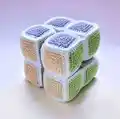
This pattern teaches you to crochet an Infinity Cube β€” a soft, twistable fidget toy made from small crocheted cubes. You will make 48 squares in six colors, assemble them into 8 cubes, then join the cubes into two parts and sew them together for the final toy. The pattern uses US terms and clear instructions for sewing and finishing so you can create a neat, functional cube.
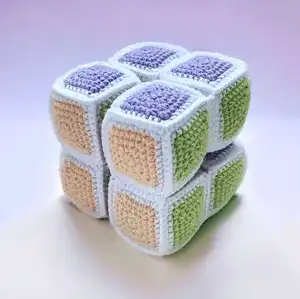
Infinity Cube Amigurumi Pattern crochet pattern - detailed view of completed project

Suitable for crocheters who know basic stitches, this design emphasizes assembly and shaping for the best movement. The finished toy measures approximately 10 cm using the recommended materials.

Why You'll Love This Infinity Cube Amigurumi Pattern

I absolutely love this pattern because it turns simple crochet squares into a playful, interactive object that kids and adults enjoy twisting and exploring. I enjoy the meditative rhythm of making many identical squares and then watching them come together as you assemble the cubes. The assembly and finishing steps let me practice neat sewing and shaping techniques, which always feels satisfying. I also love the color play β€” using pastel combinations gives the cube a soft, modern look I keep returning to.

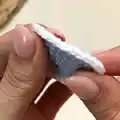
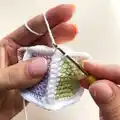
Infinity Cube Amigurumi Pattern step 1 - construction progress Infinity Cube Amigurumi Pattern step 2 - assembly progress Infinity Cube Amigurumi Pattern step 3 - details and accessories Infinity Cube Amigurumi Pattern step 4 - final assembly and finishing

Switch Things Up

I love how easy it is to change the look of this cube by swapping colors for each square; try a monochrome palette for a modern look or contrasting brights for playfulness.

I sometimes use a thicker yarn and larger hook to make a chunky, squishier version that is great as a baby toy; conversely, choose thinner yarn for a mini keychain-sized cube.

I often add embroidered symbols or felt shapes to the face centers to create a learning cube for toddlers that teaches colors and shapes.

I like swapping the white edge color for a contrasting trim to make the cube faces pop; try black or a metallic thread for a graphic effect.

To make the cube quieter or more tactile, try adding a small bell or rattle inside one cube before final closing for sensory variety.

I sometimes sew on a small loop or keyring to turn one cube into a functional keychain or bag charm while keeping the twistable feature.

For gifting, I add tiny crocheted accessories like a mini bow or ribbon around one cube to personalize it for a recipient.

I recommend experimenting with different seaming methods β€” mattress stitch gives a flat seam whereas whipstitch can be slightly raised; choose what you prefer for movement.

I also test stuffing amounts: slightly less stuffing yields softer folds, while a bit more gives a firmer cube; always avoid overstuffing to preserve mechanics.

I sometimes alternate the stitch used for edging (hdc instead of sc) to get a different edge texture and slightly different seam appearance.

Finally, I encourage you to create sets of cubes in matching color families for a coordinated collection β€” they look lovely displayed together and are fun to play with.

Common Mistakes & How to Fix Them

βœ— Not hiding thread tails as you go leads to visible loose ends in the seams; weave and hide ends inside as you finish each square or cube. βœ— Overstuffing the cubes makes the toy rigid and deformed; stuff lightly and shape the cube with your hands after assembly to keep a soft and flexible finish. βœ— Skipping counts when working increases (inc3) will distort the square corners; count stitches after each row and mark corners to ensure inc3 are placed correctly. βœ— Sewing cubes with mismatched face orientations causes the toy not to fold correctly; follow the color orientation photos and double-check directions before sewing parts together. βœ— Using inconsistent tension across squares produces uneven cube faces and poor seams; maintain even tension and block or steam lightly to even out faces before assembly.
Infinity Cube Amigurumi Pattern

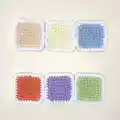
Make a tactile, twistable Infinity Cube fidget toy with this complete crochet pattern. You will create 48 colorful squares, assemble them into 8 small cubes, then join the cubes into a functioning infinity cube toy. The pattern uses simple stitches and clear step-by-step assembly notes so you can enjoy a satisfying handmade project.

Intermediate 5-7 Hours

Materials Needed for Infinity Cube Amigurumi Pattern

β€” Main Fabric

  • 01
    YarnArt Jeans 75 (blue)
  • 02
    YarnArt Jeans 72 (purple)
  • 03
    YarnArt Jeans 53 (light green)
  • 04
    YarnArt Jeans 23 (carrot)
  • 05
    YarnArt Jeans 88 (yellow)
  • 06
    YarnArt Jeans 73 (peach)
  • 07
    Alize Cotton Gold 55 (white) for edges

β€” Tools Required

  • 01
    Crochet hook β„–2
  • 02
    Holofiber filler (polyester stuffing)
  • 03
    Sewing needle
  • 04
    Scissors
  • 05
    Yarn needle for weaving ends
  • 06
    Iron (for steam shaping, optional but recommended)

Progress Tracker

0% Complete

β€” Notes :

Info :

You can use any yarn and a suitable hook. If you work with other colors than indicated in the pattern, I would recommend you to write down which color you use and which color you are replacing with. The size of the finished toy from the indicated materials is ~10 cm. Pattern is written in US crochet terms.

β€” Abbreviations :

Infos :

ar - amigurumi ring. sc - single crochet. hdc - half double crochet. inc3 - increase (1 sc, 1 hdc, 1 sc)*in one stitch. ch - chain. sl st - slip stitch. (...) - the number in brackets at the end of the row means the number of stitches in the row. (...) * - repeat n times.

β€” Materials and tools :

Info :

YarnArt Jeans 75 (blue). YarnArt Jeans 72 (purple). YarnArt Jeans 53 (light green). YarnArt Jeans 23 (carrot). YarnArt Jeans 88 (yellow). YarnArt Jeans 73 (peach). Alize Cotton Gold 55 (white). Crochet hook β„– 2. Holofiber filler. Sewing needle. Scissors.

β€” Square :

Info :

Note! Inc3 - (1 sc, 1 hdc, 1 sc)*in one stitch. All inc3 are in the corners of the square. In the last row (when you work along the edge of the square with white yarn): inc3 - 3 sc in one stitch. Make 8 squares of each color. In total, you should have 48 squares.

Round 1 :

7 sc in ar, sl st, ch (8)

Round 2 :

inc3 in the next stitch (count ch as sc when you count stitches in the rows), (sc, inc3)*3, sl st in ch of the beginning of the row, ch (16)

Round 3 :

inc3 in the next stitch, (3 sc, inc3)*3, 2 sc, sl st in ch of the beginning of the row, ch (24)

Round 4 :

inc3 in the next stitch, (5 sc, inc3)*3, 4 sc, sl st in ch of the beginning of the row (32)

Info :

Fasten off, cut the thread. Hide the end of the thread when you work along the edge of the square with white yarn.

Round 5 :

Attach a white thread to any of the sides of the square and work along the edge of the square with sc, make inc3 in the corners of the square (3 sc (!) in one stitch). Finish with a needle (see photo) and fasten the thread from the inside. As a result - on the sides of the square you should have (7 sc + 3sc (on the tops)*4 (40)

β€” Cube making :

Info :

Now you need to make 8 cubes. Work with sc to connect two squares. When you work in the corners that have already been connected, make addition sl st through sc in the corner to "sharp" the corner. Fasten the thread tails and hide them inside of the cube.

Info :

Cube making scheme: assemble squares in the order shown in the photo scheme (center, left, right, top, bottom, etc.). See photos for reference.

Info :

Making sl st in the corner: when joining squares work a slip stitch through the corner stitch to secure and sharpen corner edges as shown in photos.

Info :

Attaching the yarn to the corner: attach white yarn at a chosen corner and continue working sc along the edge joining adjacent squares. See step photos for exact placement.

Info :

When you have one side left open, fill the cube with holofiber. Do not fill tightly (this is important!!!) in order not to deform the cube. After the cube is assembled, give the part the correct shape with your hands.

β€” Cubes connection :

Info :

Make 2 parts, each of them has 4 cubes.

Part 1 :

Assemble 4 cubes as shown in the photo. The faces of the same color of all the cubes are directed in the same direction (the photo is signed in which direction and which color). The places where the cubes are sewed together are shown by dashes and arrows. Sew with simple seam "stitch to stitch" in sc of the white yarn row.

Info :

*purple - from above. *blue - from below.

Part 2 :

Assemble the second group of 4 cubes as shown in the photo. Ensure the faces of the same color are all oriented in the same direction for part 2 as indicated in the photo. The color of the upper and lower faces should match between parts.

Info :

Now, assemble part 1 and part 2, as in the photo below. The side faces of the same color of all the cubes are directed in the same direction (in the photo it is signed, in which direction which color). The color of the upper and lower faces is the same. At this stage, we do not sew anything.

Info :

At the final stage, we need to turn the toy 180' (two parts at the same time) so that the upper faces are at the bottom. Check the photo below. Sew in places marked with a stroke.

β€” Finishing :

Info :

Your cube is almost ready! Now, to make your cube more dynamic, I advise you to steam it with an iron. Pass the iron along all the faces, giving the cube the correct shape (do not press the iron too much, it can deform the side faces). Pay special attention to the seams between the cubes, apply steam to them several times to make them soft, to make easy to play with the cube.

Info :

Done! Now you can twist it, fold it, turn it! And also - develop imagination, fine motor skills, study colors and shapes with your child. Or just get away from the outside world and calm down☺ I hope you enjoyed the process of creating this mysterious toy! Happy crocheting!

Assembly Instructions

  • Join squares with single crochet (sc) along edges to form cube faces; when joining corners that are already connected make an additional slip stitch (sl st) through the corner stitch to sharpen the corner.
  • Make 8 completed cubes by joining the appropriate squares, leaving one face open for stuffing, then close the final face after stuffing lightly with holofiber.
  • Sew cubes into two parts of four cubes each, aligning faces of the same color in the same direction and sewing stitch-to-stitch in the white sc edge row.
  • Bring part 1 and part 2 together, turn both parts 180 degrees (so the top faces become the bottom), then sew the marked seams to complete the working cube.
  • Fasten and hide thread tails inside the cube during assembly and use light steam from an iron to shape and soften seams after sewing.
  • Do not overstuff cubes; stuff lightly before final closure to avoid deforming the cube and to preserve twistability.

Important Notes

  • πŸ’‘Do not fill cubes tightly with holofiber; overstuffing will deform the cube and prevent proper movement.
  • πŸ’‘Hide and fasten thread tails inside the cube as you finish each square or seam to keep seams neat and secure.
  • πŸ’‘When sewing cubes together, keep the faces oriented exactly as shown in the photos to ensure the toy folds and twists correctly.
  • πŸ’‘Use light steam to shape the cube but avoid pressing hard with the iron as excessive pressure can flatten side faces and seams.
  • πŸ’‘Work inc3 increases in the corners consistently to maintain square shape and correct stitch counts throughout the rows.

This Infinity Cube pattern transforms simple crochet squares into a playful, tactile fidget toy you can twist and fold. 🧢 Follow the clear steps to make 48 squares, 8 cubes, and assemble a smooth-moving cube that measures about 10 cm. ✨ Enjoy the soothing process of crocheting, stuffing, sewing, and shaping β€” then delight in twisting your handmade creation! 😊

You ask,

we answer.

FAQs

What size will the finished piece be?

The finished toy measures approximately 10 cm when using the recommended yarn (YarnArt Jeans) and hook β„–2.

Can I use different yarn weights for this pattern?

Yes, you can use different yarn weights, but this will change the final size and texture; choose a suitable hook for your yarn and make a gauge test to adjust.

Do I need prior crochet experience for this pattern?

This pattern is rated intermediate, so basic knowledge of single crochet, half double crochet, increases, and seaming is recommended for best results.

How long does this project typically take to complete?

Most crocheters complete this project in 5-7 hours, though time may vary based on experience and how quickly you assemble and sew the cubes.