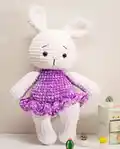
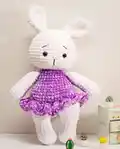
About This Lily Bunny Amigurumi Pattern
This pattern creates a soft, plush Lily Bunny amigurumi with a sweet ruffled skirt and embroidered facial details. It uses chenille sport yarn and a 5 mm hook to produce a cuddly toy approximately 35 cm tall. The pattern covers head sculpting, sewing parts together, and a simple dress attachment for a finished look.
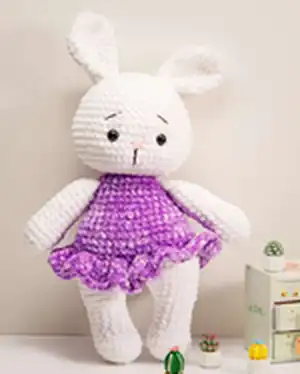
Clear step-by-step rounds are provided for each part: arms, legs, body, skirt, head and ears. US terminology is used and the pattern level is easy to medium, suitable for intermediate crocheters.
Why You'll Love This Lily Bunny Amigurumi Pattern
I absolutely love this pattern because it combines ultra-soft chenille yarn with a charming ruffled skirt, making the bunny both huggable and visually delightful. I enjoy how the simple shaping methods yield a professional-looking amigurumi without complicated steps. I love adding small embroidered facial details — they give each bunny a unique personality and warmth. I also appreciate that the pattern is structured so you can work in short sessions and still see steady progress toward a finished toy.
Switch Things Up
I love how this pattern lends itself to so many playful variations — I often swap the purple skirt for pastel shades to make a whole set of themed bunnies.
I sometimes change yarn weight and hook size to make minis or jumbo versions; chunky yarn with a larger hook gives a super cuddly bunny while thin yarn makes a tiny keychain friend.
I add embroidered cheeks and different eye styles to change the expression; felt eyes or smaller safety eyes create a very different look.
I also experiment with outfit changes: swap the ruffle skirt for a little vest or a removable dress to create mix-and-match play options.
Try adding a small pompom tail in a contrasting color or sewing on tiny felt patches to personalize each bunny.
For stability or poseability, I sometimes insert a short length of wire into the limbs before stuffing; this helps the bunny hold a seated pose.
If you want a more realistic ear shape, adjust the number of rounds in the ear or add a row of contrasting color inside the ear for depth.
I often use embroidery to change the facial features — a tiny mouth, different brow shapes, or freckles instantly alter personality.
Want a gender-neutral or holiday-themed bunny? Change yarn colors to neutrals, pastels, or seasonal shades like red and green for festive versions.
I recommend making one sample bunny first to practice placement and stuffing, then customize subsequent bunnies with patterns, accessories, and color stories to build a charming collection.
Common Mistakes & How to Fix Them
✗ Skipping stuffing until the end can make it difficult to shape the limbs and neck; stuff gradually as you go to maintain even shape and control.
✗ Not placing a stitch marker at the start of rounds leads to miscounted stitches and uneven shaping; use a marker at the first stitch of each round and move it after each round.
✗ Overstuffing the head or body can distort shaping and make sewing pieces together awkward; use moderate, even stuffing and adjust incrementally to keep smooth contours.
✗ Forgetting to secure color changes or ends causes unraveling later; fasten off securely, weave ends into the body, and hide threads inside before finishing.
✗ Sewing parts without pinning can result in asymmetrical placement and an unbalanced look; pin and align arms, legs, and ears first, then stitch firmly in place.