About This Mash bag Triangles Pattern
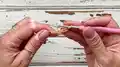
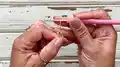
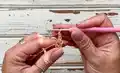
This pattern creates a trendy mash/mesh bag worked in twisted raffia yarn with a decorative triangle motif. It includes full step-by-step instructions for the round base, mesh body, handles, and base trim. Perfect for shoppers or as a stylish everyday tote, the finished bag is lightweight and practical.
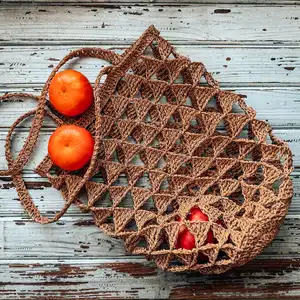
The design is beginner friendly and uses basic stitches with clear photos and a diagram for rows 1-8. Measurements and steaming tips are provided to help you shape the triangles and finish the bag professionally.
Why You'll Love This Mash bag Triangles Pattern
I absolutely love this pattern because it transforms simple stitches into a beautiful triangular mesh that looks intricate but is easy to make. I love the natural texture of twisted raffia yarn — it gives the bag great structure and a summery feel. The method of working the round base into repeating triangle motifs is so satisfying and quick to progress. I also enjoy that the pattern includes clear steaming and shaping tips to make the final piece look polished and professional. Sharing a project that people can complete in a weekend and proudly use makes me so happy.
Switch Things Up
I love customizing this bag by changing the yarn: using a cotton rope or thicker raffia makes a sturdier, chunkier tote perfect for heavy groceries.
I often switch colors to create stripes or ombre effects — alternate two or three colors every few rows to personalize the mesh.
If you want a smaller clutch, I change the diameter of the base by decreasing the increases in rounds 2 and 3 to reduce the overall size.
To make a larger market bag, add additional repeat rounds in the mesh section (rows 9-14) before working the base trims to increase depth and capacity.
I sometimes line the bag with lightweight fabric and sew it in place for smaller items or to prevent delicate things from poking through the mesh.
Try different handle styles: double up the handles for a thicker grip, make shorter handles to carry by hand, or add a detachable long strap for a crossbody option.
Embellishments are fun: add beads or tassels at triangle points, or use embroidery to add a monogram to the base trim area.
For extra durability, I reinforce the handle posts with a small strip of fabric inside the handle ends or add a second row of SlSt when attaching the handles.
I sometimes swap some triangle rows for a different stitch profile (for example replacing a TC with a cluster) to give a slightly different texture to the points.
Want a more polished look? I use a matching or contrast-colored binding worked in single crochet around the top instead of the SlSt trim for a framed edge.
I also recommend experimenting with blocking: gentle steam shaping versus wet-blocking can give slightly different drape and triangle definition.
Finally, I encourage trying decorative closures or buttons on the top trim if you want the bag to close — a small loop and button can be both functional and decorative.
Common Mistakes & How to Fix Them
✗ Not unwinding twisted raffia into balls before starting causes tangling and uneven tension; unwind the raffia into neat balls and secure with a rubber band before you begin.
✗ Failing to prepare and join new balls correctly when the thread runs out can create bulky joins; separate the fibers, cut ends diagonally, overlap by about 5 mm, glue, allow to dry and then twist the ribbons back together.
✗ Skipping steam shaping will leave triangles floppy and uneven; steam the triangles with an iron on both front and wrong sides and shape each triangle by hand to set the form.
✗ Not counting loops for the base trim and handle placement causes misaligned handles; count 15 and 38 loops from the beginning, place markers and follow the exact SlSt counts when attaching handles.
✗ Pulling stitches too tight while working tall stitches (TC, DTC, DDTC) will distort triangle points; keep a relaxed, consistent tension and gently shape points while steaming.