🧢 Beautiful ✨ Detailed πŸ’ Adorable

Modern Irish Lace Dress Pattern

Modern Irish Lace Dress Pattern
4.8β˜… Rating
12-15 Hours Time Needed
2.1K Made This
βœ‚οΈ

Advanced Level

Designed for experienced crocheters, these patterns involve intricate designs and complex techniques to challenge and inspire.

⏱️

Multi-Day Project

A rewarding 12+ hour journeyβ€”perfect for dedicated crafters who love detailed work.

🌟

Elegant Drape

Soft flow with graceful movement, designed to flatter all body types with sophisticated comfort.

About This Modern Irish Lace Dress Pattern

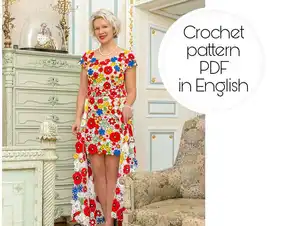
This pattern shows how to create an Irish-lace floral dress composed of many individual crochet motifs. It includes guidance on yarn choices, blocking, wet-steaming, arranging motifs and joining them with a crocheted net. The design emphasizes high-quality finishing on both sides and step-by-step composition advice to assemble a wearable gown.

Modern Irish Lace Dress Pattern crochet pattern - detailed view of completed project

You will learn motif finishing, pressing/steaming, and how to lay out a composition on a pattern using tailor pins. The instructions also cover using a tablet for sleeves and working on a sliding tailor's dummy.

Why You'll Love This Modern Irish Lace Dress Pattern

I absolutely love this pattern because it turns small, simple motifs into an extraordinary wearable work of art. I adore the process of creating each tiny piece and watching the composition grow as you pin motifs together on a pattern. The blocking and wet-steaming stages really transform the motifs, giving them professional shape and volume. I enjoy the creativity of composing the layout β€” every dress becomes unique depending on how you place the motifs. Working with this technique is meditative and rewarding, and the finished gown is show-stopping.

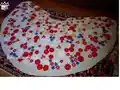
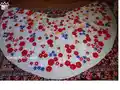
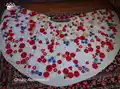
Modern Irish Lace Dress Pattern step 1 - construction progress Modern Irish Lace Dress Pattern step 2 - assembly progress Modern Irish Lace Dress Pattern step 3 - details and accessories Modern Irish Lace Dress Pattern step 4 - final assembly and finishing

Switch Things Up

I love how versatile this pattern is for customization; you can change color palettes to create very different looks from vintage neutrals to bold modern brights.

Try pastel shades for a softer, romantic dress or use saturated colors like reds and blues for a striking stage piece.

Change the motif scale by switching to a thicker mercerized cotton and a larger hook for a chunkier, more textured garment.

Make a smaller project by creating just a top or a skirt from motifs if you prefer a quicker project.

I like to add embroidered centers or tiny beads to motif centers for added sparkle and dimension.

You can mix motif shapes and sizes for an organic, random composition or repeat a few motif types for a more geometric look.

Swap the joining net stitch: use chains for an open airy look or small double crochet stitches for a firmer fabric between motifs.

For a lined wearable version, sew a light cotton lining onto the inside after joining to make the dress more wearable and modest.

If you want posability in sleeves, create a light fabric under-sleeve and crochet the motif overlay onto it rather than leaving sleeves purely mesh.

I often experiment with metallic or variegated threads for a couture finish; a thin metallic thread used in centers creates subtle glamour.

Common Mistakes & How to Fix Them

βœ— Failing to work motifs tightly enough; use a smaller hook or hold a firmer tension to ensure motifs keep their shape. βœ— Cutting thread tips too short before hiding them; leave 10-12 cm and hide tips with a needle stitching to avoid loose ends later. βœ— Skipping wet-steaming and blocking steps; always wash and press-steam motifs to set shape and prevent finished piece distortion. βœ— Joining motifs carelessly without pinning; lay motifs on the pattern and pin tightly to ensure the composition lies correctly before joining.

Modern Irish Lace Dress Pattern

Make a stunning floral Irish-lace dress made from many crochet motifs joined into a flowing gown. This pattern guides you through yarn choices, motif finishing, blocking and composing the pieces into a wearable art dress. You will learn how to prepare motifs, steam and block them, join with a decorative net and construct sleeves using a tablet (styrofoam). Perfect for ambitious crocheters who love slow, creative work with dramatic results.

Advanced 12-15 Hours

Materials Needed for Modern Irish Lace Dress Pattern

β€” Main Fabric

  • 01
    IRIS Kutnor - 100% mercerized cotton, Length 450 m, Weight 50 g (example threads for motifs)
  • 02
    PELICAN - 100% double mercerized cotton, Length 330 m, Weight 50 g (various color codes shown)
  • 03
    VIOLET MELANGE YARN ART - Length 282 m, Weight 50 g
  • 04
    IRIS (VITA COTTON) - 100% double mercerized cotton, Length 125 m, Weight 20 g
  • 05
    YARN CANARIAS - Length 203 m, Weight 20 g, Composition: 100% mercerized cotton
  • 06
    EGYPTO 16 (MAFIL) - 100% mercerized cotton, Length 453 m, Weight 50 g
  • 07
    IRIS ALTIN (Altin Basak) - small balls shown (lace cotton threads)
  • 08
    FILO DI SCOZIA No8 - 100% mercerized cotton, Length 453 m, Weight 50 g
  • 09
    MADAME TRICOTE - Country Turkey, Length 340-350 m, Weight 20 g, Composition: 100% Egyptian cotton
  • 10
    Assorted 50 g and 20 g balls of mercerized cotton in primary colors (red, white, blue, yellow, green) for the floral motifs - quantities depend on size of dress

β€” Tools Required

  • 01
    Crochet hook number 1 (recommended for motifs)
  • 02
    Crochet hook 0.35 mm (Tulip No.25) for irregular mesh work and fine sewing
  • 03
    Sewing thread number 40 for net and mesh
  • 04
    Sewing needle for hiding thread tips and joining motifs
  • 05
    Tailor pins for pinning motifs to pattern
  • 06
    Pins for blocking motifs on a tablet
  • 07
    Stationery knife (to cut styrofoam tablet)
  • 08
    Polystyrene foam tablet (styrofoam plate) 5 cm thickness for working sleeves
  • 09
    Food plastic wrap (to wrap tablet) and protective covering
  • 10
    Iron for pressing/steam-blocking motifs
  • 11
    Scissors
  • 12
    Yarn needle for finishing and sewing motifs
  • 13
    Sliding tailor's dummy / mannequin for assembling and fitting the dress
  • 14
    Measuring tape

Progress Tracker

0% Complete

β€” Materials :

Info :

Thread for motifs: mercerized cottons such as IRIS, Pelican, YarnArt and similar (see yarn list). Use bright colors for flowers and white or neutral for background motifs.

Info :

A thread for motifs. Hook number 1.

Info :

A thread on an irregular mesh - sewing number 40, hook 0.35.

β€” Tools :

Info :

Use fine hooks for motifs (no.1), a 0.35 mm hook for mesh and sewing thread, sewing needles, pins, styrofoam tablet for sleeves, iron and sliding tailor's dummy for assembling pieces.

β€” The principle of ready motifs in Irish lace :

Info :

YOU DO NOT HAVE TO TRY TO MAKE AN EXACT COPY OF MOTIFS AND COMPOSITION - YOUR FANTASY WILL ONLY ENRICH THE PRODUCT AND GIVE THE WORLD NEW BEAUTY.

Info :

1. Crochet motif very tightly. If the motif is loose, try to work with a smaller number of the crochet hook.

Info :

2. Leave all the tips in the motif 10-12 centimeters, thoroughly hide them with a needle stitching from the bottom 3-4 times, moving the needle along dense sections of the motif, without nodules and knots. TRY TO MAKE YOUR WORK HIGH-QUALITY ON BOTH SIDES WRONG AND ON THE FRONT SIDE.

Info :

3. I prefer to hide the tips right after I finished crocheting motif.

β€” Washing :

Info :

4. After I hide the tips, I always wash all motifs of any color before putting out a draft of the product. I add liquid detergent to the warm water 40-50Β° C (100-122Β° Fahrenheit). This is the first stage of wet-steaming processing, which gives shrinkage of motifs, and avoids distortion of finished product size.

β€” Drying :

Info :

5. After washing, spread the motifs on a bulk (bath) towel or fabric, roll together with the elements into a tube so that the fabric absorbs moisture. I do this several times, each time changing the towel to dry. Then spread the motifs on a horizontal flat surface onto a dry cloth or towel, spreading the elements with your hands, giving them the desired shape. Flip heavy and voluminous motives in 3 hours. If necessary, change the fabric base to dry. Avoid direct sunlight during the drying. Leave them for a day.

β€” Wet-steaming (block steaming) :

Info :

6. Next day I do the second stage of wet-steaming processing (block steaming). I do press-steaming of motifs from both sides through moist tissue. Then leave them to dry for another day.

β€” Making the composition :

Info :

7. You can start creating a work composition. Lay out the motifs wrong side up in the desire sequence. Pin all the motifs tightly. Fill the background between motifs using chain and double crochet. For beginners I recommend to start with the first small works and use a large number of motifs and smaller voids. As your get more experience in netting, strengthening the hand muscles in the right position, you can spread the motifs, increasing the space for the background.

β€” Sleeve :

Info :

8. The pattern of the sleeve is always flat, design on a paper and make on a tablet. Ready sleeves need to wash. Then make press - steaming both sides through wet tissue. Put ready sleeve on the pattern, check it and make corrections if it is necessary to get the right size. Connect the joint along the seam (stitch). Crochet into the fabric.

β€” Learning path & mannequin advice :

Info :

9. I recommend starting to master Irish lace with small products - a napkin, a handbag, a collar. And then - from the easiest to the most difficult, from small to large. You will learn to surprise the world with the unique beauty of your skillful fingers.

Info :

10. Working on a sliding tailor's dummy allows me to AVOID errors in the construction of drawings and REMOTELY FALL INTO THE SIZE OF THE CUSTOMER BY 100%, since it is possible to put a copy of the figure. Mechanisms can be regulated separately for the breast, the waist, and the hip volumes. If it is necessary to build a drawing, I ask professionals in sewing atelier to make a draft from cotton single-tone fabric. The color of the fabric has to be contrast color than color of the work.

β€” Crochet symbols & US/UK conversions :

Info :

Symbols shown in chart: chain (us/uk), crochet beginning, turning chain (us/uk), 5 chain join into a ring (us/uk), slip stitch (us/uk), 6 chain arch (us/uk), single crochet (us) = double crochet (uk), half double crochet (us) = half treble crochet (uk), double crochet (us) = treble crochet (uk), treble (triple) crochet (us) = double treble crochet (uk), double treble crochet (us) = treble treble crochet (uk), crossover stitches (us/uk), double crochet 3 stitches together (us) = treble crochet 3 stitches together (uk), double crochet increase by 2 more stitches (us) = treble crochet increase by 2 more stitches (uk), puff stitch (us/uk), mirror reverse sc (us) / mirror reverse dc (uk), reverse sc(us) / reverse dc (uk), picot (us/uk).

Info :

Reference diagrams and stitch illustrations include how to make sc dec, hdc dec, chains, front loop and back loop, slip stitch, and many picture guides for double, treble and double treble crochet techniques (see diagrams).

β€” Choosing thread, washing, blocking and composition directions :

Info :

But choose the colour of thread you need. Crochet the motives. Hide thread tips, use a sewing needle. Pull thread gently into motif. Wash all the motives. Spread them to dry. Steam them using an iron. Lay out the motifs face down on a right size pattern. Pin the motives to the pattern, using tailor pins. Attach motives carefully and strong (motives don't have to move).

β€” Joining motifs and crocheting net :

Info :

Now join the motives, crochet net to fill the space between the motives. There is no "correct" or "incorrect" way to join the motives together. It depends on your preferences. Use a crochet hook to join the motives.

Info :

To crochet net use the same thread as for the motives but thinner one or take a sewing thread. Join the motives on the back side at a few points to each other. Don't cut thread at each point. Pull it accurately inside motif from one point to another. Use chains, double or treble crochet to make net. Connect them to motives or each other, insert hook under the two loops.

β€” Tablet (plate) instructions for sleeves and working surface :

Info :

HANDMADE TABLET (PLATE): You can do a tablet yourself. 1. Buy a building polystyrene foam (Styrofoam) plate 5 cm thickness (2 inch), 25 kg/m3 density. 2. Cut the tablet desired size with a stationery knife. 3. Wrap with food plastic wrap - and crochet with pleasure! ATTENTION - CUT THE FOAM OUTSIDE - LOTS OF FOAM CRUMBS!!!

β€” Assembly and finishing :

Info :

After creating the composition and joining with net, pin the joined piece on the mannequin and check fit. Sew any seams, connect sleeve joints along seams and crochet edges into fabric as needed. Ensure all thread tips are hidden and weave in ends securely. Press-steam the final assembled piece gently where motifs permit.

Assembly Instructions

  • Lay motifs face down on the paper pattern and pin each motif tightly with tailor pins before joining so the composition matches the desired shape.
  • Join motifs on the wrong side by connecting at a few points using the same thread (or thinner sewing thread) and a crochet hook, using chains, double or treble crochet to make the net between motifs.
  • Construct sleeves on a styrofoam tablet: design sleeve flat on paper, create on the tablet, wash and press-steam, then attach sleeve joint along the seam and crochet edges into the garment fabric.
  • Work on a sliding tailor's dummy to fit the dress accurately; adjust positioning by pinning and make final seams, then secure and hide all thread tips with a needle before final pressing.

Important Notes

  • πŸ’‘Leave thread tips 10-12 cm long and hide with needle stitching to avoid knots and ensure tidy backs.
  • πŸ’‘Always wash and wet-steam (press-steam) motifs in two stages to set shape and avoid final distortion of sizes.
  • πŸ’‘Pin and pin tightly on the pattern before joining motifs so the final composition matches the intended design.
  • πŸ’‘Use a styrofoam tablet and food plastic wrap to work sleeves and small elements safely and cleanly.

This modern Irish-lace dress pattern transforms simple motifs into a dramatic wearable artwork. Create floral beauty by crocheting, blocking, and composing motifs into an elegant gown that radiates handmade charm. Follow the finishing and joining techniques to ensure a professional result and enjoy a rewarding creative journey. 🧢✨🌺

You ask,

we answer.

FAQs

What size will the finished piece be?

The finished dress size depends on your pattern and number of motifs; the pattern shows how to pin motifs to a paper pattern and fit on a sliding tailor's dummy for accurate sizing.

Can I use different yarn weights for this pattern?

You can, but changing yarn weight will change the motif size and finished dress proportions; if you change weight, adjust hook sizes and re-create sample motifs to check scale.

Do I need prior crochet experience for this pattern?

This pattern is rated Advanced because it requires precise motif work, multiple stitches (double, treble, picot, puff), blocking and composition skills; intermediate crocheters with motif experience may attempt it.

How long does this project typically take to complete?

Most crocheters will take a multi-day effort to complete the dress, commonly 12-15 hours or more depending on motif count, finishing and fitting time.