🧶 Beautiful ✨ Detailed 💝 Adorable

Mungo Highland Cow Amigurumi Pattern

Mungo Highland Cow Amigurumi Pattern
4.8★ Rating
5-7 Hours Time Needed
2.5K Made This
✂️

Beginner Friendly Level

Perfect for those just starting their crochet journey, with clear instructions and simple techniques

⏱️

Weekend Treat

Takes 5-7 hours, making it an enjoyable project to finish over a couple of days.

🧸

Cute Companion

An adorable friend to cherish, handcrafted with love to bring comfort and joy for years to come.

About This Mungo Highland Cow Amigurumi Pattern

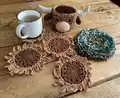
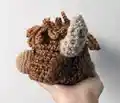
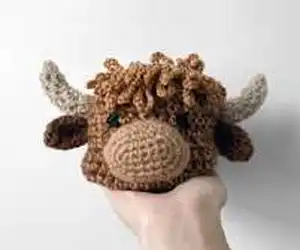
This pattern makes a Highland cow themed coaster set: four coasters, a loop-stitch mat, and a cow head that stores the coasters. It combines basic amigurumi shaping, simple surface details, and a fun loop-stitch mat technique. The instructions include yarn suggestions, stitch photos, and assembly notes to help you finish a polished set.

Mungo Highland Cow Amigurumi Pattern crochet pattern - detailed view of completed project

Great for gifting, home decor, or a playful addition to your kitchen, the set is customizable with color choices. Clear step-by-step rounds and handy tips make this a fun weekend project for adventurous beginners.

Why You'll Love This Mungo Highland Cow Amigurumi Pattern

I absolutely love this pattern because it blends functional homewares with a playful amigurumi character that really delights. I enjoy how the cow head doubles as a cozy storage container for the coasters, making the set both decorative and practical. I love the texture contrast between the loop-stitch mat and the flat coasters — it gives the finished collection real visual interest. I also appreciate that the pattern uses simple stitches and clear steps, so I can easily customize colors and make matching gifts for friends.

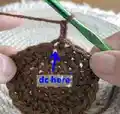
Mungo Highland Cow Amigurumi Pattern step 1 - construction progress Mungo Highland Cow Amigurumi Pattern step 2 - assembly progress Mungo Highland Cow Amigurumi Pattern step 3 - details and accessories Mungo Highland Cow Amigurumi Pattern step 4 - final assembly and finishing

Switch Things Up

I love how easy it is to customize this set by changing colors — try soft pastels for a nursery-friendly version or bold earthy tones for a rustic kitchen set.

I often swap the yarn weight and hook size to make a mini keychain version of the cow head by using fingering weight yarn and a much smaller hook.

If I want a chunkier, more sculptural head I use bulky yarn and a larger hook; the horns and nose can be adjusted proportionally to maintain the look.

I sometimes embroider little eyebrows, freckles or a smile to change the cows expression and add personality to each piece I make.

For a more durable coaster set, I reinforce the coasters with a second round of tighter single crochet in a contrasting color around the edge.

I like to change the mat flowers by using small beads or buttons as centers instead of French knots for a bit of sparkle and texture.

I also experiment with placement of the coasters inside the head — try folding and arranging the loops differently to create fun hairstyles or tufts.

I sometimes add a small loop or keyring to the top inside so the set can be hung as whimsical decor when not in use.

For gifting, I make sets in matching color palettes and pair them with a hand-tied ribbon and a little care card explaining the yarns used.

When I want more posability, I add a short piece of wire inside the horns to help them hold a specific curve — be sure to cover wire ends well so they dont poke through.

I recommend trying different eye techniques: small safety eyes, embroidered eyes, or French-knot eyes all give different personalities.

Finally, I suggest practicing loop stitch tension on a small swatch before starting the mat so your loops are even and the mat lies flat.

Common Mistakes & How to Fix Them

✗ Skipping stitch markers when joining rounds can lead to lost starting points; place a marker at the start of each round to keep track of your stitches and round starts. ✗ Not checking gauge or using the wrong hook size will change finished sizes and fit; use the recommended hooks and adjust hook size if your tension is much tighter or looser than the photos show. ✗ Overstuffing the horns or nose will distort the head shape and placement; stuff lightly and shape gradually, adding small amounts until you reach the desired firmness. ✗ Forgetting to weave in ends as you go creates a lot of finishing work and visible tails; weave in ends or secure them as you finish each piece to keep your work tidy. ✗ Misplacing ears or horns without pinning first can cause asymmetry; pin pieces in place and check positioning from several angles before sewing to ensure symmetry.

Mungo Highland Cow Amigurumi Pattern

Make a charming Mungo Highland Cow coaster set that includes 4 coasters, a cuddly cow head container, and a decorative loop-stitch mat. This pattern guides you through every piece with photos and helpful tips so you can create a cozy, gift-ready set. Youll love the playful design and practical functionality—perfect for gifting or adding handmade charm to your home.

Beginner Friendly 5-7 Hours

Materials Needed for Mungo Highland Cow Amigurumi Pattern

— Main Fabric

  • 01
    Impeccable Solid Yarn by Loops & Threads (4.5 oz. / 127.5g; 285 yd. / 260 m) - main medium weight yarn used in pattern
  • 02
    Coasters & Cow Head: Walnut (Impeccable) & Lion Brand Skein Tones (Honey) - approximate amounts for four coasters and head
  • 03
    Ears: Walnut (same yarn as coasters/head) - small amount
  • 04
    Horns: Almond (Impeccable or similar) - small amount
  • 05
    Nose: Bernat Super Value (Topaz) - small amount for nose piece
  • 06
    Mat: Lion's Pride Woolspun Yarn (Forest Print - discontinued) or various bulky yarns for loop stitch mat (size 5 weight recommended for loop mat)
  • 07
    Additional: Various yarn colours for small flowers and details on mat; small amounts of medium weight (4) for flower centres

— Tools Required

  • 01
    Crochet hook size U.S H/8 (5 mm)
  • 02
    Crochet hook size U.S H/9 (5.5 mm)
  • 03
    Optional crochet hook size 6.5 mm for loop-stitch mat (use hook size needed for your yarn)
  • 04
    Embroidery thread or black yarn for eyes
  • 05
    Tapestry / yarn needle for sewing and weaving ends
  • 06
    Small amount of polyester stuffing for nose and horns
  • 07
    Scissors
  • 08
    Stitch markers (optional)
  • 09
    Stitch counter (optional)

Progress Tracker

0% Complete

— Measurements :

Info :

Cow head with coasters & mat inside: approximately 10" (L) x 6" (W) x 5.5" (H). Coasters: approximately 6.5" diameter each. Mat: approximately 8" diameter.

— Coasters (make 4) :

Info :

Use 5 mm hook. Colour WALNUT for base rounds.

Round 1 :

Create MC, 6 sc into MC. Sl st to close round (6).

Round 2 :

2 sc in each st (increase) around (12). Sl st to close round.

Round 3 :

*2 sc in next st (increase), sc in next st* rep around (18). Sl st to close round.

Round 4 :

Ch 1, *2 hdc into next st, hdc in next 2 sts* repeat around (24). Sl st into ch 1 to close round.

Round 5 :

Ch 2 (counts as first dc), dc in same sp. Ch 1, skip next st. *2 dc in next st, ch 1, skip next st* repeat around ending in ch 1 (36). Sl st to top of ch 2 to close.

Round 6 :

Ch 3 (counts as first hdc and ch 1). *3 hdc in next space, ch 1* repeat around ending with 2 hdc in last space. Sl st to top of ch 2 to close round (48). Fasten off.

Round 7 :

Colour HONEY. Join with sl st to round 6 cluster space. *Ch 14, sl st into same sp, sl st into next 2 sts, ch 10, sl st into same sp, sl st into next 2 sts* repeat around. Fasten off.

— Cow Head :

Info :

Use 5.5 mm hook. To make the head, use 2 strands of yarn at the same time.

Round 1 :

MC, ch 2 (counts as hdc). 9 hdc in the MC. Join with sl st into top of ch 2 to close round (10).

Round 2 :

Ch 2 (counts as hdc). Hdc into same st. *2 hdc in next st* repeat around. Join with sl st into top of ch 2 to close round (20).

Round 3 :

Ch 2 (counts as hdc). Hdc into same st. *Hdc in next st, 2 hdc in next st* repeat around. Join with sl st into top of ch 2 to close round (30).

Round 4 :

Ch 2 (counts as hdc). Hdc into same st. *Hdc in next 2 sts, 2 hdc in next st* repeat around. Join with sl st into top of ch 2 to close round (40).

Round 5-12 :

Ch 1. Hdc in each st around. Join with sl st into ch 1 to close off round (40).

Round 13 :

Ch 1. *Hdc together (decrease stitch), hdc in next 2 sts* repeat around. Join with sl st to close off round. Fasten off and weave in any loose ends using a yarn needle.

Info :

Use black embroidery thread or yarn to add eyes to the head. Tip: wait until the nose is complete and sewn onto the head before adding eyes. This will ensure correct eye placement to the nose.

— Horn (make 2) :

Info :

Use 5 mm hook. Working in continuous rounds. Starting at the tip of the horn.

Round 1 :

Create MC, 5 sc into MC, join with sl st (5).

Round 2 :

Sc around (5).

Round 3 :

2 sc (increase), sc, 2 sc (increase), sc. (At this point the piece should start curling, flip it inside out and work the rounds from the outside.)

Round 4 :

Dc in next 6 sts.

Round 5 :

Sc in next 2 sts.

Round 6 :

Dc in next 4 sts.

Round 7 :

Sc in next 3 sts.

Round 8 :

Dc in next st.

Round 9 :

2 dc in next st (increase).

Round 10 :

Dc in next 2 sts.

Round 11 :

Sc in next 4 sts. (All of the sc sts should be lining up in each row and you should start to see the horn curling.)

Round 12 :

Dc in next 2 sts.

Round 13 :

2 dc in next st (increase).

Round 14 :

Dc in next 2 sts.

Round 15 :

Sc in next 3 sts.

Round 16 :

Dc in next 6 sts.

Round 17 :

Sc in next 4 sts.

Round 18 :

Dc in next 9 sts.

Info :

Fasten off leaving long tail. Lightly stuff horns and shape as desired. Sew onto opposite sides of the head near the top.

— Ear (make 2) :

Info :

Use 5 mm hook. Working in continuous rounds.

Round 1 :

Create MC, 6 dc into MC, sl st to close.

Round 2 :

2 dc in each st (increase) (12), sl st to close. (At this point the piece should start curling, flip it inside out and work the rounds from the outside.)

Round 3 :

Dc in each st around (12).

Round 4 :

Dc-together (decrease) in each st around (6).

Info :

Fasten off leaving long tail (approximately 12") to sew onto head. Fold bottom of ear together and sew a few stitches with long tail to keep it pinched. Sew onto each side of the head.

Info :

Sew each ear onto opposite sides of the head just under horn. Make sure both ears are facing the same direction.

— Nose :

Info :

Use 5 mm hook. Note: The nose uses a method in which the starting chain moves along the round so it will shift as you go. We are making an oval shape (not a circle).

Round 1 :

Ch 6. Sc into 2nd ch from hook, sc in next 3 sts, 3 sc into end chain.

Round 1 Continued :

Continue around working in bottom side of ch 6. Sc into next 3 sts, 2 sc (increase) into end ch (12). Sl st into next ch (this will now count as the end of the previous row. The next sc will act as the first st in the next round).

Round 2 :

Sc in next 3 sts (put your marker into the 1st st and this will be the starting ch of the round). 2 sc in the next 3 sts (increase), sc in the next 3 sts, 2 sc in the next 3 sts (18). Sl st into first st to end this row. Next st is the beginning of Round 3.

Round 3 :

Sc in next 4 sts, 2 sc in the next 3 sts (increase), sc into the next 5 sts, 2 sc in the next 3 sts, sc into the last 3 sts (24). Sl st into first st to end this row. Next st is the beginning of Round 4.

Round 4 :

Sc in next 3 sts, 2 sc in the next st (increase), sc into the next 2 sts, 2 sc into next (increase), sc into the next 2 sts, 2 sc into next (increase), sc into the next 5 sts, 2 sc into next (increase), sc into next 2 sts, 2 sc into next (increase), sc into next 2 sts, 2 sc into next (increase), sc into next 2 sts, 2 sc into next (increase), sc into next 2 sts (30). Sl st into first st to end this row. Next st is the beginning of Round 5.

Round 5-6 :

Sc around (30). No need to sl st to beginning first chain, just keep going around.

Round 7 :

Sc in next 4 sts. You should end around one of the corners of the oval (not in the middle). Fasten off leaving long tail (approximately 20"). Stuff lightly and sew onto bottom middle of the head.

— Mat :

Info :

I used a 6.5mm hook for the example mat, but use the size needed for your yarn. The method used to make the mat consists of loop stitches in a round.

Row 1 :

MC, 6 sc into MC, sl st to close (see video link above for how to do this).

Row 2 :

2 sc into each st around (increase), sl st to close (12).

Row 3 :

*sc in next st, 2 sc in next st (increase)* repeat around, sl st (28).

Row 4 :

*sc in next 2 sts, 2 sc in next st (increase)* repeat around, sl st (24).

Row 5 :

*sc in next 3 sts, 2 sc in next st (increase)* repeat around, sl st (30).

Row 6 :

*sc in next 4 sts, 2 sc in next st (increase)* repeat around, sl st (36).

Row 7 :

*sc in next 5 sts, 2 sc in next st (increase)* repeat around, sl st (42).

Row 8 :

*sc in next 6 sts, 2 sc in next st (increase)* repeat around, sl st (48).

Row 9 :

*sc in next 7 sts, 2 sc in next st (increase)* repeat around, sl st (54).

Row 10 :

*sc in next 8 sts, 2 sc in next st (increase)* repeat around, sl st (60).

Row 11 :

*sc in next 9 sts, 2 sc in next st (increase)* repeat around, sl st (66).

Info :

The small flowers on the mat are made using French Knots: Thread a yarn needle with the yarn colour of your choice and fold the yarn in half. Push the needle through the back of the mat to the front making sure to avoid poking through any loops.

Info :

Pull up the needle and do a French Knot (wrap thread around bottom of the needle twice). Push the needle back through the mat making sure not to poke through the same hole you came up on (try to catch at least 1 stitch or else your flowers might pull through the back of the mat). Gently pull the yarn tight to make a French Knot. Scatter flowers throughout the mat adding the occasional cluster of 2-3 together.

— Final Assembly :

Info :

Fold the mat and place inside the bottom of the head. Fold a coaster over the front and back of the head. Fold the remaining 2 coasters in half, then half again and stuff into the head with the loops hanging out the top.

Info :

Happy Creating!

Assembly Instructions

  • Fold the mat and place inside the bottom of the head to create a stable base for storing the coasters.
  • Fold one coaster over the front and back of the head to form the outer cover and decorative detail around the face area.
  • Fold the remaining two coasters in half, then in half again, and stuff them into the head with the looped petals pointing up to create the hair/tuft effect.
  • Sew the horns onto opposite sides of the head near the top, positioning them evenly and securing with tight stitches.
  • Pin ears and nose to the head before sewing to ensure correct placement; sew each ear just under its corresponding horn and sew the nose to the bottom middle of the head.

Important Notes

  • 💡This pattern is written for right-handed crochet; if you are left-handed, mirror the instructions or work from photos for guidance.
  • 💡Use stitch markers at the start of rounds and when joining to keep track of the beginning of each round and cluster spaces.
  • 💡Wait to add eyes until the nose is sewn on to ensure correct placement relative to the nose and to maintain expression.
  • 💡Stuff horns and nose lightly and gradually to preserve shape; overstuffing can distort the head and placement of features.
  • 💡Pin pieces in place before sewing to check symmetry and positioning; adjust as needed before permanently stitching.

This playful Highland Cow coaster set adds handcrafted charm to any table and doubles as a cute storage container. It makes a thoughtful handmade gift that is as functional as it is adorable. Whether you keep it for yourself or share it with a friend, this set will brighten coffee breaks and cozy moments. 🧶🐮
You ask,

we answer.

FAQs

What size will the finished piece be?

The cow head with coasters and mat inside measures approximately 10" (L) x 6" (W) x 5.5" (H); individual coasters are about 6.5" diameter and the mat is about 8" diameter.

Can I use different yarn weights for this pattern?

Yes, you can substitute yarn weights, but this will affect the finished sizes; adjust hook sizes accordingly and test gauge on a coaster and the mat to ensure desired size.

Do I need prior crochet experience for this pattern?

This pattern is beginner friendly but assumes you know basic stitches like sc, hdc, dc, and how to work in rounds; following the step-by-step rounds and the photos will help newer crocheters.

How long does this project typically take to complete?

Most crafters complete the full set in about 5-7 hours depending on experience, yarn choice, and how much time you spend on finishing and assembly.