🧶 Beautiful ✨ Detailed 💝 Adorable

Pajama Cardigan Pattern

Pajama Cardigan Pattern
4.8★ Rating
12-15 Hours Time Needed
1.6K Made This
✂️

Intermediate Level

Ideal for those with basic crochet experience, featuring slightly more advanced stitches and techniques to expand your skills.

⏱️

Multi-Day Project

A rewarding 12+ hour journey—perfect for dedicated crafters who love detailed work.

👕

Casual Chic

Relaxed style with a modern twist, perfect for everyday wear while maintaining that handcrafted uniqueness.

About This Pajama Cardigan Pattern

This pattern creates an oversized, cozy pajama cardigan with pockets and a subtle textured pattern stitch. It is worked mostly in the round for sleeves and flat for body pieces, with clear shaping for the V-neck and shoulders. The design is intended as a relaxed layering piece you can throw on over pajamas or wear casually out.

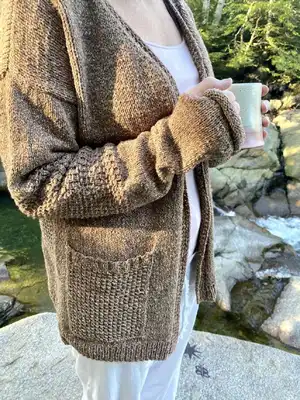
Pajama Cardigan Pattern crochet pattern - detailed view of completed project

Includes instructions for multiple sizes, pocket construction, sleeves with optional thumbholes, and full assembly notes. Uses worsted-weight yarn and is designed to be comfortable and drapey.

Why You'll Love This Pajama Cardigan Pattern

I absolutely love this pattern because it captures the perfect balance between cozy and polished, making it my go-to relaxed cardigan. I designed the pocket placement and pattern stitch to add interest without overwhelming the simplicity of the piece. I enjoy that it is versatile across sizes and that small adjustments—like sleeve length or buttonband width—change the finished look. This cardigan is one I reach for when I want comfort and style together, and I hope it becomes a favorite in your wardrobe too.

Pajama Cardigan Pattern step 1 - construction progress Pajama Cardigan Pattern step 2 - assembly progress Pajama Cardigan Pattern step 3 - details and accessories Pajama Cardigan Pattern step 4 - final assembly and finishing

Switch Things Up

I love to customize this cardigan by changing the yarn color to create a totally different vibe—try a soft pastel for a gentle, spring-ready look or deep rustic tones for a cozy fall version.

I often swap the yarn weight and needle size to create a chunkier, warmer cardigan; using a bulky yarn and larger needles makes a plush, speedy project.

To make a lighter summer layer, I choose a lighter worsted or DK weight and adjust needle size, watching gauge and finished measurements carefully.

I sometimes lengthen or shorten the body by working more or fewer pattern/stockinette sections; adding or removing 1-2 inches is straightforward and personalizes the fit.

For sleeves, I like to convert the thumbhole option into a full thumb warmer by decreasing where the gap would be and adding a small rib cuff.

Add decorative buttons or vintage buttons for a classic look, or leave the front open for a modern drapey cardigan—both look great with the pattern stitch edge.

I enjoy adding subtle stripes in the pocket or cuff area to highlight details; thin contrasting yarns work well without overpowering the texture.

Want pockets with a twist? Try angled pockets or larger patch pockets to suit your phone and keys—just adjust CO and length to match the desired size.

For extra structure, I sometimes pick up fewer stitches for the buttonband and work a deeper rib, or add a sewn-in lining for wind resistance.

I also experiment with cable or seed stitch panels instead of the pattern stitch to create a different fabric density and visual interest—just calculate repeats and maintain edge selvedge stitches.

Finally, I love mixing fibers: a wool-blend body with cotton-lined pockets adds durability where needed while keeping the cardigan soft against skin.

Common Mistakes & How to Fix Them

✗ Skipping the selvedge stitches when working rib and stockinette edges can make your seams look uneven; always keep the edge stitches worked as instructed to maintain clean edges. ✗ Using only the larger needles from the start may throw off gauge and drape; begin with the smaller needles for the ribbing and switch to the larger recommended needles when instructed for accurate sizing. ✗ Failing to work the pattern stitch exactly as written will change the fabric texture and measurements; follow the YO and pass-the-YO sequence carefully and count pattern repeats as you go. ✗ Not placing or moving the marker when joining for the sleeve can result in mismatched increases; place the marker at the BOR and track your increase rounds to keep symmetry. ✗ Sewing pockets on without blocking them first can cause misshapen pockets that don't match the garment; BO pocket sts, block pockets to size, then pin and sew in place for a neat finish. ✗ Forgetting to end after a WS row when instructed may alter neckline alignment; always note whether to end after a RS or WS row as specified to keep pieces matching.

Pajama Cardigan Pattern

Make a cozy, oversized pajama cardigan that feels like your favorite robe but looks like a stylish layering sweater. This pattern guides you through a relaxed fit with pocket details and a subtle pattern stitch, perfect for lounging or running errands. You'll enjoy a comfortable, boxy silhouette designed to be worn over pajamas or casual outfits.

Intermediate 12-15 Hours

Materials Needed for Pajama Cardigan Pattern

— Main Fabric

  • 01
    Mungo by Rosa Pomar of Retrosaria (made in Portugal) in color Fossil (002) - 100 g / 220 m / 240 yds per skein, 50% recycled wool / 50% recycled cotton
  • 02
    Yarn amount by size: 6 (6, 7, 7)[8, 8, 9, 9, 10] skeins of Mungo (see sizes for exact skein counts)
  • 03
    Approximate total yardage recommended: 1,440–2,400 yards of any worsted weight (aran/worsted) wool/cotton blend yarn as an alternative

— Tools Required

  • 01
    US size 3 / 3.25 mm circular needle (for ribbing/smaller needle work)
  • 02
    US size 6 / 4 mm circular needle (32"/80 cm or 40"/100 cm) for body and sleeves
  • 03
    Double pointed needles (dpns) for sleeves if preferred
  • 04
    Stitch marker (1) to mark BOR for sleeves
  • 05
    Yarn needle for sewing and weaving ends
  • 06
    Scissors
  • 07
    Blocking tools (pins, mats) for finishing pockets and garment

Progress Tracker

0% Complete

— Back Panel :

Info :

Beginning at bottom with smaller needles, CO 98 (110, 122, 134)[146, 158, 170, 182, 194] sts.

Info :

Keeping each edge stitch worked in stockinette st (selvedge sts), work in *K1P1* ribbing for 2".

Info :

Stockinette Stitch Section: Change to larger needles.

Info :

Work in stockinette st (K on RS, P on WS) for 6 (6, 6.5, 6.5)[6.25, 6.25, 6.25, 6.75, 6.75]" End after a WS row.

Info :

*Pattern Stitch Instructions: (worked flat) Continue to keep each selvedge st worked in stockinette st Row 1(RS): K2, *YO, k2, pass the YO over the 2 k sts* rep from * to * until 2 sts from end, k2. Row 2 (WS): P across row. Repeat rows 1 + 2 as directed.

Info :

Pattern Stitch Section: Work in Pattern St for 8.5 (9.5, 9.5, 10)[10, 10.5, 10.5, 10.5, 10.5].

Info :

Stockinette Stitch Section: Now, work in stockinette st for 8.5 (8.5, 8.5, 8.5)[9, 9, 9, 9, 9]. End after a WS row.

Info :

Shoulder BO: BO 12 (15, 17, 20)[14, 16, 17, 19, 20] sts at the beginning of the next 4 (4, 4, 4)[6, 6, 6, 6, 6] rows. BO remaining neck sts.

— Left Front Panel :

Info :

With smaller needles, CO 44 (50, 56, 62)[68, 74, 80, 86, 92] sts. Work in*K1P1*ribbing for 2".

Info :

Change to larger needles and work in stockinette st until entire length is 19.5 (20, 20, 20.5)[20.5, 21, 21, 21, 21.5]. End after a WS row.

Info :

V-Neck Shaping: Work V-neck shaping at end of RS rows as follows: k to last 4 sts, ssk, k2. WS: P. Work these last 2 rows a total of 19 (20, 20, 21)[22, 22, 23, 23, 24] times or until front panel matches length of back panel.

Info :

Shoulder BO: BO 12 (15, 18, 20)[15, 17, 19, 21, 23] sts at the beginning of the next row, k to end of row. WS: P.

Info :

BO 13 (15, 18, 21)[15, 17, 19, 21, 23] sts at the beginning of the next row, Sizes XL, 2X, 3X, 4X, and 5X, k to end of row. Sizes XL, 2X, 3X, 4X, and 5X only: WS: P.

Info :

Sizes XL, 2X, 3X, 4X, and 5X only: BO 16 (18, 19, 21, 22) sts.

— Right Front Panel :

Info :

With smaller needles, CO 44 (50, 56, 62)[68, 74, 80, 86, 92] sts. Work in *K1P1* ribbing for 2".

Info :

Change to larger needles and work in stockinette st until entire length is 19.5 (20, 20, 20.5)[20.5, 21, 21, 21, 21.5]. End after a WS row.

Info :

V-Neck Shaping: Work V-neck shaping at beg of RS rows as follows: k2, k2tog, k to end of row. WS: P. Work these last 2 rows a total of 19 (20, 20, 21)[22, 22, 23, 23, 24] times.

Info :

Shoulder BO: RS: K. WS: BO 12 (15, 18, 20)[15, 17, 19, 21, 23] sts at the beginning of the next row, p to end of row.

Info :

RS: K. WS: BO 13 (15, 18, 21)[15, 17, 19, 21, 23] sts at the beginning of the next row, Sizes XL, 2X, 3X, 4X, and 5X, p to end of row.

Info :

Sizes XL, 2X, 3X, 4X, and 5X only: RS: K. WS: Sizes XL, 2X, 3X, 4X, and 5X only: BO 16 (18, 19, 21, 22) sts.

— Pockets :

Info :

POCKETS: (make 2) With larger needles, CO 36 sts.

Info :

Work 6 rows of *K2P2* ribbing.

Info :

Work in Pattern St Instructions (worked flat) for 7" or until pocket is desired length.

Info :

BO sts and set aside to be blocked and attached to garment later.

— Sleeves :

Info :

SLEEVES: (make 2) With smaller needles, beginning at cuff, CO 42 (44, 44, 46)[46, 48, 48, 50, 50] sts. (do NOT join in the round).

Info :

Work 28 rows or 4" in Stockinette st (k RS, p WS). End after a WS row.

Info :

Join in the round (if using dpns, distribute sts evenly on 3 needles), place marker at BOR.

Info :

Wrist + Arm: Stockinette Stitch Section: Inc. rnd.: Kfb on each side of the marker. (2 sts inc)

Info :

With larger needles, work inc rnd every 6 (6, 6, 6)[4, 4, 3, 3, 3]th/rd rnd 9 (9, 9, 9)[15, 15, 22, 22, 23] times.

Info :

*Pattern Stitch Instructions: (worked in the rnd) Rnd 1: *YO, k2, pass the YO over the 2 k sts*, rep from * to * to end of rnd. Rnd 2: K.

Info :

Pattern Stitch Section: Work rnds 1 + 2 of Pattern Stitch (in the round) for 5.5 (5.5, 5.5, 6)[6, 6.5, 6.5, 7].

Info :

At the same time, work the inc rnds every 6 (6, 6, 5)[4, 3, 3, 3, 3]th/rd rnd 6 (6, 8, 10)[9, 14, 11, 15, 14] times and then work EVEN until pattern section is approx 6.5 (6.5, 6.5, 7)[7, 7.5, 8]" in length. 72 (74, 78, 84)[94, 106, 114, 124, 124] sts.

Info :

Stockinette Stitch Section: Continue to work even by knitting ea rnd (without inc) until sleeve measures 18.5 (18.5, 18.5, 18.5)[17.5, 17.5, 17, 17, 16]" from CO edge (or your desired length). BO.

— Buttonband + Collar :

Info :

Using larger circular needle, and with RS facing, pick up and k 158 (162, 165, 168)[171, 174, 174, 176, 176] sts along right front, 58 (58, 60, 60)[66, 66, 70, 70, 74] sts along back neck, and 158 (162, 165, 168)[171, 174, 174, 176, 176] sts along left front.

Info :

Work in Pattern Stitch Instructions (worked flat) on 374 (381, 390, 396)[408, 414, 418, 422, 426] sts until button band measures 1.5-2".

Info :

BO loosely in p.

— Assembly :

Info :

Assembly: *Buttons are not needed for this design, however if buttons are desired, place evenly spaced on left side of button band and secure well. The pattern stitch edging on the right side lends itself well for the buttonholes or you can knit them in!

Info :

Sew shoulder seams.

Info :

Sew in sleeves.

Info :

Sew up lower sleeve seams leaving a 2" gap for each thumbhole (if desired). Otherwise, sew up entire seam.

Info :

Sew up the side seams.

Info :

Sew on the pockets.

Info :

Block and enjoy!

Assembly Instructions

  • Sew shoulder seams together securely, matching shoulder shaping points and aligning fronts and back evenly.
  • Set sleeve into armhole, easing the sleeve cap to fit; sew sleeves in place and finish seam allowances neatly.
  • Sew up lower sleeve seams leaving a 2" gap for each thumbhole if you want thumbholes; otherwise sew the full seam closed.
  • Sew side seams of the body from hem up to underarm, aligning side seams and keeping selvedge edges tidy.
  • Block pockets to desired shape and size, pin pockets to front at chosen placement, and sew them on through the ribbing for secure attachment.
  • Weave in all ends and block the entire garment to measurements for best drape and finish.

Important Notes

  • 💡Keep each edge stitch worked as a selvedge in stockinette to ensure neat seams and buttonband pickup edges.
  • 💡Work the pattern stitch exactly as written (YO, pass the YO over) and check pattern repeats frequently to maintain consistent texture and gauge.
  • 💡Block pockets before attaching them to ensure they lie flat and match the garment measurements when sewn on.

This pajama cardigan blends cozy comfort with everyday style, designed to feel like your favorite robe while looking polished enough for outings. Make it in neutral Fossil for effortless wear or choose bold hues for a personal twist. Whether you keep it simple or add thumbholes and buttons, it will become a wardrobe favorite. 🧶👕

You ask,

we answer.

FAQs

What size will the finished piece be?

Sizes range to fit women chest measurements 30 (34, 38, 42)[46, 50, 54, 58, 62]" with positive ease built into the design; check finished measurements in the pattern for precise fit.

Can I use different yarn weights for this pattern?

You can substitute yarn weights, but this will affect the final size and drape; choose an appropriate needle size and swatch to match gauge (24 sts + 28 rows = 4"/10 cm in stockinette with larger needle, blocked).

Do I need prior knitting experience for this pattern?

This pattern is rated intermediate and requires familiarity with stockinette, K1P1 ribbing, increases (kfb), decreases (ssk, k2tog), picking up stitches, and working in the round.

How long does this project typically take to complete?

Most knitters will complete this cardigan over multiple days; expect about 12-15 hours depending on experience, size, and customization choices.

Are buttons required for this design?

Buttons are optional; the pattern stitch edging lends itself to buttonholes if you prefer, but the cardigan is designed to be button-free if desired.

How should I care for the finished cardigan?

Follow the yarn manufacturer's care instructions; because this yarn is a wool/cotton blend, gentle hand washing or delicate machine cycles and flat drying are usually best to preserve shape and texture.