🧶 Beautiful ✨ Detailed 💝 Adorable

Paris Pattern

Paris Pattern
4.0★ Rating
12-15 Hours Time Needed
2.3K Made This
✂️

Intermediate Level

Ideal for those with basic crochet experience, featuring slightly more advanced stitches and techniques to expand your skills.

⏱️

Multi-Day Project

A rewarding 12+ hour journey—perfect for dedicated crafters who love detailed work.

Stylish Touch

An elegant detail to elevate any look, combining traditional techniques with contemporary design sensibilities.

About This Paris Pattern

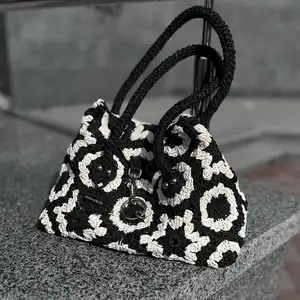
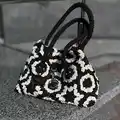
This pattern creates the Paris crochet bag made from granny star (hexagon) motifs crocheted in twisted raffia yarn. You will learn how to crochet the hexagon motif in two colors, join motifs into a canvas, and sew a fitted fabric lining. The pattern includes detailed instructions for making two sturdy handles and finishing touches for a professional look.

Paris Pattern crochet pattern - detailed view of completed project

Perfect for crafters who enjoy modular crochet and assembly work. The result is a bold, textured bag ready for everyday use or gifting.

Why You'll Love This Paris Pattern

I absolutely love this pattern because it combines a striking geometric motif with practical construction techniques that produce a wearable, stylish bag. I appreciate how the alternating colors create depth and movement across the hexagon canvas. The process of joining motifs and adding a tailored lining feels rewarding and makes the bag durable. I also enjoy the versatility—you can change colors or materials to create entirely different looks while using the same structure.

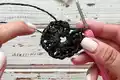
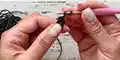
Paris Pattern step 1 - construction progress Paris Pattern step 2 - assembly progress Paris Pattern step 3 - details and accessories Paris Pattern step 4 - final assembly and finishing

Switch Things Up

I love how easily you can customize this design by changing the color palette; try monochrome neutrals for a minimalist look or bright contrasting colors for a bold statement.

To make a smaller or larger bag, change your yarn weight and hook size; a lighter yarn and smaller hook will create a petite clutch while bulkier raffia will produce a roomier tote.

I often substitute a sturdy cotton rope or leather straps instead of crocheted handles when I want a more structured finish and stronger carrying capacity.

Play with the motif layout: experiment with more or fewer hexagons, or arrange them in a different join pattern to create unique silhouettes.

For a softer interior, add quilting interfacing behind the lining before sewing to give the bag more body and protection for contents.

I recommend trying embroidered details or small appliques on a few hexagons to personalize the bag without changing the overall construction.

If you want hardware, you can add a magnetic snap or a small zipper at the top—install these on the lining before attaching it to the canvas.

Consider adding a detachable lining with button loops, so you can wash or swap linings for different looks or seasons.

I also like to mix materials—substituting a portion of the raffia for thin cotton yarn adds subtle texture contrast while keeping the motif structure identical.

Finally, experiment with metallic or variegated raffia for festive finishes; these small changes keep the same pattern but give each bag its own personality.

Common Mistakes & How to Fix Them

✗ Changing colors without twisting the yarn from the wrong side can create tangled threads and loose joins; when you change color, twist the yarn from the wrong side to secure the join and prevent loose ends. ✗ Crocheting raffia without unwinding it into manageable balls causes knots and uneven tension; unwind twisted raffia into balls before starting and secure each with a rubber band. ✗ Pulling loops too tight when creating the mock stitch makes the hexagon points too small; keep the first pulled loop about 20 mm and maintain consistent loop size for even petals. ✗ Skipping steaming or blocking the hexagons leads to irregular motif sizes; steam each hexagon on both front and wrong sides to reach the approximate 15 cm measurement before joining. ✗ Failing to strengthen and hide ends after joining motifs can cause loose seams over time; always tie a knot, pull ends to the wrong side, and hide them securely between loops.

Paris Pattern

Create the stylish Paris crochet bag using twisted raffia yarn and a striking granny star hexagon motif. This pattern walks you through crocheting, joining hexagons, making the lining, and finishing sturdy handles for a polished, wearable bag. Perfect for makers who love texture and bold contrast in accessories.

Intermediate 12-15 Hours

Materials Needed for Paris Pattern

— Main Fabric

  • 01
    Paper twisted raffia yarn, 180-200 g (approximately 440 yards / 400 m) of each color (base dark and additional light)
  • 02
    Base color - dark (approx. 180-200 g)
  • 03
    Additional color - light (approx. 180-200 g)
  • 04
    Fabric for the lining: 40 x 40 inches (1 x 1 m)

— Tools Required

  • 01
    Crochet hook size 3.0-3.5 mm
  • 02
    Plastic needle with large eyelet
  • 03
    Sewing needle and thread, color to match yarn
  • 04
    Scissors
  • 05
    Any small lock or snap hook (60 x 20 mm) and snap hook ring (35 mm)
  • 06
    Iron or steamer for blocking/steaming motifs and seams
  • 07
    Pins for assembly and positioning the lining
  • 08
    Measuring tape or ruler

Progress Tracker

0% Complete

— Materials and Tools :

Info :

Paper twisted raffia yarn, 180-200 gr (440 yards (400 m)) of each color. 3-3,5 mm hook. Any small lock, or snap hook (60*20 mm) and snap hook ring (35 mm). Plastic needle with large eyelet. Sewing needle and thread, color of the yarn. Scissors. Fabric for the lining, 40*40 inches (1*1 m).

Info :

Gauge: 24 stitches and 9 rows = 4*4 inches (10*10cm). Finished bag from the specified materials: length - 13 inches (33 cm), height - 9 inches (23 cm), width - 8 inches (20 cm), length of the handles - 24 inches (60 cm).

— Crochet the Granny Star (Hexagon) :

Info :

Base color - dark. Additional color - light. The diagram for crocheting the granny star is in the appendix 1.

Round 1 :

Take the yarn of the base color. Crochet 5 CH. Join in a circle, SlSt. 1 row. Pull the loop 20 mm. Twist the hook clockwise, then over the loop. Pull one more loop. Crochet two loops together, then two more. This is mock stitch and the first post of the row, 2 DC, CH. Next, (3 DC, CH)*4, 3 DC.

Round 2 :

Crochet the end into this row, cut off the excess. 2 row. Take the yarn of an additional color. Insert the hook under the 1st loop of the row. Pull the loop 20 mm. Make the mock stitch, 2 DC, CH, 3 DC, CH. Next, (3 DC, CH, 3 DC, CH)*4, 3 DC, CH, 3 DC, SlSt.

Round 3 :

Crochet in the base thread to this row. Crochet the end into the 1st cluster, cut off the excess. 3 row. Pull the loop 20 mm. Make the mock stitch, 2 DC, change the color to the base one, CH. Next, (3 DC, CH, 3 DC, change the color to an additional one, CH, 3 DC, change the color to the base one, CH)*5, 3 DC, CH, 3 DC, SlSt.

Info :

Please note that when changing the thread, do not crochet in another color, but twist the yarn from the wrong side. To prevent the yarn from twisting together, turn the work on the hook away from yourself after each color change.

Round 4 :

4 row. Pull the loop 20 mm. Make the mock stitch, 2 DC, CH, 3 DC, change the color to an additional one, CH. Next, (3 DC, CH, 3 DC, change the color to the base one, CH, 3 DC, change the color to an additional one, CH)*5, 3 DC, CH, 3 DC, SlSt.

Round 5 :

5 row. Pull the loop 20 mm. Make the mock stitch, 2 DC, change the color to the base one, CH, 3 DC, change the color to an additional one, CH, 3 DC, change the color to the base one, CH. Next, (3 DC, CH, 3 DC, change the color to an additional one, CH, 3 DC, change the color to the base one, CH, 3 DC, change the color to an additional one, CH, 3 DC, change the color to the base one, CH)*5, 3 DC, CH, 3 DC, change the color to an additional one, CH. Cut the thread, pull out the end. Insert the hook under the 1st loop of the row, pull the end. Insert the hook under the last loop of the row. Pull the end back to the wrong side. Tie the knot. Hide the ends between the loops.

Info :

Similarly crochet 10 more granny star.

Info :

Steam each hexagon on the front and wrong side. The hexagon measures approximately 6 inches (15 cm).

— Sew the Canvas :

Info :

Take the two hexagons and turn on the wrong side. Take the yarn of the base color. Insert the hook on the back loops only in the corner. Pull the loop. Crochet 3 SlSt on the back loop only (BLO).

Info :

Take the yarn of an additional color, crochet 4 SlSt BLO. Change the color to the base one, 4 SlSt BLO. Change the color to an additional one, 4 SlSt BLO. Change the color to the base one, 4 SlSt BLO. Crochet the last SlSt in CH in the corner (=15 SlSt).

Info :

Cut the thread, pull out the end. Strengthen all ends. Join 8 hexagons in 4 pairs in the same way.

Info :

Then, join 2 pairs and 1 hexagon into the strip of 5 hexagons. After that, take the strip of 5 elements and 1 pair. Place them parallel to each other. Begin to join from the left side.

Info :

Crochet 15 SlSt BLO, make the last SlSt in SlSt of the pair and CH in the corner. Make 1 more SlSt in the corner to strengthen the seam. Cut the additional thread. Next crochet with the thread of the base color.

Info :

On the next sides of the hexagons, crochet 15 SlSt BLO + the additional SlSt in the corner. Add and cut off the additional thread at each side of the hexagons. Then, join 1 more hexagon to the last pair.

Info :

On the other side of the strip of 5 elements, add the pair, and then the last hexagon. Strengthen and hide all ends. Steam the canvas on the front and wrong sides.

Info :

Diagram of the hexagon join is provided in the pattern appendix.

— Lining :

Info :

Fold the fabric in half and draw along the contour of the canvas. Make the lining from two halves if the fabric is not enough. Cut out the lining with 10-15 mm seam allowances. If desired, you can cut out a pocket.

Info :

Sew the lining on the side seams. Then, fold the top edge. The shape of the lining repeats the shape of the bag and resembles a 3D trapezoid. At this stage, you can give it to the atelier if you prefer professional sewing.

— Assembly :

Info :

Join the side seams of the bag in the same way as joined the canvas. Strengthen and hide all ends. Twist the towel into the roll. Steam the seams on the wrong side.

Info :

Turn the bag inside out. Straighten the seams with your hands.

— Crochet the Handle (*2) :

Round 1 :

Take the yarn of the base color. Crochet 76 CH. Don't tighten the loops, crochet loosely. 1 row. Crochet 75 SC from the 2nd loop from the hook, CH.

Round 2 :

Insert the hook through the last SC. Pull out the end. Crochet the end into the next row. 2 row. 75 SC BLO, CH.

Round 3 :

3 row. 75 SC BLO and the front loop only (FLO) of the pre-previous row, CH.

Round 4-6 :

4-6 rows. 75 SC BLO and FLO of the pre-previous row, CH.

Round 7 :

7 row. 75 SC BLO and FLO of the pre-previous row. Cut the thread, pull out the end. Strengthen and hide the end.

— Base Trim and Join of the Handle :

Info :

Turn the canvas of the handle with the other side to you. Count 4 SC from the left corner. Insert the hook in the 5th SC, pull the loop. Crochet 3 SC. Next crochet 3 SC in 1 in the corner, 3 SC, 3 SC in 1 in the corner, 3 SC.

Info :

Turn the fabric with the wrong side facing up. Fold the handle in half lengthwise. Insert the hook on the 5th loops from the edge. Pull the loop. Next crochet 66 SlSt to the other end of the handle. Don't tighten the loops, so as not to tighten the handle. Insert the hook on the loop of the chain and both loops of the SC of the last row.

Assembly Instructions

  • Join the crocheted hexagon canvas side seams by aligning pairs and crocheting SlSt BLO across the adjoining back loops, reinforcing corners with an extra SlSt and hiding ends between loops.
  • Place the two hexagon panels and sew the fabric lining (cut with 10-15 mm seam allowances) into the bag interior, matching the top edge and folding to form a 3D trapezoid shape.
  • Make two handles and attach them by folding the handle canvas, crocheting SlSt across the folded edge, and securing both ends through the chain loop and the last row SC to the bag top.
  • Steam/block each hexagon and the assembled canvas on both front and wrong sides before final assembly to ensure uniform motif size and flat seams.
  • Strengthen all seams and hidden thread ends by knotting and pulling them to the wrong side, then trim excess and press the bag to finalize the shape.

Important Notes

  • 💡Unwind twisted raffia into balls before starting; secure each ball with a rubber band to avoid tangles while crocheting.
  • 💡When changing colors, twist the yarn from the wrong side rather than crocheting with the new color on top to avoid bulky joins and twisting.
  • 💡Steam or press each hexagon on both sides to reach the correct measurement (about 15 cm) before joining to keep the canvas even.
  • 💡Work the joining SlSt in the back loops only (BLO) as instructed to create a neat seam and consistent edge for the lining and assembly.

This Paris bag pattern blends classic granny star hexagons with modern raffia texture for a truly stylish accessory. The step-by-step instructions cover motif making, color changes, joining, lining construction, and handle finishing for a polished final piece. Make it in contrasting tones or soft pastels to match your wardrobe — and enjoy creating something uniquely yours. 🧶✨
You ask,

we answer.

FAQs

What size will the finished piece be?

The finished bag measures approximately 13 inches (33 cm) in length, 9 inches (23 cm) in height, and 8 inches (20 cm) in width when made with the specified materials.

Can I use different yarn weights for this pattern?

You can use different yarns, but the structure and size will change; if using thicker yarn, use a larger hook and expect a chunkier bag and fewer hexagons per area.

Do I need prior crochet experience for this pattern?

This pattern is rated intermediate and assumes you know chain, single crochet, double crochet, slip stitch, and how to work BLO/FLO, as well as basic color changes.

How long does this project typically take to complete?

This is a multi-day project and typically takes 12-15 hours in total, depending on your experience with motif work, seaming, and sewing the lining.

How many hexagons do I need to crochet?

You will crochet 11 hexagons for one canvas unit as described, and the instructions show how to crochet additional hexagons and join them into pairs and strips to create the full bag canvas.