🧢 Beautiful ✨ Detailed πŸ’ Adorable

Planter Crochet Amigurumi Pattern

Planter Crochet Amigurumi Pattern
4.1β˜… Rating
5-7 Hours Time Needed
2.6K Made This
βœ‚οΈ

Intermediate Level

Ideal for those with basic crochet experience, featuring slightly more advanced stitches and techniques to expand your skills.

⏱️

Weekend Treat

Takes 5-7 hours, making it an enjoyable project to finish over a couple of days.

🧸

Cute Companion

An adorable friend to cherish, handcrafted with love to bring comfort and joy for years to come.

About This Planter Crochet Amigurumi Pattern

This pattern teaches you how to crochet charming planter amigurumi with various plant toppers like cactus, sunflower, succulent and more. Each planter is worked from the bottom up and includes options for spider, cow and polar bear themed pots. The pattern includes individual pieces for noses, ears, leaves, stems and small accessories. Full assembly instructions and eye placement tips are provided for a polished finish.

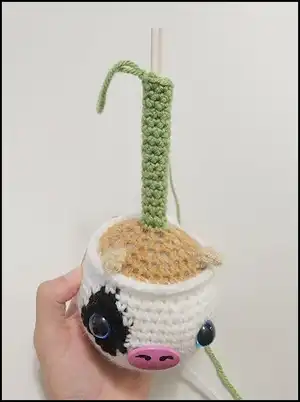
Planter Crochet Amigurumi Pattern crochet pattern - detailed view of completed project

You will get detailed rounds for each component and clear finishing steps for attaching features. The pattern suits intermediate crocheters ready to practice shaping, color changes, and small-piece assembly.

Why You'll Love This Planter Crochet Amigurumi Pattern

I absolutely love this pattern because it blends playful character design with practical crochet techniques that keep the project engaging. I enjoy how each planter becomes unique depending on the plant topper and color choices, so every finished piece feels personal. The variety of small parts like noses, ears, and leaves makes the assembly part really rewarding and creative. I also love that these planters are portable and make lovely handmade gifts that brighten someones day.

Planter Crochet Amigurumi Pattern step 1 - construction progress Planter Crochet Amigurumi Pattern step 2 - assembly progress Planter Crochet Amigurumi Pattern step 3 - details and accessories Planter Crochet Amigurumi Pattern step 4 - final assembly and finishing

Switch Things Up

I love how easy it is to switch yarn colors to create different themed planters β€” try pastels for a soft nursery set or bright colors for a playful shelf display.

I sometimes use bulky yarn with a larger hook to make a chunky version that is more huggable and larger in scale.

I often add wire or pipe cleaners inside stems and legs to make them poseable so my planters can hold different shapes.

I like to customize faces with embroidery details or felt pieces instead of safety eyes for a softer, child-friendly finish.

You can change eye sizes to alter the characters expression; larger eyes give a cuter look while smaller eyes make subtler faces.

Try making a mini version by using sport weight yarn and a smaller hook for tiny keychain-sized planters.

I add tiny accessories like a crocheted hat or tiny scarf to make seasonal versions for holidays or gift themes.

If you want more stability, I recommend inserting a wooden dowel or small stick into the stem and securing with hot glue or stitching for a firm upright plant.

I sometimes embroider freckles, blush, or simple mouths to completely change the personality of a planter without altering the base pattern.

Combine toppers, for example a succulent with a sunflower leaf, to create hybrid plants or to make a set of planters for a cohesive collection.

Common Mistakes & How to Fix Them

βœ— Not using a stitch marker can cause you to lose track of the start of rounds; place a marker at the beginning of every round to maintain correct stitch counts and shaping. βœ— Joining rounds when the pattern says to work in a continuous spiral will create a visible seam and disrupt shaping; work in a continuous spiral unless the instructions explicitly say to join. βœ— Overstuffing the pot or head portions can distort the intended shape and make sewing pieces difficult; stuff gradually and evenly, checking shape as you go to avoid lumps. βœ— Placing safety eyes too early or in the wrong rounds causes misaligned facial features; follow the exact eye placement rounds and count stitches carefully before inserting eyes. βœ— Skipping color change details for the cow pattern will result in incorrect spot placement; follow the cow pot rounds exactly for white and black stitch counts to achieve the correct look.

Planter Crochet Amigurumi Pattern

Make adorable little planter pals with this detailed crochet amigurumi pattern. You will create tiny plant pots with charming faces and a variety of plant toppers β€” perfect for gifts or decor. Clear step-by-step instructions guide you through shaping, color changes, and finishing touches. Enjoy making a sweet handmade companion to brighten any shelf or desk.

Intermediate 5-7 Hours

Materials Needed for Planter Crochet Amigurumi Pattern

β€” Main Fabric

  • 01
    Worsted weight yarn (#4), approximately 75g main color
  • 02
    Accent colors: approximately 25g total for details and plant tops
  • 03
    Bulky weight yarn option for larger planters (use F hook or 3.75 mm)
  • 04
    Colors vary depending on planter (brown for dirt, green for plants, black/white/pink for cow/polar bear details)

β€” Tools Required

  • 01
    Crochet hook size 3.25mm (D)
  • 02
    Crochet hook size 3.75mm (F) for bulky yarn
  • 03
    Safety eyes: Worsted 16 mm; Bulky spider 21 mm; Cow 24 mm; Polar Bear 20 mm
  • 04
    Scissors
  • 05
    Sewing needle for assembly
  • 06
    Stitch markers
  • 07
    Polyester fiberfill stuffing
  • 08
    Wooden dowel or cake dowel (for stems)
  • 09
    Pipe cleaner (optional for shaping legs)
  • 10
    Pins for assembly

Progress Tracker

0% Complete

β€” Pot :

Info :

Crocheted from bottom to top For the spider, if you want to attach the legs as you work, make the legs first(pg. 4). The cow color changes are located below.

Round 1 :

Make 8 sc into a magic ring= 8

Round 2 :

Increase in each st around= 16

Round 3 :

(sc, inc) x 8= 24

Round 4 :

(3 sc, inc) x 6= 30

Round 5 :

(4 sc, inc) x 6= 36

Round 6 :

BLO sc in each st around

Round 7 :

sc in each st around

Round 8 :

(5 sc, inc) x 6= 42

Round 9 :

sc in each st around

Round 10 :

(6 sc, inc) x 6= 48

Info :

*for the spider, The no sew version: Round 14: 2 sc, (work 3 sc on the leg and pot, sc) x 4, 11 sc, (work 3 sc on the leg and pot, sc) x 4, 3 sc

Round 11-16 :

sc in each st around

Info :

For spiders: Place eyes between rounds 14 and 15, leaving 8 holes apart For Cow: Place eyes between rounds 14 and 15, leaving 10 holes apart For Polar Bear: Place eyes between rounds 14 and 15, leaving 10 holes apart

Round 17 :

(6 sc, dec) x 6= 42

Round 18 :

(5 sc, dec) x 6= 36

Round 19 :

sc in each st around

Round 20 :

FLO ch 1, hdc in each st around

Round 21 :

F/O

β€” Cow Pot :

Round 12 :

White: 20 sc, Black: 3 sc, White: 25 sc

Round 13 :

White: 19 sc, Black: 7 sc, White: 22 sc

Round 14 :

White: 19 sc, Black: 7 sc, White: 22 sc

Round 15 :

White: 19 sc, Black: 6 sc, White: 23 sc

Round 16 :

White: 20 sc, Black: 5 sc, White: 23 sc

Round 17 :

White: (6 sc, dec) x 2, 5 sc, Black: sc, dec, White: (6 sc, dec) x 3= 42

β€” Spider Legs (Make 8) :

Round 1 :

Make 7 sc into a magic ring= 7

Round 2-12 :

sc in each st around

Info :

Do not stuff the legs (if you want, add a pipe cleaner into the legs for some shaping) Fold the legs in half and sc the opening closed. F/O and leave a long tail for sewing if you did not want to make the no sew version

β€” Polar Bear Ears (Make 2) :

Round 1 :

Make 6 sc into a magic ring= 6

Round 2 :

Increase in each st around= 12

Round 3 :

(sc, inc) x 6= 18

Round 4 :

sc in each st around

Round 5 :

(sc, dec) x 6= 12

Info :

Do not stuff the ears. Fold the ears in half and sc the opening closed. F/O and leave a long tail for sewing

β€” Dirt on Pot :

Info :

Attach dirt colored yarn to back loops of round 20

Round 1 :

(4 sc, dec) x 6= 30

Info :

*for the cow the round will make the horns: Dirt color: 4 sc, dec, 3 sc, Horn Color: Ch 4, inc3 in 2nd ch from hook, hdc in next ch, dc in next ch, Dirt Color: sc, dec, 4 sc, dec, 2 sc, Work a horn, Dirt color: 2 sc, dec, (4 sc, dec) x 2= 30

Round 2 :

(3 sc, dec) x 6= 24

Round 3 :

(2 sc, dec) x 6= 18

Round 4 :

(sc, dec) x 6= 12

Round 5 :

dec x 6= 6

Info :

If you are making the cow, do not F/O! If you are not making the cow, F/O and sew the hole closed

Info :

Change to green: 1-18. sc in each st around Insert a wooden dowel or something similar inside the stem. F/O and sew the hole closed.

β€” Polar Bear Nose :

Round 1 :

Make 6 sc into a magic ring= 6

Round 2 :

Increase in each st around= 12

Round 3 :

(sc, inc) x 6= 18

Round 4-5 :

sc in each st around

Info :

Place 18 mm nose between rounds 1 and 2. F/O and leave a long tail for sewing

β€” Cow Ears (Make 2) :

Round 1 :

Make 6 sc into a magic ring= 6

Round 2 :

Increase in each st around= 12

Round 3 :

(sc, inc) x 6= 18

Round 4 :

Skip 4 st, sl st in next st

Round 5 :

Sl st across the top to give the ear a pinched look. F/O and leave a long tail for sewing

β€” Cow Nose :

Info :

With Pink: Ch 4

Round 1 :

inc in 2nd ch from hook, sc, inc3, Working on the opposite side of the chain: 3 sc= 9

Round 2 :

inc x 2, 2 sc, inc x 3, sc, inc= 15

Round 3 :

(sc, inc) x 2, 2 sc, (sc, inc) x 3, 2 sc, inc= 21

Round 4-5 :

sc in each st around

Info :

F/O and leave a long tail for sewing

β€” Sunflower :

Round 1 :

Make 5 sc into a magic ring= 5

Round 2 :

Increase in each st around= 10

Round 3 :

(sc, inc) x 5= 15

Round 4 :

(2 sc, inc) x 5= 20

Round 5 :

(3 sc, inc) x 5= 25

Info :

Change to Yellow: 6. (Ch 5, sc in 2nd ch from hook, hdc in next ch, dc in next ch, tr in next ch, Sl st in next 2 st)around F/O and leave a long tail for sewing

β€” Sunflower Leaf #1 :

Info :

With Green: Ch 7

Round 1 :

Dc + tr in 3rd ch from hook sc in last ch

Round 2 :

2 tr in next ch

Round 3 :

2 dc in next ch

Round 4 :

Hdc in next ch

Info :

F/O and leave a long tail for sewing

β€” Sunflower Leaf #2 :

Info :

With Green: Ch 7

Round 1 :

Sc in 3rd ch from hook

Round 2 :

Hdc in next ch

Round 3 :

2 dc in next ch

Round 4 :

2 tr in next ch

Round 5 :

tr + dc in last ch

Info :

F/O and leave a long tail for sewing

β€” Spider Succulent :

Info :

Attach green yarn with a sl st in between rounds 2 and 3.

Round 1 :

*Ch 7 1. sl st in 2nd ch from hook, sc in next ch, hdc in next ch, dc in next 2 chains, tr in next ch, sl st in next 2 stitches.*

Round 2 :

Repeat from * to * around until you get to the middle of the pot.

β€” Venus Fly Trap :

Info :

Stem(make 4): With Green:

Round 1 :

Make 6 sc into a magic ring= 6

Round 2-16 :

sc in each st around

Info :

Do not stuff the stems. If you want, place a cake dowel in the stem. F/O and leave a long tail for sewing

Info :

Trap(Make 4 in red, 4 in green): Starting with Red: 1. Make 6 sc into a magic ring= 6 2. Increase in each st around= 12 Do not F/O the green! Place back sides of green and red pieces together.

Round 3 :

With green: (sc, inc) x 6= 18

Round 4 :

(2 sc, inc) x 6= 24

Round 5 :

(ch 3, sl st in same st, sl in next 2 st) around

Info :

F/O and leave a long tail for sewing

Info :

Leaves(Make 3): Ch 15 1. sc in 2nd ch from hook, 2 hdc, 2 dc, 4 tr, 2 dc, 2 hdc, inc in last ch, Working on the opposite side of the chain: sc, 2 hdc, 2 dc, 4 tr, 2 dc, 2 hdc, sc F/O and leave a long tail for sewing

β€” Polar Bear Cactus :

Info :

With Green: Ch 20

Round 1 :

sc in 2nd ch from hook and across= 19

Round 2-16 :

BLO Ch 1, turn, sc in each st across

Info :

F/O and leave a very long tail for sewing

β€” Holly Leaves (Make 2) :

Info :

With green: Ch 10

Round 1 :

sc in 2nd ch from hook, sc, hdc, dc, dc-inc, dc, hdc, sc, inc3 in last ch, Working on the opposite side of the chain: sc, hdc, dc, dc-inc, dc, hdc, sc, sl in last st

Round 2 :

sc, *ch 3, sl st in same st*, 4 sc, * to*, 4 sc, * to*, 2 sc, * to *, 4 sc, * to *, 3 sc, sl st to 1st st F/O and leave a long tail for sewing

β€” Berries (Make 2) :

Round 1 :

With red: Make 6 sc into a magic ring= 6

Round 2 :

Sc in each st around

Round 3 :

Dec x 3= 3

Info :

Sew the berry closed. F/O and leave a long tail for sewing

β€” Assembly :

Head :

1. Pin the cow nose onto the front of the pot between the eyes. Sew the nose onto the pot. Embroider 2 nostrils. 2. Pin the ears onto the side of the pot. Sew the ears onto the pot. 3. Pin the polar bear nose onto the front of the pot. Sew the nose onto the pot. 4. Pin the ears onto the side of the polar bear pot. Sew the ears onto the pot.

Spider :

1. If you chose not to work the spider legs into the pot. Pin the legs onto the side of the spider pot. 2. Sew the legs onto the side of the pot. 3. Embroider the face onto the spider if you would like.

Plants :

1. For the cow: Pin the leaves onto the bottom of the stem. Sew the leaves onto the stem. 2. Pin the flower onto the top of the stem. Sew the flower onto the stem. 3. Sew the cactus together in a tube. Stuff the cactus. Sew the top of the cactus together. 4. Sew the cactus onto the top of the pot. Sew the holly berry onto the top of the cactus. 5. For the venus fly trap: Sew the stems onto the top of the pot. Fold the trap in half and sew the back to give it a closed look. Sew the trap onto the top of the stem. Sew the leaves onto the top of the pot.

Assembly Instructions

  • Attach the cow nose to the front of the cow pot between the eyes, sew securely and embroider two nostrils for detail.
  • Sew ears to the sides of the appropriate pots: attach cow ears to the cow pot and polar bear ears to the polar bear pot, positioning them symmetrically.
  • If legs were not worked into the spider pot, pin eight spider legs evenly around the body and sew them in place through the pot wall for stability.
  • Insert a wooden dowel or similar inside stems where indicated, then sew plant stems into the center of the pot opening and secure tightly.
  • Pin leaves and flowers to stems before stitching to ensure correct placement, then sew leaves, flowers, and berries to the top of the stem or cactus as instructed.

Important Notes

  • πŸ’‘Do not join rounds unless stated β€” work in a continuous spiral for seamless shaping and consistent stitch placement.
  • πŸ’‘Use a stitch marker to mark the beginning of each round to avoid losing track and ensure accurate stitch counts.
  • πŸ’‘All stitches are worked in both loops unless stated otherwise; change to BLO or FLO only where specified in the pattern.
  • πŸ’‘Stuff firmly but evenly and avoid overstuffing to maintain the intended shape and to make sewing parts together easier.

This planter crochet pattern brings playful plant pals to life with lots of tiny details and personality. Whether you make a spider, cow, polar bear, or succulent version, each one is a little handmade friend that adds charm to any space. Perfect for gifting or collecting β€” happy crocheting and enjoy every stitch! 🧢🌿

You ask,

we answer.

FAQs

What size will the finished piece be?

The finished planter measures approximately 6 inches from bottom to top of the plant (depending on the plant) when using weight 4 yarn and a 3.25 mm hook.

Can I use different yarn weights for this pattern?

Yes, you can use different yarn weights but this will change the final size; use a larger hook for bulky yarn (F / 3.75 mm) and expect a larger planter.

Do I need prior crochet experience for this pattern?

This pattern is rated intermediate, so basic knowledge of crochet stitches and techniques is recommended, plus some patience for assembling multiple small pieces.

How long does this project typically take to complete?

Most crocheters complete this project in 5-7 hours, though time may vary depending on experience level and how many plant toppers you make.

Where should I place the safety eyes?

Place safety eyes between rounds 14 and 15; for spiders leave 8 holes apart, for cow and polar bear leave 10 holes apart as indicated in the pot instructions.