🧢 Beautiful ✨ Detailed πŸ’ Adorable

Snail Amigurumi Pattern

Snail Amigurumi Pattern
4.3β˜… Rating
5-7 Hours Time Needed
3.0K Made This
βœ‚οΈ

Intermediate Level

Ideal for those with basic crochet experience, featuring slightly more advanced stitches and techniques to expand your skills.

⏱️

Weekend Treat

Takes 5-7 hours, making it an enjoyable project to finish over a couple of days.

🧸

Cute Companion

An adorable friend to cherish, handcrafted with love to bring comfort and joy for years to come.

About This Snail Amigurumi Pattern

This pattern teaches you how to crochet a whimsical snail amigurumi with a shaped shell, movable eyes and a textured mantle. You will work small pieces in spiral rounds and assemble them using wire frames and invisible stitches. The instructions include wire handling, stuffing tips and finishing steps for a polished result.

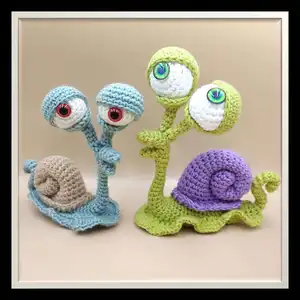
Snail Amigurumi Pattern crochet pattern - detailed view of completed project

Photos and precise stitch counts are provided for every section so you can follow along easily. The finished snail is compact and makes a lovely gift or display piece.

Why You'll Love This Snail Amigurumi Pattern

I absolutely love this pattern because it blends traditional amigurumi techniques with simple armature work to bring character and poseability to a small toy. I enjoy the way the shell spirals and the expressive eyes add personality to the snail. The detailed photos and step-by-step rounds helped me perfect the assembly and wiring process. I find it satisfying to see the flat pieces combine into a charming 3D creature that stands on its own.

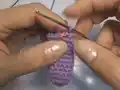
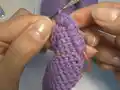
Snail Amigurumi Pattern step 1 - construction progress Snail Amigurumi Pattern step 2 - assembly progress Snail Amigurumi Pattern step 3 - details and accessories Snail Amigurumi Pattern step 4 - final assembly and finishing

Switch Things Up

I love how easy it is to customize this snail by changing the yarn colors; try pastels for a soft nursery friend or bright colors for a statement piece.

To make a mini keychain version, switch to thinner yarn and a smaller hook, and shorten the wire frame for the eyes.

For a larger, cuddlier snail, use a bulkier yarn and bigger hook, but remember to strengthen the eye wires or use wooden dowels for stability.

I often add embroidered details like freckles or spots on the mantle to give each snail a unique personality.

Swap the glass eyes for safety eyes or embroidered pupils if you prefer no glued parts for toys intended for young children.

Try adding tiny accessories such as a crocheted scarf, hat or a mini flower glued to the shell to create seasonal variations.

You can experiment with the mantle edge by using picot, shell or scallop stitches for a different ruffle look and more movement.

I sometimes braid small yarn cords and attach them as antenna decorations to give the snail extra charm.

If you want the snail to be posable, add a slightly thicker wire into the body frame during construction, or use craft wire inside the neck for stronger holding positions.

For a rustic finish, use natural-colored cotton yarn and sew on tiny felt accents like leaves or mushrooms to the shell for a woodland theme.

Common Mistakes & How to Fix Them

βœ— Not tightening the magic ring enough for the lower eyelid; leave the ring slightly loose so there is a hole for the wire frame and avoid pulling it too tight. βœ— Using loose tension when crocheting the toy body causes large holes and floppy shaping; maintain tight, consistent tension and consider a smaller hook if gaps appear. βœ— Forgetting to stuff gradually will create lumps or an uneven shape; stuff lightly as you go and add fiberfill in small amounts to shape the piece evenly. βœ— Skipping wrapping the eye wires with textile band-aid can make the wire damage the crochet fabric; always wrap wires before inserting and secure them with glue if needed. βœ— Not hiding thread tips and tails properly leads to loose ends showing; weave and hide the tip of the thread inside the ball or piece after finishing each element.

Snail Amigurumi Pattern

Create a whimsical crocheted snail with detailed step-by-step instructions for the shell, eyes, jaws, body and mantle. This pattern includes wiring tips, assembly photos and precise stitch counts so you can replicate the cute shape reliably. Ideal for crafters who enjoy small, detailed amigurumi with a mix of crochet and light armature work.

Intermediate 5-7 Hours

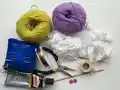
Materials Needed for Snail Amigurumi Pattern

β€” Main Fabric

  • 01
    YarnArt Jeans 160 m (174 yds) in 50 g (1.76 oz), 55 % cotton, 45 % pac: light green (color 29) - 14 g
  • 02
    YarnArt Jeans 160 m (174 yds) in 50 g (1.76 oz), 55 % cotton, 45 % pac: purple (color 72) - 7 g
  • 03
    YarnArt Jeans 160 m (174 yds) in 50 g (1.76 oz), 55 % cotton, 45 % pac: white (color 62) - 3 g
  • 04
    Fiberfill for stuffing (amount as needed, fill lightly)

β€” Tools Required

  • 01
    Steel crochet hook size 1.75 mm (#4 US)
  • 02
    Wooden skewer and a toothpick with a broken tips for stuffing
  • 03
    Gypsy needle
  • 04
    Scissors
  • 05
    2 glass eyes 14 mm (0.55 inch)
  • 06
    Glue Moment Crystal
  • 07
    Craft wire (aluminum or cooper) thick 0,75-1 mm (0.03-0.039 inch) - 115 cm (45.28 inch)
  • 08
    Round pliers and wire cutters
  • 09
    Textile band-aid
  • 10
    Stitch markers (optional)
  • 11
    Yarn needle for sewing

Progress Tracker

0% Complete

β€” Shell :

Round 1 :

6 sc in MC

Round 2 :

6 inc = 12

Round 3-12 :

12 sc

Round 13 :

inc, 11 sc = 13 (photo 1)

Round 14-23 :

13 sc

Round 24 :

inc, 12 sc = 14

Round 25-29 :

14 sc

Round 30 :

3 sc in 1, 13 sc = 16

Round 31 :

sc, 3 sc in 1, 14 sc = 18

Round 32 :

2 sc, 3 sc in 1, 15 sc = 20

Round 33 :

3 sc, 3 sc in 1, 16 sc = 22

Round 34 :

4 sc, 3 sc in 1, 17 sc = 24 (photo 2)

Round 35 :

5 ps, 3 ps in 1, 18 ps = 26 (photo 3-4)

Info :

Fasten off, hide the tip of the thread. Fill the shell with fiberfill lightly.

Info :

Make a tie from the narrow part of the shell and fix it at the first round (photo 5-6).

Info :

Fold the second round and stretch the ends of the pulling thread through the tip of the shell, make a knot on the inside of the shell (photo 1-2). Bend the side (photo 3).

β€” Eye :

Round 1 :

6 sc in MC

Round 2 :

6 inc = 12

Round 3 :

(sc, inc) * 6 = 18

Round 4 :

(2 sc, inc) * 6 = 24

Round 5-7 :

24 sc

Round 8 :

(2 sc, dec) * 6 = 18

Round 9 :

(sc, dec) * 6 = 12, fill with fiberfill.

Round 10 :

6 dec = 6, pull the hole by the front loops. Hide the tip of the thread inside the ball (photo 4).

Info :

Pick up the eye in the 7th row for 2 columns on a long wire. Align the ends of the wire and twist it under the eye (photo 1-2). Bend the ends of the wire.

Info :

Stretch the ends of the wire through the tube of the lower eyelid, thereby inserting the eye into the socket (photo 3-5).

Info :

The eye does not need to be sewn in any way. It is remarkably fixed between the eyelids (photo 6).

β€” Upper eyelid :

Round 1 :

6 sc in MC

Round 2 :

6 inc = 12

Round 3 :

(sc, inc) * 6 = 18

Round 4 :

(2 sc, inc) * 6 = 24

Round 5-8 :

24 sc, fasten off, hide the tip of the thread (photo 1).

β€” Lower eyelid :

Round 1 :

5 sc in MC, we do not tighten the ring tightly - there should be a hole for the frame (photo 2-3).

Round 2-6 :

5 sc

Round 7 :

7 inc = 12 (the marker of the beginning of the row will shift by 2 loops)

Round 8 :

(sc, inc) * 6 = 18, sl st. Cut the yarn leaving a tail for sewing (photo 4).

Info :

Fold the upper and lower eyelid and combine 8 sc in pairs (photo 5).

β€” Upper jaw :

Round 1 :

6 sc in MC

Round 2 :

6 sc

Round 3 :

inc, 5 sc = 7

Round 4 :

7 sc

Round 5 :

inc, 6 sc = 8

Round 6 :

8 sc

Round 7 :

3 sl st, sc, 4 hdc = 8 (photo 1), finish, hide the tip of the thread. Fold the wire with a loop (photo 2), wrap it with a textile band-aid (photo 3). Insert it into the upper jaw. To add volume, fill it slightly (photo 4).

β€” Lower jaw :

Round 1 :

4 sc in MC

Round 2 :

(inc, sc) * 2 = 6

Round 3 :

6 sc, sl st. Do not fill.

Round 4 :

ch, rotate, 3 join sc with upper jaw on sl st (photo 1-2), when knit on upper jaw: sc, 3 hdc, sc, on lower jaw: 3 sl st = 8 (photo 3)

Info :

Insert the eye wires at the base of the first and last half double crochet of the 7th row of the upper jaw (photo 4). Stretch the frame into the neck (photo 5-6). Wrap the wires with a textile band-aid.

β€” Body :

Round 1-2 :

8 sc

Round 3 :

dec, 6 sc = 7

Round 4 :

dec, 5 sc = 6

Round 5-7 :

6 sc

Round 8 :

inc, 5 sc = 7

Round 9 :

7 sc

Round 10 :

inc, 6 sc = 8

Round 11 :

8 sc

Round 12 :

inc, 7 sc = 9 (photo 1)

Round 13 :

inc, 8 sc = 10

Round 14 :

(inc, 4 sc) * 2 = 12

Round 15 :

(3 sc, inc) * 3 = 15

Round 16 :

(4 sc, inc) * 3 = 18

Round 17-19 :

18 sc

Round 20 :

dec, 16 sc = 17

Round 21-23 :

17 sc

Round 24 :

dec, 15 sc = 16

Round 25-27 :

16 sc

Round 28 :

dec, 14 sc = 15

Round 29 :

15 sc

Round 30 :

dec, 13 sc = 14

Round 31 :

dec, 12 sc = 13

Round 32 :

dec, 11 sc = 12. Fill the body with fiberfill lightly.

Round 33 :

dec, 10 sc = 11

Round 34 :

dec, 9 sc = 10

Round 35 :

dec, 8 sc = 9

Round 36 :

dec, 7 sc = 8

Round 37 :

dec, 6 sc = 7

Round 38-51 :

7 sc, cut off the excess tip of the frame (photo 2), complete, pull the hole by the front loops, hide the tip (photo 3-4).

Info :

We bend the body of the snail in the place of thickening with the letter L. We sew the shell to the body with invisible stitches, picking up the border between 34 and 35 rows (photo 1-2). The stitch length is 1 column or 1 row. We bend 35 Row up.

β€” Mantle :

Info :

Make 47 loops on the body. To do this, it is convenient to mark 3 columns on the chest (photo 3) and count another 22 rows on the sides of them. For each row and for each single crochet, make 1 loop. The mantle line should be in 2 loops below the shell. The line does not have to be flat. The curves of the line will create the illusion of mobility of the mantle (photo 4-5).

Round 1 :

rotate, 10 sc, 7 hdc, 5 dc, 3 inc dc, 5 dc, 7 hdc, 10 sc = 50

Round 2 :

sl st on the body, rotate, skip 1, 10 inc, 7 inc hdc, 16 inc dc, 7 inc hdc, 10 inc, sl st, fasten off, hide the tip of the thread (photo 1).

β€” Assembly and design of the toy :

Item 1 (P1) :

Press a recess on the abdomen with your finger (photo 2) and sew it around the perimeter so that the snail stands more stable (photo 3).

Item 2 (P2) :

Glue the eyes (photo 4-5).

Info :

Wrap and hide all wire ends, secure with textile band-aid and glue as needed to protect crochet fabric. Pin parts in place before final sewing for symmetry.

Assembly Instructions

  • Sew the shell to the body with invisible stitches, picking up the border between rounds 34 and 35; use a stitch length of one single crochet or one row and bend row 35 up for a natural fit.
  • Press a recess on the abdomen and sew around the perimeter so the snail stands more stably, stitching through the body base as shown in photos.
  • Insert and secure the eye wires: pick up the eye in the 7th row on two columns of wire, twist the wire under the eye, stretch the ends through the lower eyelid tube and insert into the socket; wrap wires with textile band-aid.
  • Glue the glass eyes into the white eye ball area using Moment Crystal glue and ensure they are positioned symmetrically before the glue sets.
  • Wrap any exposed wire frames with textile band-aid and hide or weave in excess tips before finishing to protect the crochet fabric.

Important Notes

  • πŸ’‘Crochet the toy with tight stitches to avoid visible holes when the fabric is stretched; consider using a slightly smaller hook if gaps appear.
  • πŸ’‘Stuff gradually while crocheting; filling lightly and evenly will help preserve the shape and avoid lumps in the shell and body.
  • πŸ’‘If the toy is for a toddler under the age of three, use safety eyes and avoid glass eyes or any small glued parts to prevent choking hazards.
  • πŸ’‘Wrap and protect wire parts with textile band-aid to prevent sharp wire ends from piercing the crochet fabric and to increase durability.

This adorable snail amigurumi pattern makes a charming handmade gift or shelf friend. The design combines delicate shaping, wired eyes and a ruffled mantle for a playful, lifelike look. Follow the step-by-step rounds and photos for neat assembly and finishing. 🧢🐌✨

You ask,

we answer.

FAQs

What size will the finished piece be?

The finished snail measures approximately 13.5 cm x 11.5 cm (5.31 x 4.53 inches) when using the recommended yarn and hook size.

Can I use different yarn weights for this pattern?

Yes, you can use different yarn weights, but the final size will change; adjust hook size accordingly and be mindful that thicker yarn may require sturdier wire for the eyes and frame.

Do I need prior crochet experience for this pattern?

This pattern is rated intermediate and uses basic amigurumi techniques plus wiring and assembly, so familiarity with single crochet, increases and decreases is recommended.

How long does this project typically take to complete?

Most crafters complete this project in 5-7 hours, though exact time varies with experience and attention to assembly details.

What type of eyes are recommended?

The pattern uses 14 mm glass eyes; for children or toys that will be handled, consider using safety eyes or gluing glass eyes securely and avoiding loose small parts.