About This Spike Stitch Tote Bag Pattern
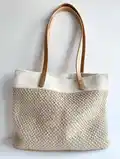
This pattern creates a roomy Spike Stitch Tote Bag with a textured body and a contrasting top band. It uses the spike stitch for an engaging woven look and works in continuous rounds to avoid seams. The pattern includes two strap options: pre-made leather straps or crocheted straps for a fully handmade finish. Clear notes and a visual tutorial are provided to help you master the spike stitch and achieve clean results.
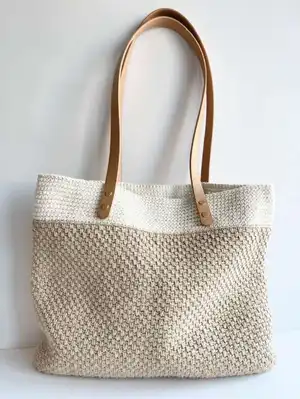
The finished bag measures approximately 15 inches wide by 12 inches high using the recommended yarn and hook. Detailed round-by-round instructions make it easy to follow along and customize colors or straps to your taste.
Why You'll Love This Spike Stitch Tote Bag Pattern
I absolutely love this pattern because the spike stitch creates an effortlessly chic texture that looks far more complex than it is. I enjoy how the design can be made with either pre-made straps for a polished finish or crocheted straps for a fully handmade touch. I also appreciate that the construction is worked in rounds, which gives a smooth, seamless look and makes assembly simple. Every time I make this tote I like to experiment with color placement and yarn combinations to create a different vibe.
Switch Things Up
I love changing up the color placement to give the bag a different personality; try a bold body with a neutral top band or a soft pastel band for a feminine look.
To make a smaller or larger bag, change your yarn weight and hook size; bulky yarn and a larger hook will make a chunky, cozy tote while lighter yarn creates a delicate, smaller bag.
I often experiment with Ombre or variegated yarn for the body so the spike stitch pops with subtle color shifts across the bag.
Try lining the bag with fabric for added durability and a professional finish; choose a lightweight cotton for structure without weighing the bag down.
Swap the faux leather straps for wooden or metal handles for a completely different style and dress the bag up for evening use.
Embellish with a small crocheted pocket on the inside or outside for keys and phone; I usually add a simple slip pocket sewn to the lining for convenience.
If you want extra sturdiness, insert a thin interfacing panel into the base before lining to prevent sagging when the bag is filled.
I sometimes add a decorative stitch row between the body and the top band, like a row of reverse single crochet, to create a defined edge.
For long-lasting straps, reinforce the attachment with both rivets and a few hand stitches through the strap tabs; this adds strength and peace of mind when carrying heavy items.
Want to personalize it? Embroider a small initial or motif on the top band before attaching straps to make each bag uniquely yours.
Common Mistakes & How to Fix Them
✗ Skipping the recommendation to crochet around a second strand of yarn; start round 2 around a second strand if you want a firmer structure to avoid a floppy bag.
✗ Not placing stitch markers for strap placement which leads to uneven handles; place stitch markers at the specified stitches before beginning round 54 to ensure symmetry.
✗ Twisting the long chains when making handles which causes a twisted strap; check that each CH 100 is not twisted before joining or slip stitching into it.
✗ Forgetting to count stitches after increases results in an incorrect stitch count; always confirm the stitch totals shown in parentheses at the end of each round.
✗ Pulling the carried yarn too tight when using a second strand can cause puckering; check the work at the end of each round and gently stretch the carried yarn to remove bunching.