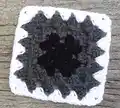
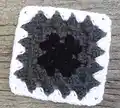
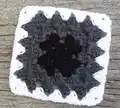
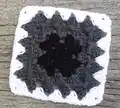
About This Basic Granny Square Pattern
This pattern produces a classic basic granny square that can be worked in just a few rounds. You can make little squares or continue adding rounds to grow larger pieces for blankets or accessories. The instructions use US terminology and are written to be easy to follow for beginners.
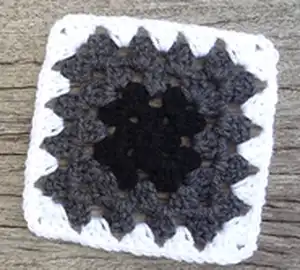
Use any yarn weight or colors you like — gauge is not critical for this design. Each square is quick to make and easy to sew together into larger projects.
Why You'll Love This Basic Granny Square Pattern
I absolutely love this pattern because it captures the timeless simplicity of the granny square while remaining highly versatile. I enjoy how quickly a square can be made, making it satisfying to see progress in a short time. The ability to mix and match colors keeps the project endlessly creative and fun. I also appreciate that the pattern is forgiving with gauge, so makers of all levels can achieve beautiful results.
Switch Things Up
I love changing colors every round to create vibrant striped granny squares that really pop.
I sometimes use a thinner yarn with a smaller hook to make delicate, lace-like squares for shawls or scarves.
I also like to make oversized squares by using bulky yarn and a larger hook for cozy blankets that work up fast.
I often experiment with different join methods — slip stitch joins for a neat edge or whipstitch for a softer seam — to change the final look.
I add a round of single crochet around the finished square to give a clean border and make joining easier.
I switch up color placement by using gradient or ombre yarns to create flowing color transitions across multiple squares.
I sometimes embroider simple motifs onto finished squares for extra detail and personality.
I enjoy assembling squares into unconventional layouts, like diagonal or offset grids, for modern blanket designs.
I occasionally add a scalloped edging around joined blankets for a decorative finish that elevates the whole piece.
I recommend trying contrasting yarn for joins to make a graphic grid effect that highlights each square.
Common Mistakes & How to Fix Them
✗ Skipping the slip stitch join after ch 4 can make your centre loose; always join ch 4 to the first chain with a slip stitch to form a neat ring.
✗ Not tying off and turning work after finishing rounds can cause corners to pull left; tie off and turn work as directed to keep corners flat and even.
✗ Using inconsistent tension when making 3-dc clusters causes uneven corners; maintain consistent tension and count stitches in each cluster carefully.
✗ Forgetting to weave in ends after the final round results in untidy edges; weave in all ends securely after tying off to finish cleanly.