🧶 Beautiful ✨ Detailed 💝 Adorable

Pearodactyl Amigurumi Pattern

Pearodactyl Amigurumi Pattern
4.6★ Rating
5-7 Hours Time Needed
1.5K Made This
✂️

Intermediate Level

Ideal for those with basic crochet experience, featuring slightly more advanced stitches and techniques to expand your skills.

⏱️

Weekend Treat

Takes 5-7 hours, making it an enjoyable project to finish over a couple of days.

🧸

Cute Companion

An adorable friend to cherish, handcrafted with love to bring comfort and joy for years to come.

About This Pearodactyl Amigurumi Pattern

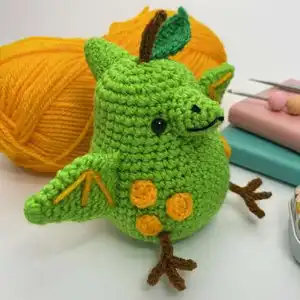
This pattern makes a small, pear-shaped creature with wings, a leafy stem and playful spots. You will crochet a body, wings, crest, beak, legs, stem and leaf then assemble them using long tails. It uses DK yarn and a 2.5mm hook for a compact 11cm finished toy.

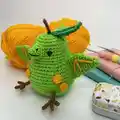
Pearodactyl Amigurumi Pattern crochet pattern - detailed view of completed project

Techniques include invisible decreases, invisible finishing and simple sewing for neat joins. Full photo references and round-by-round instructions make assembly straightforward.

Why You'll Love This Pearodactyl Amigurumi Pattern

I absolutely love this pattern because it combines a playful pear shape with tiny dragon-like details that give it lots of personality. I enjoy making small amigurumi that come together quickly and still look full of character. The little spots and embroidered details let me add unique touches every time I make one. I also appreciate how the pattern uses simple shaping techniques to create expressive features without complicated steps.

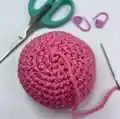
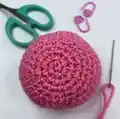
Pearodactyl Amigurumi Pattern step 1 - construction progress Pearodactyl Amigurumi Pattern step 2 - assembly progress Pearodactyl Amigurumi Pattern step 3 - details and accessories Pearodactyl Amigurumi Pattern step 4 - final assembly and finishing

Switch Things Up

I love how easy it is to customise the Pearodactyl by changing colours; try pastel greens for a softer look or bright contrasting spots for a pop of fun.

I sometimes swap the wing embroidery colour to match a theme — using pink or teal for the wing veins creates a whole new personality.

To make a bigger version I use a bulkier yarn and a larger hook; this gives a chunky, huggable toy ideal for kids.

If you want a keychain size, use finer yarn and a smaller hook, and attach a keyring to the top of the stem before finishing.

I often embroider different facial expressions — moving the mouth and nostrils slightly changes the mood from cheeky to sleepy.

Try adding tiny accessories like a crocheted scarf, bow or hat to personalise each Pearodactyl as a gift.

You can mix yarn textures too; use a slightly fluffy DK for a softer, fuzzier surface or a cotton DK for a firmer, textured look.

I sometimes replace safety eyes with French knots or embroidered eyes for a fully handmade option that is child-safe.

For a seasonal twist, use autumnal colours for a fall-themed pearodactyl or red and green for a festive ornament.

I recommend experimenting with placement of the spots and wings to create asymmetrical patterns for a quirky, handmade charm.

Common Mistakes & How to Fix Them

✗ Not placing safety eyes at the correct rounds can throw off facial symmetry; insert safety eyes between rounds 24-25 five visible stitches apart as instructed to keep them even. ✗ Forgetting to stuff gradually leads to lumps and uneven shaping; start adding stuffing early and continue stuffing as you decrease to maintain a smooth pear shape. ✗ Skipping stitch markers during rounds with repeated increases and decreases can cause miscounts; use a stitch marker at the start of each round and recount often to stay accurate. ✗ Pulling your yarn too tight when embroidering nostrils or wing veins will distort the piece; use gentle tension and test placement before securing stitches permanently. ✗ Cutting tails too short when finishing parts can make sewing difficult; leave long tails for attaching the beak, crest, wings and spots so you can join them securely. ✗ Overstuffing the head or body will make joining parts bulky and uneven; stuff firmly but not excessively, adjusting as you work through decrease rounds to keep shape consistent.

Pearodactyl Amigurumi Pattern

Create a charming Pearodactyl — a tiny pear-shaped dragon-bird amigurumi — with this full crochet pattern. You will find clear rounds, assembly steps, and helpful technique photos to guide you through each piece. Perfect as a handmade gift or a cute desk companion, this pattern uses DK yarn and small details for a delightful finish.

Intermediate 5-7 Hours

Materials Needed for Pearodactyl Amigurumi Pattern

— Main Fabric

  • 01
    Stylecraft Special DK (DK weight) - Kelly Green
  • 02
    Stylecraft Special DK (DK weight) - Grass Green
  • 03
    Stylecraft Special DK (DK weight) - Sunshine
  • 04
    Stylecraft Special DK (DK weight) - Gingerbread
  • 05
    Small amounts of each colour (project is approx 11cm tall using suggested yarn and hook)

— Tools Required

  • 01
    Crochet hook size 2.5mm
  • 02
    Two 6mm safety eyes
  • 03
    Stitch markers
  • 04
    Yarn needle
  • 05
    Fibrefill
  • 06
    Black embroidery thread

Progress Tracker

0% Complete

— Techniques :

Info :

How to close amigurumi invisibly 1. Insert needle in the FLO of each stitch around 2. Pull tight to close 3. Insert needle through centre exiting a few rounds down 4. Weave in the end and admire your work!

Info :

How to decrease invisibly 1. Insert hook into FLO of first stitch 2. Insert hook into FLO of next stitch 3. Yarn over and pull through two loops 4. Yarn over and pull through two loops again. Invisible decrease complete!

Info :

How to fold and stitch together 1. Fold piece in half, insert hook through next stitch and corresponding stitch on the other side 2. Yarn over and pull through both stitches 3. Complete sc as normal and repeat for all stitches 4. Finished piece folded and stitched together!

— Body :

Rnd 1 :

6sc in MR (6)

Rnd 2 :

inc each st around (12)

Rnd 3 :

*1sc, inc* rep 6 times (18)

Rnd 4 :

*2sc, inc* rep 6 times (24)

Rnd 5 :

*3sc, inc* rep 6 times (30)

Rnd 6 :

*4sc, inc* rep 6 times (36)

Rnd 7 :

*5sc, inc* rep 6 times (42)

Rnd 8 :

*6sc, inc* rep 6 times (48)

Rnds 9 - 16 :

sc each st around (48) (8 rnds)

Rnd 17 :

*6sc, dec* rep 6 times (42)

Rnd 18 :

sc each st around (42)

Rnd 19 :

*5sc, dec* rep 6 times (36)

Rnd 20 :

sc each st around (36)

Rnd 21 :

*4sc, dec* rep 6 times (30)

Rnds 22 - 27 :

sc each st around (30) (6 rnds)

Info :

Insert safety eyes between rnds 24 - 25 five visible sts apart.

Info :

Start adding stuffing and continue to stuff as we decrease.

Rnd 28 :

*3sc, dec* rep 6 times (24)

Rnd 29 :

*2sc, dec* rep 6 times (18)

Rnd 30 :

*1sc, dec* rep 6 times (12)

Rnd 31 :

dec 6 times (6)

Info :

Fasten off and leave a long tail. Complete invisible close. Weave in ends. (photo 1)

— Wings (make two) :

Rnd 1 :

6sc in MR (6)

Rnd 2 :

sc each st around (6)

Rnd 3 :

*sc, inc* rep 3 times (9)

Rnd 4 :

sc each st around (9)

Rnd 5 :

*2sc, inc* rep 3 times (12)

Rnd 6 :

sc each st around (12)

Rnd 7 :

*3sc, inc* rep 3 times (15)

Rnd 8 :

sc each st around (15)

Rnd 9 :

dec, 5sc, inc, 5sc, dec (14)

Rnd 10 :

dec, 4sc, 2inc, 4sc, dec (14)

Info :

Fold and stitch together. Cut yarn leaving a long tail.

Info :

Using sunshine make three long sts on each wing making sure they are only visible on the front (photo 2)

— Crest :

Rnd 1 :

6sc in MR (6)

Rnd 2 :

*sc, inc* rep 3 times (9)

Rnd 3 :

sc each st around (9)

Rnd 4 :

*2sc, inc* rep 3 times (12)

Rnd 5 :

sc each st around (12)

Rnd 6 :

5sc, 2inc, 5sc (14)

Rnd 7 :

sc each st around (14)

Info :

Cut yarn leaving a long tail.

— Beak :

Rnd 1 :

6sc in MR (6)

Rnd 2 :

*sc, inc* rep 3 times (9)

Rnd 3 :

sc each st around (9)

Rnd 4 :

3sc, 3inc, 3sc (12)

Rnd 5 :

5sc, 2inc, 5sc (14)

Info :

Cut yarn leaving a long tail.

Info :

Using black embroidery floss, stitch two nostrils and a mouth to the beak. Crest and beak shown in (photo 3)

— Legs (make two) :

Info :

Using Gingerbread Ch8, *slst in 2nd ch from hook, 2slst, ch4* rep 2 times. Slst in 2nd ch from hook, 2slst, now working back up the original ch, 4slst. Cut yarn leaving a long tail (photo 4)

— Stem :

Info :

Using Gingerbread Ch7, slst in 2nd ch from hook, 5slst (6)

— Leaf :

Rnd 1 :

Using Kelly Green ch10, sc in 2nd ch from hook, 2hdc, dc, dcinc, dc, 2hdc, work the following sts in the final st (sc, ch2, slst in 2nd ch from hook, sc)

Info :

Now working down the other side of the ch, 2hdc, dc, dcinc, dc, 2hdc, sc, slst to join (20). Cut yarn leaving a long tail.

Info :

Stem and leaf shown in (photo 5)

— Spots (make five) :

Rnd 1 :

Using Sunshine 6sc in MR, slst to join

Info :

Cut yarn leaving a long tail (photo 6)

— Assembly :

Info :

We will use the long tails to attach everything to the body.

Info :

Lightly stuff the beak then sew between the eyes over rnds 23 - 27 (photo 7)

Info :

Lightly stuff the crest then sew to the back of the head directly opposite the beak over rnds 26 - 30 (photo 7)

Info :

Attach the stem and leaf to the centre/top of head (photo 8)

Info :

Join the wings either side of the body over rnds 15 - 21 (photo 9)

Info :

Attach the legs between rnds 11 - 12 approx 10 sts apart (photo 9)

Info :

Finally, sew the spots to the sides near each wing, three on one side, two on the other (photos 10 and 11)

Assembly Instructions

  • Lightly stuff the beak then sew it between the eyes over rounds 23-27 using the long tail, ensuring it sits centered on the face.
  • Lightly stuff the crest and sew it to the back of the head directly opposite the beak over rounds 26-30 so it balances the front features.
  • Attach the stem and leaf to the centre/top of the head using the stem long tail, positioning the leaf angled slightly to one side for a natural look.
  • Join the wings to either side of the body over rounds 15-21, matching the seam and angling them slightly forward before sewing securely.
  • Attach the legs to the bottom of the body between rounds 11-12, spacing them approximately 10 stitches apart for stability.
  • Sew the five spots to the sides near each wing: three on one side and two on the other, using the long tails from each spot for neat attachment.

Important Notes

  • 💡Use stitch markers to mark the first stitch of each round, especially during increases and decreases to keep counts accurate.
  • 💡Stuff gradually as you work through decrease rounds so the shape remains smooth and even — avoid overstuffing which can distort shaping.
  • 💡Leave long tails on all small parts to make sewing and accurate placement easier during assembly.
  • 💡Pin pieces in place and check symmetry before sewing to ensure correct positioning and balance.

This delightful Pearodactyl pattern brings a playful pear-shaped companion to life with small details like a leafy stem and cheerful spots. It is perfect for gifting or brightening your craft shelf and works beautifully with DK yarn. Make one today and enjoy a cute, compact project that finishes at about 11cm tall. 🧶🍐
You ask,

we answer.

FAQs

What size will the finished piece be?

The finished amigurumi measures approximately 11 cm tall when using the recommended Stylecraft Special DK yarn and a 2.5mm hook.

Can I use different yarn weights for this pattern?

Yes, you can use a different yarn weight, but the finished size will change; choose an appropriate hook size for the yarn you select to maintain stitch definition.

Do I need prior crochet experience for this pattern?

This pattern is rated intermediate and assumes you know magic ring, increases, decreases, and basic sewing; photo technique guides are included to help with finishing.

How long does this project typically take to complete?

Most makers complete this project in 5-7 hours depending on experience and how many details (spots, embroidery) you add.