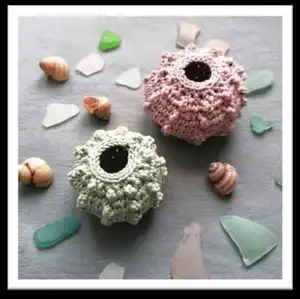
Create beautiful, textured sea urchin shells in three sizes with this detailed crochet pattern. You will learn how to form the little tubercles using treble stitches and shape the shells using a simple glue-and-water method. The pattern includes full round-by-round instructions, materials, and shaping tips so you can finish charming decorative shells for home or gifts. Perfect for crafters who love small, tactile projects.
Progress Tracker
0% Complete
— Materials :
Infos :
For crocheting: 100 % cotton yarn. Crochet hook. Scissors. (Needle to weave in ends). I used for smaller set: Madame Tricote 'Camilla', 100 % cotton, 50 g = 125 m, 1.5 mm hook. Finished shells measured approx. 4 cm, 5 cm and 6 cm in diameter. I used for larger set: Drops 'Muskat', 100 % cotton, 50 g = 100 m, 2,5 mm hook. Finished shells measured 5 cm, 6,5 cm and 8 cm in diameter. For shaping: White glue, water. Cup, something to stir. Rubber gloves (optional).
— Abbreviations :
Info :
CH – CHAIN. SL ST – SLIP STITCH. SC – SINGLE CROCHET. TR – TREBLE CROCHET. DC – DOUBLE CROCHET. SC2TOG – DECREASE BY CROCHETING 2 SINGLE CROCHET STITCHES TOGETHER. ST(S) – STITCH(ES). (6) – NUMBER OF STITCHES YOU SHOULD HAVE AT THE END OF THE ROUND. BLO – BACK LOOPS ONLY.
— Small sea urchin shell :
Round 1 :
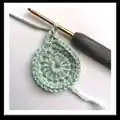
ch 3 (= 1 dc) and 14 dc in magic ring; join with sl st into top of ch 3 (15)
Round 2 :
ch 1 (=1 sc), sc in same st, 2 sc in each st all around; join with sl st to ch 1 (30)
Round 3 :
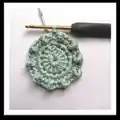
ch 1 (=1 sc), sc in next st, tr in next; * sc in next 2 sts, tr in next; rep from * 8 more times; join with sl st to ch 1 (30)
Info :
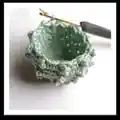
Make sure you push treble crochet stitch forward to front of your work so it forms a little bump (look at the photos), it helps if you make a single crochet stitch which comes after treble as tight as possible!
Round 4 :
ch 1 (=1 sc), sc in each st; join with sl st to ch 1 (30)
Round 5, 7, 9 :
ch 1 (=1 sc), sc in next st, tr in next; * sc in next 2 sts, tr in next; rep from * 8 more times; join with sl st to ch 1 (30)
Round 6, 8, 10 :
ch 1 (=1 sc), sc in each st; join with sl st to ch 1 (30)
Round 11 :
ch 1 (=1 sc), sc in next, tr in next; * sc2tog, tr in next; rep from * 8 more times; skip ch1 and join with sl st to next sc (20)
Round 12 :
ch 1 (=1 sc), sc in each st (20)
Round 13 :
working in back loops only sl st in each st all around (20)
Info :
Fasten off and weave in all ends.
— Medium sea urchin shell :
Round 1 :
ch 3 (=1 dc) and 14 dc in magic ring; join with sl st into top of ch 3 (15)
Round 2 :
ch 1 (=1 sc), sc in same st, 2 sc in each st all around; join with sl st to ch 1 (30)
Round 3 :
ch 1 (=1 sc), sc in next st, tr in next; * sc in next 2 sts, tr in next; rep from * 8 more times; join with sl st to ch 1 (30)
Round 4 :
ch 1 (=1 sc), sc in each st; join with sl st to ch 1 (30)
Round 5 :
ch 1 (=1 sc), sc in next, sc and tr in next; * sc in next 2 sts, sc and tr in next; rep from * 8 more times; join with sl st to ch 1 (40)
Round 6, 8, 10 :
ch 1 (=1 sc), sc in each st; join with sl st to ch 1 (40)
Round 7, 9, 11 :
ch 1 (=1 sc), sc in next 2 sts, tr in next; * sc in next 3 sts, tr in next; rep from * 8 more times; join with sl st to ch 1 (40)
Round 12 :
ch 1 (=1 sc), sc2tog; * sc in next 2 sts, sc2tog; rep from 8 more times; sc in last st and join with sl st to ch 1 (30)
Round 13 :
ch 1 (=1 sc), sc in next st, tr in next; * sc in next 2 sts, tr in next; rep from * 8 more times; join with sl st to ch 1 (30)
Round 14 :
ch 1 (=1 sc), sc in next 2 sts; * sc2tog, sc in next; rep from 8 more times; skip ch 1 in beg of rnd and join with sl st to next sc (20)
Round 15 :
ch 1 (=1 sc), sc in each st; join with sl st to ch 1 (20)
Round 16 :
working in back loops only sl st in each st all around (20)
Info :
Fasten off and weave in all ends.
— Large sea urchin shell :
Round 1 :
ch 3 (=1 dc) and 14 dc in magic ring; join with sl st into top of ch 3 (15)
Round 2 :
ch 1 (=1 sc), sc in same st, 2 sc in each st all around; join with sl st to ch 1 (30)
Round 3 :
ch 1 (=1 sc), sc in next st, tr in next; * sc in next 2 sts, tr in next; rep from * 8 more times; join with sl st to ch 1 (30)
Round 4 :
ch 1 (=1 sc), sc in each st; join with sl st to ch 1 (30)
Round 5 :
ch 1 (=1 sc), sc in next, sc and tr in next; * sc in next 2 sts, sc and tr in next; rep from * 8 more times; join with sl st to ch 1 (40)
Round 6 :
ch 1 (=1 sc), sc in each st; join with sl st to ch 1 (40)
Round 7 :
ch 1 (=1 sc), sc in next 2 sts, sc and tr in next; * sc in next 3 sts, sc and tr in next; rep from * 8 more times; join with sl st to ch 1 (50)
Round 8 :
ch 1 (=1 sc), sc in each st; join with sl st to ch 1 (50)
Round 9 :
ch 1 (=1 sc), sc in next 3 sts, tr in next; * sc in next 4 sts, tr in next; rep from * 8 more times; join with sl st to ch 1 (50)
Round 10, 12, 14 :
ch 1 (=1 sc), sc in each st; join with sl st to ch 1 (50)
Round 11, 13, 15 :
ch 1 (=1 sc), sc in next 3 sts, tr in next; * sc in next 4 sts, tr in next; rep from * 8 more times; join with sl st to ch 1 (50)
Round 16 :
ch 1 (=1 sc), sc in next, sc2tog, * sc in next 3 sts, sc2tog; rep from 8 more times; sc in last; join with sl st to ch 1 (40)
Round 17 :
ch 1 (=1 sc), sc in next 2 sts, tr in next; * sc in next 3 sts, tr in next; rep from * 8 more times; join with sl st to ch 1 (40)
Round 18 :
ch 1 (=1 sc), sc2tog, * sc in next 2 sts, sc2tog; rep from 8 more times; sc in last st; join with sl st to ch 1 (40)
Round 19 :
ch 1 (=1 sc), sc in next st, tr in next; * sc in next 2 sts, tr in next; rep from * 8 more times; join with sl st to ch 1 (30)
Round 20 :
ch 1 (=1 sc), sc in next 2 sts; * sc2tog, sc in next; rep from 8 more times; skip the ch 1 in beg of rnd and join with sl st to next sc (20)
Round 21 :
ch 1 (=1 sc), sc in each st; join with sl st to ch 1 (20)
Round 22 :
working in back loops only sl st in each st all around (20)
Info :
Fasten off and weave in all ends.
— Shaping the shell :
Infos :
In a cup mix 2 parts of water with 1 part of glue. Immerse crocheted shell into the glue and water mixture (wear rubber gloves if necessary) until it's fully wet. Carefully squeeze out excess glue-water mix. Start shaping the shell by gently pulling at the crochet fabric and giving it a desired shape. Use something (chopstick, large size crochet hook) to insert into the shell and push the sides of shell slightly outside to give it a nice rounded shape. Pull at tubercles to shape them nicely. Continue until you are satisfied with it. Leave it to dry on a towel.
— Few more tips and tricks :
Infos :
I use for most of my small crochet work 100% cotton yarn which has 125 m of yarn per 50 grams. Many brands have this weight. Some examples: Madame Tricote 'Camilla', Kartopu 'Organica', Anchor 'Creativa Fino', Schachenmayr 'Catania' and there are many more. Yarn label calls for 3,0 mm hook for these yarns but I recommend to use as small hook as you possibly can. I usually work with 1,5 mm. If this feels too uncomfortable then try a bit larger hook like 1,75 mm or 2,00 mm. The smaller the hook, the tighter the stitches and the prettier an end result. This pattern works great with thicker yarn as well. Remember to use as small hook as you feel comfortable with. I used Drops 'Muskat' and 2,5 mm hook with great success (yarn label suggests using 4,0 mm hook). Let’s talk some more about shaping the shell. I use regular white glue. I mix either 2 parts of water to 1 part of glue or 1:1 if I want my end result to be even stiffer. If you have sensitive skin please wear rubber gloves while using glue mix. If you like the feel of cotton yarn and don't want to add any stiffness to your shell you can just wet it in water, give it a desired shape and leave it to dry. I encourage you to experiment and find the way what suits you best! I don’t recommend using glue for shaping when using thicker yarn. Shape it just with water in this case. Finally let's talk about further embellishing your shells. I have used watercolors or diluted acrylic paint to add some extra color to my shells. I've also experimented with adding some glitter and sealing it with varnish. Or hand stitched on some seed beads (must be done before shaping with glue).
These sea urchin shells are a little coastal treasure you can make in an afternoon—perfect for shelf displays or gifts. The textured tubercles and rounded shape make each shell feel special and handcrafted. Try different cotton yarns and finishes to create a whole family of shells to decorate your home. 🧶🌊✨