🧢 Beautiful ✨ Detailed πŸ’ Adorable

Trapeze Bag Amigurumi Pattern

Trapeze Bag Amigurumi Pattern
4.4β˜… Rating
5-7 Hours Time Needed
3.0K Made This
βœ‚οΈ

Intermediate Level

Ideal for those with basic crochet experience, featuring slightly more advanced stitches and techniques to expand your skills.

⏱️

Weekend Treat

Takes 5-7 hours, making it an enjoyable project to finish over a couple of days.

✨

Stylish Touch

An elegant detail to elevate any look, combining traditional techniques with contemporary design sensibilities.

About This Trapeze Bag Amigurumi Pattern

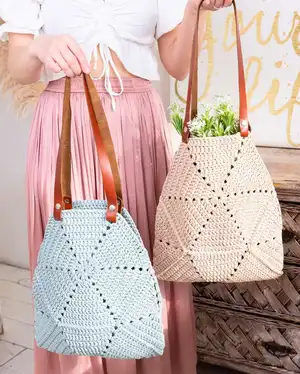
This pattern teaches you how to crochet a trapeze-shaped market bag using cord and basic double crochet techniques. Youll make three hexagon panels and a square panel, then join them together for a striking geometric design. The instructions include photo references and step-by-step assembly guidance for a neat finish.

Trapeze Bag Amigurumi Pattern crochet pattern - detailed view of completed project

Suitable for intermediate crocheters, the bag uses simple repeats and joining techniques to create a structured silhouette. The finished bag is customizable in size and color depending on your cord and tension.

Why You'll Love This Trapeze Bag Amigurumi Pattern

I absolutely love this pattern because it turns basic stitches into a beautiful geometric bag with a modern silhouette. I enjoy how the hexagon motifs come together to form a structured trapeze shape that still feels soft and wearable. The joining technique is clever and rewarding, giving clean seams without bulky edges. Im passionate about patterns that are both functional and stylish, and this bag is a perfect example of that balance.

Trapeze Bag Amigurumi Pattern step 1 - construction progress Trapeze Bag Amigurumi Pattern step 2 - assembly progress Trapeze Bag Amigurumi Pattern step 3 - details and accessories Trapeze Bag Amigurumi Pattern step 4 - final assembly and finishing

Switch Things Up

I love to change the look of this bag by swapping cord colors; try a two-toned design with contrast hexagons and a neutral square for a bold graphic look.

I often make a mini version by using thinner cord and a smaller hook to create a compact keychain or coin pouch version of the trapeze bag.

For a chunkier market tote, I use thicker 4-5 mm cord and a larger hook which gives a sturdy bag perfect for groceries or beach days.

I sometimes add a fabric lining for extra structure and to prevent small items from slipping through the stitches; pick a contrasting fabric for a playful interior surprise.

I like to experiment with handles β€” leather straps give a polished finish while crocheted straps keep the bag fully handmade and soft at the shoulders.

I will sometimes embroider initials or simple motifs on the square panel before joining to personalize the bag as a gift.

If I want a more secure top, I add a magnetic snap or a crocheted drawstring through the top corner chain spaces for closure.

I also try decorative trims like tassels or pom-poms attached at the top corners to add movement and color to the finished bag.

To make the bag more durable, I reinforce the corner chain spaces where handles attach by adding an extra round of dc only in those corner stitches.

I recommend practicing the joining technique on scrap hexagon and square pieces first so you are confident in aligning corners and seams during final assembly.

Common Mistakes & How to Fix Them

βœ— Not checking your tension; use a hook size and practice a swatch to match the sample gauge so the hexagons align correctly when joining. βœ— Forgetting to leave long enough cord ends for assembly; leave the required 110-120 cm on the two hexagons used for joining to allow comfortable seaming. βœ— Misplacing corner chains when joining panels; always count the corner chain spaces and join ch to ch to keep corners aligned and avoid distortion. βœ— Overstuffing or pulling cord too tight when closing rounds; pull the cord gently when closing the magic ring and hide ends without tightening the fabric so the shape stays flat. βœ— Skipping slip stitch counts at the end of rounds; mark the first chain or stitch and count stitches after each round to ensure correct stitch totals and tidy edges.

Trapeze Bag Amigurumi Pattern

Make a stylish Trapeze Bag using sturdy cord and simple crochet stitches. This pattern walks you through creating hexagon panels, a square side panel, and joining them for a modern geometric tote. Youll learn how to finish seams neatly and add handles for a polished, wearable result.

Intermediate 5-7 Hours

Materials Needed for Trapeze Bag Amigurumi Pattern

β€” Main Fabric

  • 01
    3-4 mm cotton, acrylic or polyester cord - 300-350 meters (main color)
  • 02
    3 mm polyester cord - sample used by designer (approx 300-350 meters)

β€” Tools Required

  • 01
    Crochet hook 5 mm
  • 02
    Scissors
  • 03
    Stitch markers
  • 04
    Yarn needle / darning needle
  • 05
    Handles for bag (with buttons or sewn ones)
  • 06
    Tapestry needle for hiding ends

Progress Tracker

0% Complete

β€” Hexagon :

Round 1 :

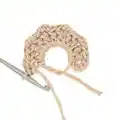
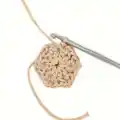
in MR: ch5 (counts as 1dc and a ch2), [ 2dc, ch2 ]*5, 1dc, tighten the ring firmly, sl st in 3rd ch (12) (pic. 1-5)

Info :

ch2 space will be referred to as the corner chain space = corner (pic. 5)

Round 2 :

begin in the corner: (1sc, ch3, 1dc) 1sc and a ch1 counts as 1dc here and throughout pattern, dc in the next 2 stitches, [ in the next corner: (1dc, ch2, 1dc), 2dc ]*5, sl st in first ch of ch3 (24) (pic. 6-12)

Info :

Using a needle, weave in the loose thread that began the magic ring between stitches on the wrong side. Cut off the end (pic. 13)

Round 3 :

begin in the corner: (1sc, ch3, 1dc), 4dc, [ in the next corner: (1dc, ch2, 1dc), 4dc ]*5, sl st (36) (pic. 14)

Round 4 :

begin in the corner: (1sc, ch3, 1dc), 6dc, [ in the corner: (1dc, ch2, 1dc), 6dc ]*5, sl st (48)

Round 5 :

begin in the corner: (1sc, ch3, 1dc), 8dc, [ in the corner: (1dc, ch2, 1dc), 8dc ]*5, sl st (60)

Round 6 :

begin in the corner: (1sc, ch3, 1dc), 10dc, [ in the corner: (1dc, ch2, 1dc), 10dc ]*5, sl st (72)

Round 7 :

begin in the corner: (1sc, ch3, 1dc), 12dc, [ in the corner: (1dc, ch2, 1dc), 12dc ]*5, sl st (84)

Round 8 :

begin in the corner: (1sc, ch3, 1dc), 14dc, [ in the corner: (1dc, ch2, 1dc), 14dc ]*5, sl st (96)

Info :

Cut off the cord, leaving the end about 20 cm. Pull the cord out as shown on pic. 15. Using a needle close the round as it is shown on pic. 16-17. Hide the end on wrong side and cut it off.

Info :

Crochet two more hexagons using rows 1-8. In these 2 hexagons leave the ends of cord about 110-120 centimeters (pic. 22)

β€” Joining Hexagons :

Info :

Put the 1st and 2nd hexagons with the front side as shown on picture 21. Join parts: work sl st along 1 side through 2 layers (use the end of the 110 cm of cord that you left on the second hexagon). (pic. 22-24)

Info :

Make the first and the last sl st in ch of corner spaces. (pic. 21) You'll have 18 sts in total. Hide the end on the wrong side and cut it off. (pic. 25-27)

Info :

Join the 2nd and 3rd hexagons in the same way (use the end of the 110 cm of cord that you left on the third hexagon) (pic. 28)

β€” Square Part :

Round 1 :

in MR: ch3 (counts as a 1dc ), 3dc, [ ch2, 4dc ]*3, ch1, tighten the ring firmly, sl st in 3rd ch (16) (pic. 31-36)

Round 2 :

into the corner just behind: (1sc, ch1, 1dc) 1sc and a ch1 counts as 1dc here and throughout pattern, [ dc in the next 4 stitches, into the next corner: (2dc, ch2, 2dc) ]*3, 4dc, into the last corner: (2dc, ch1, sl st in ch1 ) (32) (pic. 38-46)

Info :

Using a needle, weave in the loose thread that began the magic ring between stitches on the wrong side (pic. 47)

Round 3 :

into the corner just behind: (1sc, ch1, 1dc), [ 8dc, into the next corner: (2dc, ch2, 2dc) ]*3, 8dc, into the last corner: (2dc, ch1, sl st) (48)

Round 4 :

into the corner just behind: (1sc, ch1, 1dc), [ 12dc, into the next corner: (2dc, ch2, 2dc) ]*3, 12dc, into the last corner: (2dc, ch2, sl st) (64) (pic. 48)

Info :

Leave the end of the cord about 4 meters long. Pull out the cord as shown on picture 49. Crochet the second square using rows 1-4 (pic. 50)

β€” Assembly :

Info :

Steam the parts. Follow the recommendations for your cord or yarn.

Info :

Take the part of 3 hexagons and fold it in half, front side outside. Put a square part near as shown on picture 51. The long end of the cord should be on top. Join the square to the hexagon with a sl st. One square side has 16 dc. One side of hexagon has 16 dc. Make the first sl st in ch of the corner spaces (pic. 52)

Info :

Pay attention on how to work in corners, shown on pictures 55-56. Join one ch of the corner with ch of one hexagon, then join second ch with ch of another hexagon.

Info :

Continue work with sl st to the end of square part. (pic. 57-58)

Info :

Make 5 sl st on sides of hexagons, connecting them (pic. 59). Hide the end of cord on the wrong side. Cut off. (pic. 60-61)

Info :

Join the square part on the other side of the bag. Work in the same way. (pic. 62-63)

Info :

Steam the bag. Follow the recommendations for your cord or yarn. Insert or sew the handles at the top of the bag in the corner spaces. Your bag is finished! (pic. 64)

Assembly Instructions

  • Fold the 3-hexagon strip in half with the front sides out and position one square panel next to the top as shown in picture 51, ensuring the long 4 m cord end is on top for seaming.
  • Join the square to the hexagon by working slip stitches through 2 layers along one side, starting and ending in the corner chain spaces so that one square side (16 dc) matches one hexagon side (16 dc).
  • When joining corners, match and join one chain of the square corner to the corresponding chain of a hexagon corner, then join the second chain to the next hexagon corner chain as shown in pics 55-56.
  • Work slip stitches to the end of the square edge to complete the first side join, then make 5 slip stitches along adjacent hexagon sides to connect panels as shown in pic. 59.
  • Hide and secure all cord ends on the wrong side and trim flush after joining each seam to keep the inside neat and tidy.
  • Repeat the same joining process for the square panel on the opposite side, steam the finished bag according to cord recommendations, then insert or sew handles into the top corner chain spaces (pic. 64).

Important Notes

  • πŸ’‘Use stitch markers to mark the first chain of each round so you always know where to join with a slip stitch.
  • πŸ’‘Leave the longer cord ends specified (about 110-120 cm on two hexagons and about 4 meters on the square) to allow comfortable seaming without running out of cord.
  • πŸ’‘Weave in loose threads from the magic ring on the wrong side before cutting the ends to keep the right side neat and prevent unraveling.
  • πŸ’‘Steam the pieces following manufacturer recommendations for your cord to shape panels and flatten seams before final assembly.
  • πŸ’‘Match stitch counts carefully at the ends of rounds and along sides to ensure panels align properly when joining.

This Trapeze Bag pattern brings a fresh geometric look to your handmade accessories collection. The combination of hexagon motifs and a square side creates a unique, structured silhouette you can customize by cord thickness and color. A beautiful project to gift or keep, finished with leather or sewn handles for a chic everyday bag. πŸ§ΆπŸ‘œ

You ask,

we answer.

FAQs

What size will the finished piece be?

The sample bag measures approximately 15" (38 cm) high and 12" (30.5 cm) wide when using 3 mm cord and a 5 mm hook; final size will vary with cord thickness and tension.

Can I use different cord or yarn weights for this pattern?

Yes, you can use different cord or yarn weights but this will affect the finished size; thicker cord and a larger hook will give a larger, sturdier bag while thinner cord will make a smaller, more delicate bag.

Do I need special skills to make this bag?

The pattern is rated intermediate; you should be comfortable with magic ring, double crochet, single crochet, slip stitch, and joining motifs, as well as reading simple assembly instructions.

How long does this project typically take to complete?

Most crocheters finish this bag in about 5-7 hours, depending on experience level, customization choices, and how long you spend on assembly and finishing.