🧢 Beautiful ✨ Detailed πŸ’ Adorable

Tulip Shell Amigurumi Pattern

Tulip Shell Amigurumi Pattern
4.8β˜… Rating
2-4 Hours Time Needed
3.7K Made This
βœ‚οΈ

Intermediate Level

Ideal for those with basic crochet experience, featuring slightly more advanced stitches and techniques to expand your skills.

⏱️

Bite-Sized Project

Finishes in 2-4 hoursβ€”perfect for an afternoon of creative relaxation.

🏑

Cozy Accent

A warm touch for your space that transforms ordinary corners into inviting nooks filled with handmade charm.

About This Tulip Shell Amigurumi Pattern

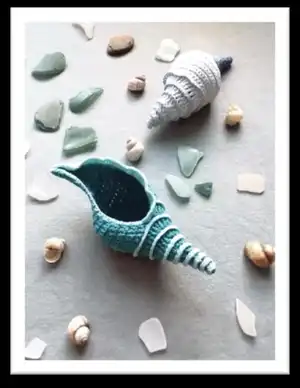
This pattern teaches you how to crochet a decorative tulip-shaped shell starting from the tip and working outwards, including a delicate trim and a shaping method using a glue-water mix. The shell uses 100% cotton yarn worked in two weights and small hooks for crisp stitches and elegant detail. You will change from working in rounds to working in rows, then add a fine border and shape the piece to give it a realistic shell silhouette.

Tulip Shell Amigurumi Pattern crochet pattern - detailed view of completed project

Includes step-by-step rounds and rows, clear trimming and border instructions, plus a full shaping guide to finish your shell. Ideal for creating coastal decor pieces or unique handmade gifts.

Why You'll Love This Tulip Shell Amigurumi Pattern

I absolutely love this pattern because it blends simple crochet stitches with a creative finishing process that turns yarn into a sculpted object. I enjoy how the small hook and thin thread for the trim give such a delicate, professional finish. The shaping step with the glue-and-water mix is very satisfying β€” you can really see the shell take form as it dries. I also love that this design is versatile: change yarn colors or weights and you get a completely different look each time, which keeps the pattern fun and inspiring.

Tulip Shell Amigurumi Pattern step 1 - construction progress Tulip Shell Amigurumi Pattern step 2 - assembly progress Tulip Shell Amigurumi Pattern step 3 - details and accessories Tulip Shell Amigurumi Pattern step 4 - final assembly and finishing

Switch Things Up

I love customizing this shell by switching colorsβ€”try an ombre gradient from pale sand to deep teal to mimic real sea shells.

I sometimes use variegated yarn for the body to create natural-looking color transitions without changing yarns.

To make a larger shell, I use a bulkier cotton yarn and a larger hook, adjusting stitches proportionally until the shape feels right.

For a miniature shell keychain, I choose a very thin thread and a 1.0 mm or smaller hook and reduce rounds slightly to keep proportions.

I often add subtle watercolor or diluted acrylic paint after shaping to deepen ridges and give a realistic finish; seal with a matte varnish when dry.

Try stitching tiny seed beads onto the trim before shaping for a sparkly accent, ensuring they are secured well before applying glue mix.

If I want a stiffer shell, I increase the glue concentration to a 1:1 water-to-glue ratio; for a softer result I use 2:1 water-to-glue.

I sometimes insert floral wire inside the long top before shaping if I want a slightly posable antenna-like tip or a more dramatic curl.

To turn shells into ornaments I attach a loop at the tip with thin cord or add a magnet inside the base to make fridge decor.

I also experiment with different border stitchesβ€”try crab stitch, picot, or reverse single crochet for a decorative edge that changes the overall look.

Common Mistakes & How to Fix Them

βœ— Not using a smaller hook for tight stitches; use a couple sizes smaller than the yarn label recommends to achieve firm, neat stitches. βœ— Skipping stitch markers when working continuous rounds and rows; place a marker in the first stitch of each round or row to avoid losing track of the beginning. βœ— Overstuffing or adding too much shaping filler; add plastic bags or stuffing gradually so the shell keeps its shape without bulging or distorting. βœ— Forgetting to work into back loops only during the round section; be sure to use back loops only as instructed so the shell profile forms correctly. βœ— Pulling the glue-water mix through the fabric too aggressively; gently squeeze excess mixture to avoid stretching or thinning the crochet fabric.

Tulip Shell Amigurumi Pattern

Make a delicate Tulip Shell with this clear crochet pattern that guides you from the tip to the finished, shaped shell. You will learn to work in continuous rounds, switch to rows, add a delicate trim and shape the piece with a glue-and-water method. Perfect for creating coastal decor or a unique handmade gift, this pattern combines simple stitches with a satisfying finishing process.

Intermediate 2-4 Hours

Materials Needed for Tulip Shell Amigurumi Pattern

β€” Main Fabric

  • 01
    100% cotton yarn, in 2 weights (general requirement for body and trim)
  • 02
    Madame Tricote "Camilla" - 100% cotton, 50 g = 125 m (used for shell body)
  • 03
    Madame Tricote "Maxi" - 100% cotton, 100 g = 565 m (used for trim and border)
  • 04
    Thin thread for trim (1.0 mm hook weight)
  • 05
    Optional: variegated yarn such as Alize "Bahar Batik" for color effects

β€” Tools Required

  • 01
    Crochet hook 1.5 mm (for shell body)
  • 02
    Crochet hook 1.0 mm (for trim and border)
  • 03
    Additional crochet hooks as needed (tiny hooks for details)
  • 04
    Scissors
  • 05
    Needle to weave in ends (yarn needle)
  • 06
    Stitch markers
  • 07
    White glue (for shaping)
  • 08
    Water (to mix with glue)
  • 09
    Small plastic bags (for filling while drying)
  • 10
    Rubber gloves (optional for shaping)
  • 11
    Chopstick or small shaping tool (to shape long thin top)
  • 12
    Pins for assembly or blocking (optional)

Progress Tracker

0% Complete

β€” Crocheting the shell :

Info :

Starting from the tip of the shell and working in continuous rounds and in back loops only.

Rnd 1 :

6 sc in a magic ring (6)

Rnd 2 :

* 1 sc in each of next 2 sts, 2 sc in next; rep from * 1 more time (8)

Rnd 3 :

* 1 hdc in each of next 3 sts, 2 hdc in next; rep from * 1 more time (10)

Rnd 4 :

* 1 dc in each of next 4 sts, 2 dc in next; rep from * 1 more time (12)

Rnd 5 :

* 1 dc in each of next 2 sts, 2 dc in next; rep from * 3 more time (16)

Rnd 6 :

* 1 dc in each of next 3 sts, 2 dc in next; rep from * 3 more time (20)

Rnd 7 :

* 1 tr in each of next 3 sts, 2 tr in next; rep from * 4 more time (25)

Rnd 8 :

* 1 tr in each of next 4 sts, 2 tr in next; rep from * 4 more time (30)

β€” Turning and continuing in rows :

Row 1 :

working through front loops only: ch 1 (=1 sc), 2 sc in next st, 1 sc in each st; turn (31)

Row 2 :

working through both loops from now on: ch 1 (=1 sc), sc2tog, * 1 sc in each of next 2 sts, 2 sc in next; rep from * 7 more times; 1 sc in each of last 4 sts; turn (38)

Row 3 :

ch 1 (=1 sc), 2 sc in next st, 1 sc in each st; turn (39)

Row 4 :

ch 1 (=1 sc), sc2tog, 1 sc in each st; turn (38)

Rows 5, 7, 9, 11 :

same as Row 3

Rows 6, 8, 10 :

same as Row 4

Row 12 :

ch 1 (=1 sc), * sc2tog, 1 sc in next 2 sts, rep from * 8 more times; 1 sc in last 2 sts; turn (30)

Row 13 :

ch 1 (=1 sc), 2 sc in next st, 1 sc in each st; turn (31)

Row 14 :

ch 1 (=1 sc), * sc2tog, 1 sc in next 2 sts, rep from * 6 more times, 1 sc in last 2 sts; turn (24)

Row 15 :

ch 1 (=1 sc), 2 sc in next st, 1 sc in each st; turn (25)

Row 16 :

ch 1 (=1 sc), * sc2tog, 1 sc in next 2 sts, rep from * 5 more times; turn (19)

Row 17 :

ch 1 (=1 sc), 2 sc in next st, 1 sc in each st; turn (20)

Row 18 :

ch 1 (=1 sc), * sc2tog, 1 sc in next 2 sts, rep from * 3 more times, 1 sc in last 3 sts; turn (16)

Row 19 :

ch 1 (=1 sc), sc in next st, 1 sc in each st; turn (16)

Row 20 :

ch 1 (=1 sc), * sc2tog, 1 sc in next st, rep from * 3 more times, 1 sc in last 3 sts; turn (12)

Row 21 :

ch 1 (=1 sc), 1 sc in each st; turn (12)

Row 22 :

ch 1 (=1 sc), * sc2tog, 1 sc in next st, rep from * 2 more times, 1 sc in last 2 sts; turn (9)

Row 23 :

ch 1 (=1 sc), 1 sc in each st; turn (9)

Row 24 :

ch 1 (=1 sc), * sc2tog, 1 sc in next st, rep from * 1 more time, 1 sc in last 2 sts; turn (7)

Rows 25, 26, 27, 28 :

ch 1 (=1 sc), 1 sc in each st; turn (7)

Info :

Fasten off and weave in the ends.

β€” Crocheting the border :

Trim :

Using 1,00 mm hook and thin thread. Attach yarn to the front loop of last stitch of last round. Working into those front loops : 2 sc in one stitch all the way to the center of the shell. Fasten off and weave in the ends.

Border :

Using 1,00 mm hook and thin thread. Attach yarn to the top of the shell opening. Ch 1 and then sc all the way around the shell opening inserting hook into the stitches. Now work 2. row only down of the opening of the shell by working 2 dcin one stitch and 1 dc in next. Few stitches before the tip of the shell make 2 hdc and 4-5 sc instead of dc. Fasten off and weave in the ends.

β€” Shaping the shell :

Infos :

In a cup mix 2 parts of water with 1 part of glue. Immerse the crocheted shell into the glue and water mixture (wear rubber gloves if necessary) until it's fully wet. Carefully squeeze out excess glue-water mix. Start shaping the shell by gently pulling at the crochet fabric and giving it a desired shape. Use something (like chopstick) to help you straighten out the long and thin shell top. Use small plastic bags to fill up the shell – it helps to hold it's shape while the shell is drying. Pinch the bottom of the shell together and shape an opening. Pull at trim. Continue until you are satisfied with the shape. Leave it to dry on a towel.

Assembly Instructions

  • Attach the trim by fastening yarn to the front loop of the last stitch of the last round and work 2 sc in one stitch into the front loops toward the center; fasten off and weave in ends.
  • Attach the border by joining yarn to the top of the shell opening, ch 1 and sc all the way around the opening inserting the hook into each stitch; work the second row down the opening as instructed.
  • Before the tip of the shell, follow the border note and replace dc with 2 hdc and 4-5 sc in a few stitches to shape the tip correctly, then fasten off and weave in ends.
  • Fill the shell with small plastic bags to support its interior while shaping, pinch the bottom to form the opening, pull the trim for a clean edge and leave to dry fully before removing supports.
  • If desired, add paint, diluted acrylics, or glue-on beads before final shaping; attach any additional embellishments before the final drying step so they seal in place.

Important Notes

  • πŸ’‘Work in continuous rounds and do not join or turn unless otherwise noted to maintain a seamless shell surface.
  • πŸ’‘Use a small hook (1.5 mm for body, 1.0 mm for trim) to achieve tight stitches and a neat finished texture for shaping.
  • πŸ’‘Mix 2 parts water with 1 part white glue for a flexible shaping solution, and wear rubber gloves if you have sensitive skin.
  • πŸ’‘Pin and fill the shell with small plastic bags while drying to preserve the intended shape and opening.

This Tulip Shell pattern brings coastal charm to your handmade collection, blending tight crochet stitches with a creative shaping finish. Follow the rounds, rows, trim and border to make a delicate shell you can display or gift. Shape with a simple glue-and-water mix and watch the shell transform as it dries. 🧢🏝️✨

You ask,

we answer.

FAQs

What size will the finished piece be?

The finished shell size depends on your yarn and hook, but using the recommended yarns and a 1.5 mm hook for the body and 1.0 mm for trim gives a small decorative shell approximately 7-12 cm long.

Can I use different yarn weights for this pattern?

Yes, you can change yarn weight but this will affect size and shaping; use a proportionally larger hook for thicker yarns and expect a chunkier, less delicate shell.

Do I need prior crochet experience for this pattern?

This pattern is rated intermediate, so familiarity with single crochet, increases, decreases, and working in rounds and rows is recommended for best results.

How long does shaping and drying take?

Shaping takes only a few minutes, but drying time will vary with the glue mix and shell thickness β€” allow several hours to overnight for the shell to dry completely.